INTERVIEW: U.S.-China economic war enters a dangerous new phase


By Asif Aydinly
In an interview with News.Az, Pavel Klachkov, Director of the Branch of the Financial University under the Government of the Russian Federation, shares his expert perspective on the deepening rift between the world’s two largest economies—China and the United States. As tariffs rise and retaliatory measures intensify, Klachkov argues that the trade war has evolved into a broader economic decoupling with potentially lasting consequences. He examines China's strategic responses, the impact on global trade, and whether there is still room for de-escalation—or if the world should brace for an irreversible breakdown in Sino-American economic relations.

– Do you believe the trade confrontation between the U.S. and China has already evolved into a full-fledged "economic decoupling"?
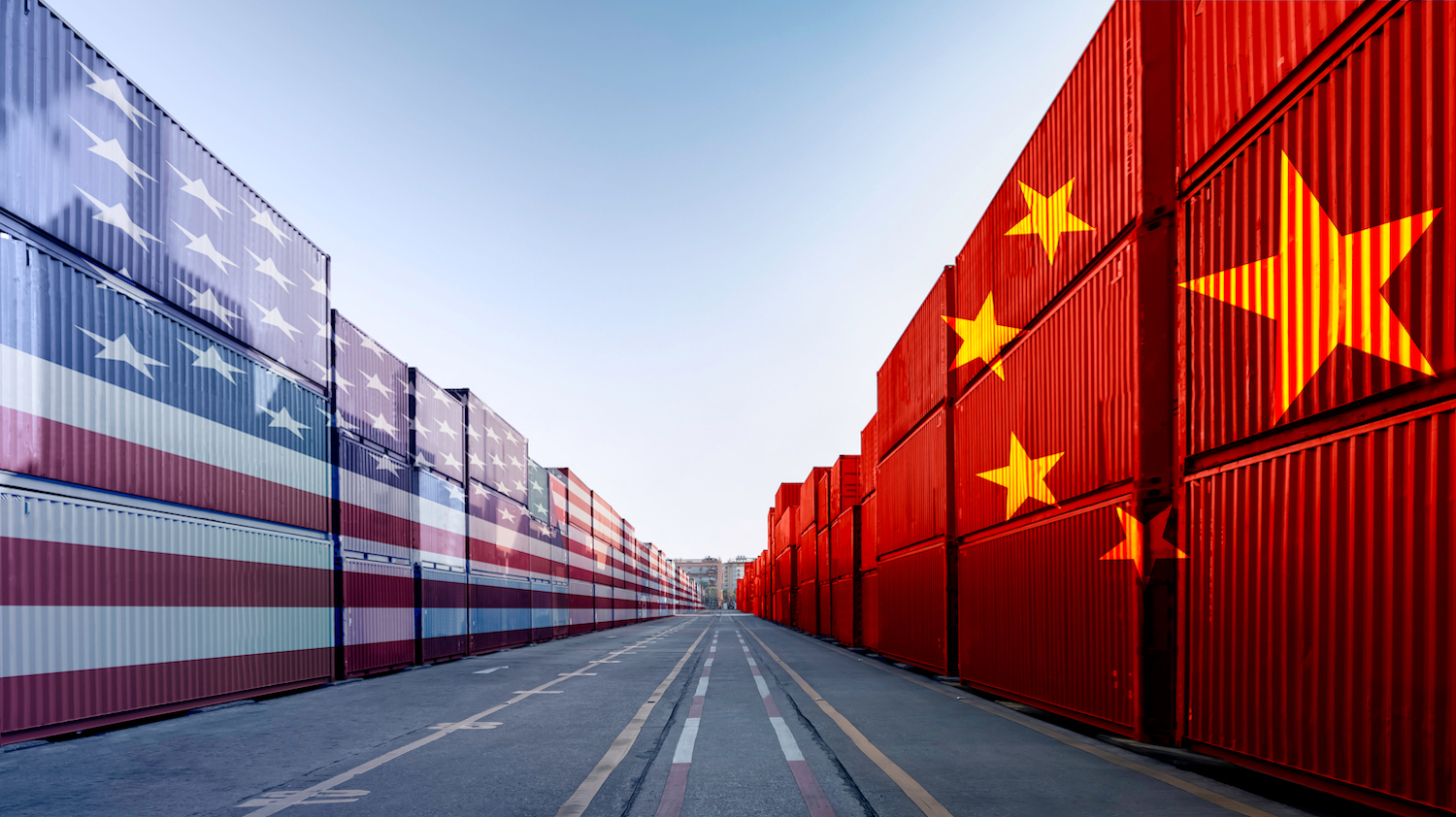
– Absolutely. The trade war between China and the United States is following a path of escalation, rising tension, and increasing hostility. According to the latest reports, the United States is attempting to draw about 70 countries into this confrontation by offering them more favorable trade terms with Washington—provided they join the U.S. side against China.
As of now, the most realistic scenario is that China will not yield or make concessions in the near future. It’s unlikely to compromise or accept unfavorable terms. Instead, China will likely seek alternative routes. Naturally, this will lead to a reduction in global trade volumes. But perhaps it should not be viewed as a catastrophe—yes, there will be a contraction in the global economy, but these crisis phenomena might in fact help cleanse the system, allowing outdated and unsustainable models to die off naturally.
We are already seeing significant impacts on both the U.S. and Chinese markets—particularly in consumer goods, electronics, and other vulnerable sectors. At this point, I see only growing confrontation, and I don’t observe any indication that China is ready to back down. For the U.S., this has become something of an “economic jihad”—a sacred war. One could even say it has become Donald Trump’s personal war.
Source: CNN
– Considering that tariffs on Chinese imports to the U.S. have reached 145%, and on American imports to China 125%, how viable is bilateral trade between the world’s two largest economies?
– Yes, a trade decline is entirely possible. Forecasts indicate potential reductions in trade volume by 70%, or even 80%. In the U.S., there are already reports of panic buying in some consumer sectors. A shortage may be developing. Americans are starting to feel it—maybe not acutely yet, but the trend is clearly emerging.
Even U.S. Treasury Secretary Scott Bessent has not ruled out the possibility of a complete severance of trade relations with China. It is important to distinguish between aggressive rhetoric aimed at intimidation and statements that reflect genuine policy direction. But the signals we’re receiving suggest that China is taking U.S. threats very seriously.
For example, China has decided to phase out the use of American Boeing aircraft as a step toward strengthening national security, including in the aviation sector. These are concrete, targeted actions to reduce dependence on the United States. Clearly, China is preparing—not just in words, but in practice.
At the same time, discussions in the U.S. also include the possibility of a full decoupling. So a collapse now seems inevitable. Meanwhile, China is acting decisively and consistently. That’s the current state of play.
– What countermeasures might Beijing take in response to the tightening of U.S. tariff policy? How seriously could China reduce imports from the U.S., and what risks would that pose for American producers?
– China, holding strong positions in the export of critical minerals, has begun to take action in that area. It is also applying pressure on U.S. digital and tech giants like Google.
Beijing is actively using international legal mechanisms, filing complaints with various organizations—including the World Trade Organization—and imposing retaliatory tariffs. Today we can say that China is pursuing a more coordinated and comprehensive approach than it did during the 2018–2019 trade war under Trump.
Now, China appears more mature and better prepared for such challenges. Its countermeasures are less abrupt and less showy than those of the U.S., but they are systematic and well-calculated. This is evident across all the sectors mentioned.
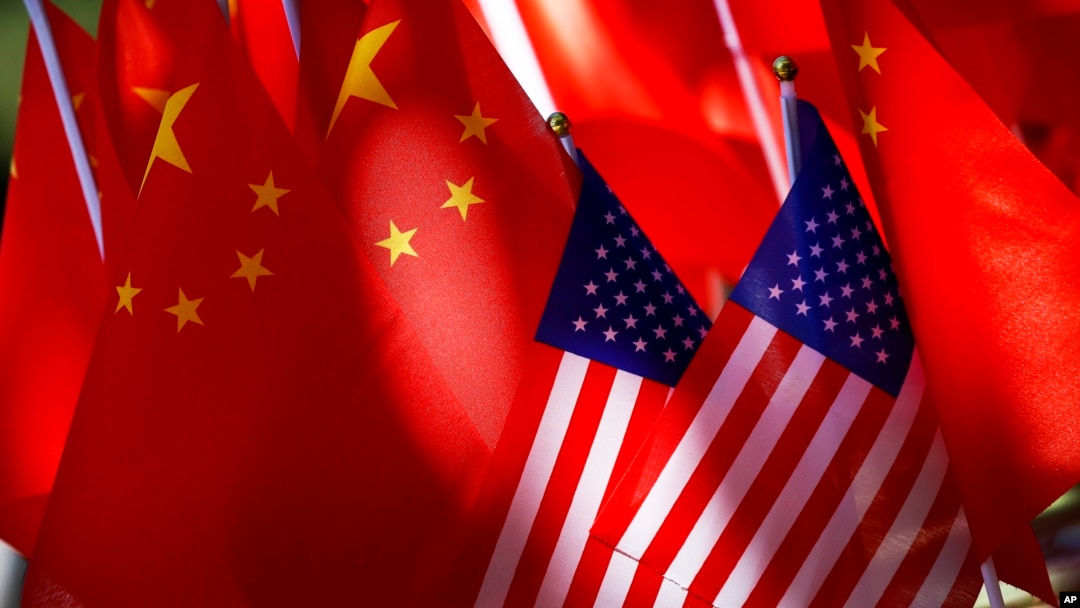
Source: Xinhua
– Can we expect a revival of trade dialogue after the next U.S. presidential election, or has the antagonism grown too deep to restore economic cooperation?
– The contradictions between the U.S. and China are indeed fundamental. The rules of the game in Washington are clear: the U.S. will not yield its position of global leadership—whether in economics or politics. The country is focused on global supremacy and has grown used to holding that position.
By challenging this dominance, China automatically provokes a reaction from the U.S., which, based on its own ideology and strategic principles, feels obligated to confront a powerful rival. China understands this perfectly and is preparing accordingly. In this context, the situation depends less on the outcome of the U.S. presidential election and more on the heavy-weight logic of long-term strategic rivalry and the global power struggle.
We cannot even rule out a scenario in which the trade war escalates into a real military conflict. While this is not the most likely outcome, it is certainly one of the scenarios being considered. A gradual escalation could shift the conflict from the economic domain into the military realm.
Therefore, there is still a window to delay or soften the confrontation. But doing so will require a political decision—perhaps a high-stakes personal meeting between Trump and Xi Jinping.
Nonetheless, all current indicators point to further escalation. The likelihood that this will become a long-term standoff is very high, as it is driven by deep, strategic ambitions for global dominance.


Similar news