Iran on the eve of a political tsunami


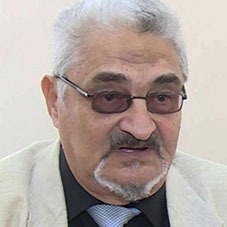
Editor's note: Moses Becker is a special commentator on political issues for News.Az, a PhD in political science and an expert on interethnic and interreligious relations. The article expresses the personal opinion of the author and may not coincide with the view of News.Az.
On October 7, 2023, the Middle East woke up to a new reality. Unprovoked aggression by Hamas against the State of Israel, resulting in the death of hundreds of innocent women, elderly people, and children, led to a sharp division between Shiites and Sunnis. This division was most evident on April 14, 2024, during the Iranian attack against Israel, as well as in the relationships between Islamic communities in EU countries and the indigenous populations of the European continent.The capture and detention of hundreds of Israeli hostages, from infants to the elderly, sparked both a wave of solidarity with the Jewish state and attempts to revive the idea of "two states for two peoples." Although Hamas ideologists completely reject Israel's right to exist, the seemingly fading idea of an independent Palestine has re-emerged. As a result of these events, the political landscape of the European Union changed dramatically. Pro-Palestinian demonstrations caused fear among the average European, who suddenly remembered their national identity.
Amidst these events, Iranian President Ebrahim Raisi died in a helicopter crash. History often shows that one event triggers another. In several EU countries, right-wing nationalists and supporters of ethnically homogeneous states gained the upper hand. In Iran, which has elevated the idea of religious unity to an absolute, a similar trend began to emerge, with signs of ethno-genetic self-awareness appearing. The death of President Raisi left the second most significant position vacant, leading to intensified power struggles among various factions in Iran for this influential role.
The first round of elections took place on June 28, 2023. Six candidates, five conservatives and one reformist, were allowed to compete for the presidency after a thorough selection process. Two conservatives withdrew their candidacies on the eve of the vote. During the debates, three out of four candidates opposed the mandatory wearing of hijabs, which had long provoked large-scale protests by Iranian women. Additionally, most candidates supported unrestricted internet access. In the first round, 42.4% of voters supported reformist Pezeshkian, while 38.6% voted for conservative Jalili, marking the lowest turnout since 1979 — only about 40%.
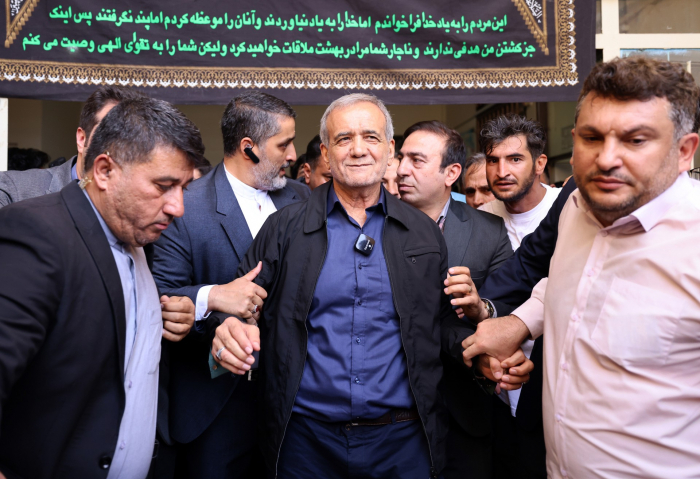 The 69-year-old cardiac surgeon and parliamentarian Masoud Pezeshkian is considered a moderate reformist. From 2001 to 2005, under President Mohammad Khatami, he headed the Ministry of Health and Medical Education. In this position, Pezeshkian implemented several reforms aimed at improving the healthcare system. In the current election campaign, he was supported by former President Khatami, who still enjoys authority among a significant portion of Iran's population. Initially having limited support, Pezeshkian focused on the most pressing and relevant issues for the country in his speeches, addressing social issues, inflation (40% per year), unemployment, especially among the youth (21.6%), etc.
 He speaks to his constituents in simple, accessible language. His program includes modernization and various reforms within the existing regime, attracting the sympathies of the neoconservative segment of the population, who understand the need for progress and development in Iran. Pezeshkian also advocated for women's rights and the rights of ethnic minorities (his father is Azerbaijani, and his mother is Kurdish). In foreign policy, the newly elected president supports gradually improving relations with Western countries, but not with Israel, as it is clear that confrontation with Israel is unlikely to enhance Iran's image. He also plans to resume the nuclear deal. It is worth noting that the president's family speaks exclusively Azerbaijani, explaining why he received the majority of votes in areas inhabited by ethnic minorities and in the capital province. The residents of Tabriz and Azerbaijani provinces showed particular enthusiasm, singing songs in their native language during rallies.
Supreme Leader of Iran Ali Khamenei stated that the participation of the Iranian people in the elections is support for the Islamic regime. He noted that the authorities are aware of the presence of people in Iran who disagree with the principles of the existing system, and their opinion must be considered.
In an anonymous poll on the official Telegram channel of the IRGC, 60% of voters supported Pezeshkian, indicating a demand for change from both time and the majority of the people. Iranians are tired of supporting various proxy groups waging war against Israel, which poses no threat to the Islamic Republic. They are weary of the adventurism of Hezbollah and Hamas, whose actions could ignite a major regional war involving the US and Sunni states, from which Iran is unlikely to benefit. The Iranian leadership is already trying to de-escalate tensions on the Lebanese-Israeli border. There is also information that Hamas has started moving towards a deal to release Israeli hostages. It is clear that this is unlikely to happen without an order from Tehran.
It should be noted that the newly elected president has inherited a complex situation. It is likely that during his term, the transfer of power from Supreme Leader Ali Khamenei to the next Rahbar will occur, and it is uncertain if this will happen peacefully and smoothly. He will also need to maintain a balance of interests between the army and the IRGC, which is not an easy task. The IRGC has enormous financial resources and considerable political influence, which naturally irritates the army leadership, who feel neglected. This structure resembles the Praetorian Guard of the Roman Empire, which is currently tightly controlled by the supreme leader. However, Iranian history has seen many unpredictable events related to the ambitions of the "colonels."
(If you possess specialized knowledge and wish to contribute, please reach out to us at opinions@news.az).


Similar news