Is a new U.S. and Israeli strike on Iran’s nuclear sites likely? - INTERVIEW


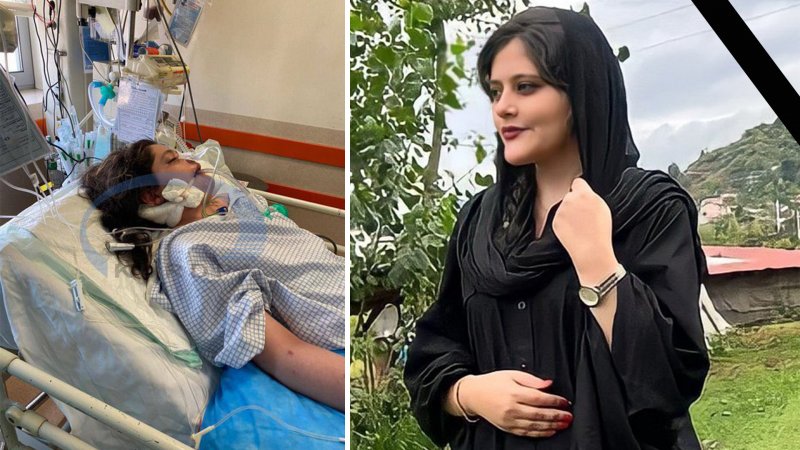
Three years have passed since the tragic death of Mahsa Amini, which sparked mass protests across Iran under the slogan “Woman, Life, Freedom.” These demonstrations drew global attention to the issue of women’s rights and became a symbol of resistance against state-imposed restrictions. Since then, Iran has continued to face deep internal and external challenges, ranging from social tensions and human rights concerns to escalating confrontations over its nuclear program.
In an exclusive interview with News.Az, an expert sheds light on the current situation in Iran — examining the state of women’s rights, the growing risks of military escalation with the United States and Israel, the fragile prospects for diplomacy, and the geopolitical complexities surrounding a potential project to transit Russian gas to Iran via Azerbaijan.
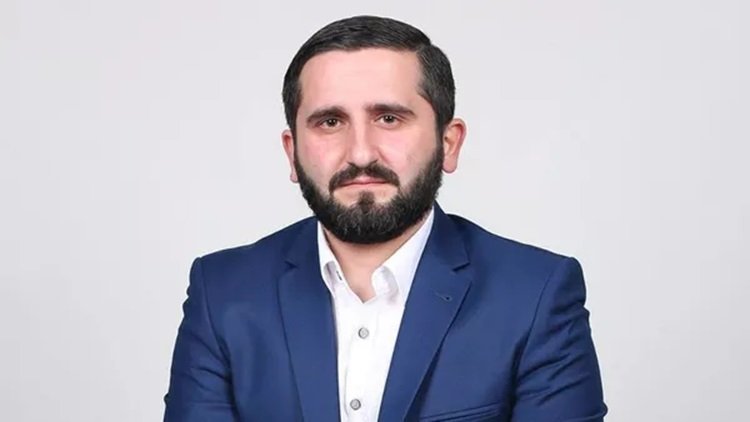 Middle East expert and Iran specialist Vasili Papava.
— Three years ago, mass protests erupted in Iran following the killing of Mahsa Amini. What has changed since then in terms of women’s rights in Iran?
— As is known, after the tragic death of Mahsa Amini in September 2022, mass protests began in Iran under the slogan “Woman, Life, Freedom.” These events became an important social and political phenomenon, raising questions not only about the mandatory wearing of the hijab but also about broader aspects of women’s rights and the status of citizens in society. Three years on, there have been no significant changes in legislation or institutional approaches. Laws requiring women to wear the hijab remain in force, and state authorities continue to enforce them. In some cases, there has even been an intensification of control and restrictions on women in public life.
However, at the level of everyday life, changes in societal behavior are noticeable. More women are appearing in public spaces without a hijab, which is seen as a way of expressing personal stance. Such behavior has become more common, especially in large cities, where enforcement of these norms is somewhat relaxed. This has brought new attitudes into the urban environment.
The “Woman, Life, Freedom” movement has drawn significant global attention. Mahsa Amini’s name became widely known beyond Iran, and within the country, women’s rights and their role in society have started to be discussed more openly. At the same time, there remains a contrast between strict state policy and growing public resistance, expressed in various forms.
In conclusion, official policy toward women in Iran has remained largely unchanged, but society has developed new experiences of collective expression of dissent, and the space for discussing women’s rights and social roles has expanded noticeably.
— The United States continues to demand that Iran completely halt the development of its nuclear program and dismantle all uranium enrichment facilities. What is your view on the likelihood of a new military operation against Iran?
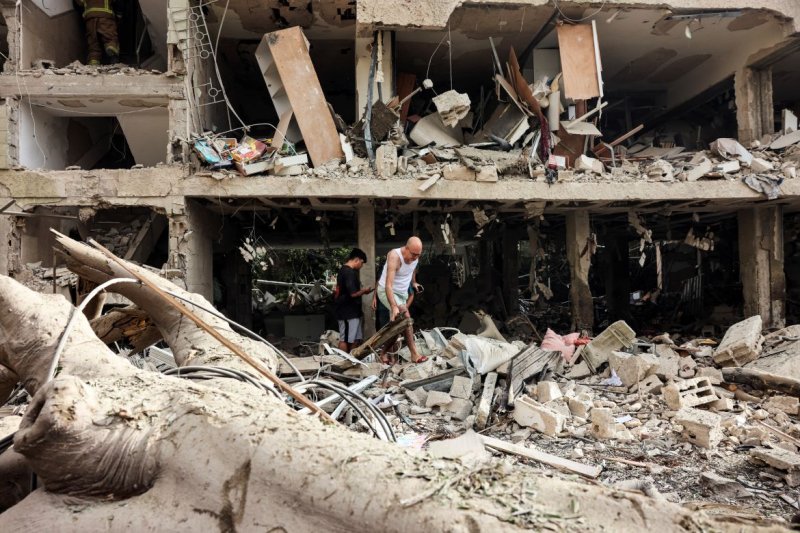
— Following the June 2025 strikes by Israel and the United States on nuclear facilities in Natanz, Fordow, and Isfahan, the situation around Iran’s nuclear program and its relations with the United States remains tense. These attacks, known as Operation “Midnight Hammer,” did not completely destroy the nuclear infrastructure but seriously complicated the work of Iranian specialists and made the program less transparent. Washington has demonstrated readiness for military measures to “resolve the Iranian nuclear issue,” while simultaneously continuing to insist on negotiations to reach a new agreement. Iran rejected the proposal for limited uranium enrichment as unacceptable, although IAEA inspectors’ access to some facilities has partially resumed, which can be seen as a step toward maintaining diplomatic channels.
Positions on both sides remain contradictory. The Trump administration adheres to a “maximum pressure” strategy on Iran, demanding full cessation of enrichment programs. Tehran, on the one hand, expresses willingness for dialogue to reduce the risk of war, and on the other, insists on non-interference guarantees and limits access to affected facilities. Israel, in turn, considers the possibility of independent action, which, if realized, could draw the United States into a new conflict.
The likelihood of a large-scale military operation in the coming months is assessed as moderately low. Restraining factors include Iran’s contacts with European countries, Tehran’s desire to ease sanctions, and limited support for a military scenario within American society. However, risks remain: incomplete cooperation with the IAEA, potential acceleration of Iran’s nuclear program, and possible independent Israeli actions could provoke new strikes.
Overall, a new military round in the short term is unlikely, but cannot be completely ruled out. Military pressure remains a tool for Washington to influence Tehran, though the preference is for a diplomatic path that allows control of the situation with fewer costs.
— Does Iran have a chance to reach a compromise with the West?
— Iran’s chances of reaching a compromise with the West remain limited and fragile, depending on a complex mix of political will, regional dynamics, and global events. Experts agree that a diplomatic path is possible, but the June 2025 strikes on Iranian nuclear facilities seriously undermined this prospect in the short term.
Relations between Iran and the West are determined by three main issues: the nuclear program, sanctions, and Iran’s support for proxy groups. The 2015 JCPOA agreement remains only a reference point, but the U.S. withdrawal from the deal in 2018 and Iran’s subsequent increase in uranium enrichment to near-weapons levels created a deep trust crisis.
Some factors still provide a basis for compromise. Iran shows limited flexibility, expressing willingness to discuss enrichment levels and allow IAEA inspectors access to certain nuclear sites. The West, in turn, maintains a weakened interest in diplomacy, aiming to avoid a full-scale conflict. Economic pressure from sanctions, which froze significant Iranian assets, also pushes Tehran to seek ways to unblock them.
However, these signals are outweighed by obstacles. The hardline stance of the Trump administration, demanding full dismantling of the nuclear program, clashes with Iran’s categorical refusal, which sees such conditions as unacceptable. Conservative forces in both Washington and Tehran limit room for concessions. Regional instability, including activity by Iran-supported proxy groups and the threat of new Israeli strikes, heightens tension. It appears that each side seems prepared for escalation rather than dialogue.
As mentioned, the likelihood of compromise is low. Achieving it would require significant mutual concessions: Iran would need to reduce uranium enrichment and return to full IAEA oversight, while the West would need to offer substantial sanction relief, not just symbolic measures. Currently, the situation is more likely to lead to further isolation of Iran or even risk of open conflict, where diplomacy gives way to military pressure.
— From time to time, there is information in the media that Russian gas will be supplied to Iran through Azerbaijan. How realistic do you think this project is?
— The project to transit Russian gas to Iran via Azerbaijan is a complex, multi-level issue where economic interests and geopolitical contradictions intersect. Formally aimed at addressing energy needs, this initiative faces a range of interconnected challenges that put its implementation at the stated scale into question.
A key aspect is Azerbaijan’s position as a transit country. After the Second Karabakh War, Baku significantly strengthened its position in the region and now views energy infrastructure as a tool of foreign policy. Relations with Russia are characterized by a delicate balance: on one hand, there is partnership in transport projects, while on the other, Azerbaijan actively develops strategic cooperation with regional and Western countries, expanding gas supplies to Europe.
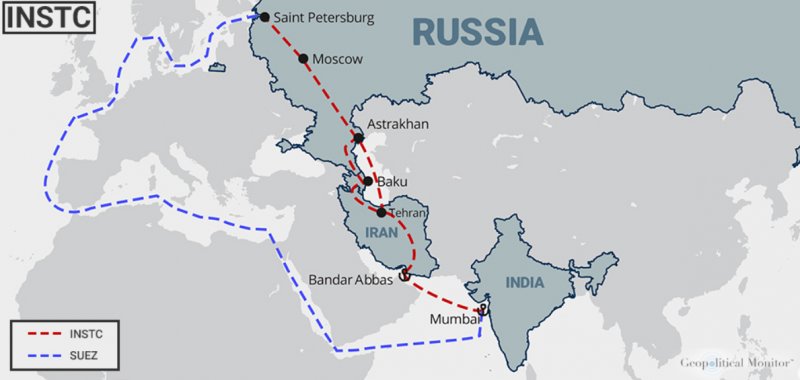
Iran-Azerbaijan relations are undergoing a period of systemic crisis. Tehran perceives Baku’s strengthening as a threat to its regional position, especially given potential destabilization in Iran’s northwest regions, which have a predominantly Azerbaijani population. In response, Azerbaijan strengthens ties with Israel and Türkiye, which Iran views as a challenge to its security.
Under these conditions, the transit route becomes a hostage to broader geopolitical processes. The prospects of the project depend on the ability of the parties to separate economic interests from geopolitical confrontation. At this stage, chances of full-scale implementation appear limited, as neither side is ready to compromise its strategic positions for energy cooperation. The most likely scenario is limited supplies in a trial mode, primarily used as a tool for political dialogue rather than a full commercial enterprise.
By Asif Aydinli


Similar news