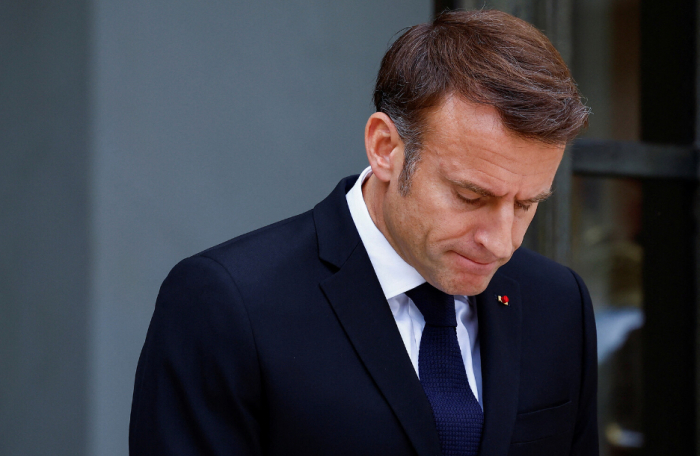
Macron loses support and power



Editor's note: Moses Becker is a special commentator on political issues for News.Az, a PhD in political science and an expert on interethnic and interreligious relations. The article expresses the personal opinion of the author and may not coincide with the view of News.Az.
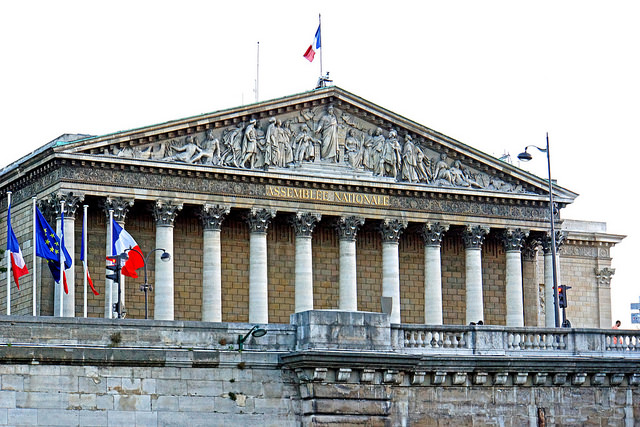
According to the results of the early parliamentary elections in France, announced on July 8, 2024, the balance of power is as follows: the left-wing coalition "New People's Front" won 182 seats, the presidential coalition "Together!" secured only 168 seats, and the right-wing coalition led by Marine Le Pen's "National Rally" received 143 seats. The French National Assembly has 577 seats in total. In other words, none of the coalitions can claim a constitutional majority. Despite this, the "New People's Front" nominated their candidate, Lucie Caste, for prime minister.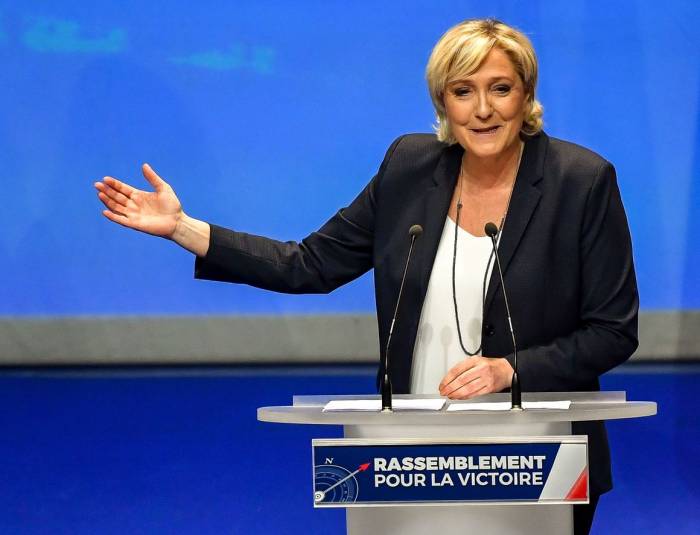
Naturally, Macron rejected this candidacy, which, in any case, could not garner the support of a majority of deputies. In response, the left accused the president of violating the Constitution, claiming that he is not only taking an authoritarian path but also acting like an autocrat, which, in their view, justifies the initiation of an impeachment procedure against the head of state. It is worth noting that the law enabling this process was adopted in November 2014. Prior to that, such a procedure had never been considered.
According to the law, removing the president from office requires the formation of a special High Court of Justice from among the members of parliament. The initiative must come from no less than 10% of the senators and 10% of the deputies of the lower house of the National Assembly. The decision to form the High Court of Justice is made if two-thirds of the deputies of one of the chambers of parliament support it in a vote. The decision must then be confirmed by the other chamber. Impeachment is possible in cases where the president commits criminal offenses or fails to fulfill their direct duties. Macron's refusal to acknowledge the results of the parliamentary elections was interpreted by several French politicians as precisely "a refusal to perform his duties."
On this basis, the bureau of the National Assembly initiated the impeachment procedure by approving the relevant resolution. In the coming weeks, debates will unfold in the Legislative Commission of the National Assembly and during parliamentary sessions, followed by voting. First, the vote will take place in the Legislative Commission, and if the initiative is approved, the matter will be submitted to the entire National Assembly. For the procedure to continue, two-thirds of the deputies—385 out of 577—must support the idea. Then it will be the Senate's turn (the upper chamber). If this stage is also passed, a joint session of both chambers will be held, where the initiators will again need to secure the support of two-thirds of the parliamentarians. After this, the president must immediately resign.
Given the current balance of power in thehttps://azvision.az/photos/2024/09/1726572666.jpgit is unlikely to reach this stage. The left-wing representatives who initiated the impeachment process only have a majority in the bureau of the National Assembly, and even there, everything remains uncertain. The Socialists hesitated for a long time before supporting the initiative. As a result, the resolution was passed with 12 votes in favor and 10 against. If the National Assembly's Legal Committee approves the resolution on Macron's impeachment, it will be included on the agenda of this body. The resolution will then need to be considered by both houses of parliament and approved by a two-thirds majority. If the necessary number of votes is not obtained at this stage, the procedure will end with no further action.
Based on the real situation and considering that no coalition can form a government on its own, the president of France, in early September, appointed Michel Barnier from the right-wing party "The Republicans" as prime minister. For Macron, in this situation, the main goal is to avoid a situational coalition in parliament between the left (193 seats) and the far-right (144), who could dismiss any of his appointees. Thus, as a result of the turn of events, Marine Le Pen has become the key judge in the "casting" of prime ministers. Despite finishing third in the elections, the far-right have ended up with almost more power than they would have had if they had won first place and tried to form a government without holding an absolute majority. "Nothing can be done without us," declared the leader of the "National Rally" and Le Pen's successor, Jordan Bardella.
In his struggle against the "National Rally," supported by Mélenchon's "New People's Front," and in his attempt to retain the presidency, Macron has de facto handed executive power to the far-right, who have promised not to vote for a motion of no confidence in the newly appointed prime minister. The most important factor is that Barnier is ready to cooperate with them. Furthermore, for the far-right, it is essential that their proposals to increase the purchasing power of the French people are reflected in the new government's budget, which has been incorporated into the new prime minister's program. Barnier's position on immigration also aligns with the far-right's slogans, which aim to limit it. Finally, Barnier does not rule out the possibility of changing the French electoral system, a long-held dream of the "National Rally," which has long called for a proportional electoral system. This will likely become a reality by the next parliamentary elections, paving the way for Marine Le Pen's supporters.
Thus, thanks to President Macron's maneuvers, a right-wing-centrist alliance has formed, which will ultimately lose. Already, the president's rating—and thus the centrists'—has plummeted to a record low. A recent sociological poll showed that Macron ranked 44th among the country's politicians. On July 7, the leader of the French "Patriots" party, Florian Philippot, reported that Macron was booed during his speech at the Olympic Games opening ceremony, held on July 26. Philippot noted that this moment of the president's speech was cut from the broadcast. On September 8, Macron was booed again at the closing ceremony of the 2024 Paralympic Games in Paris. Jean-Luc Mélenchon believes that the "new start" Macron had hoped for with his "100 days" to calm the country has "failed."
Judging by the growing discontent with Macron among the French public, his chances of political survival are slim. He relies solely on the support of France's financial elite, the European Union, and the United States. Macron is a globalist who has effectively handed over control of the French economy to the Americans, as evidenced by a journalistic investigation conducted by the newspaper Fakir. In the article La république des traîtres ("The Republic of Traitors"), facts are presented about President Emmanuel Macron's involvement, along with his close circle, in the takeover of French companies from strategically important sectors by American corporations, to the detriment of France's national interests.
The new prime minister faces the difficult task of pulling the country out of the crisis, which will involve austerity measures to reduce the state budget deficit, which is forecast to reach 5.6% of GDP this year. EU rules allow for a deficit of up to 3%. In this situation, Barnier has no choice but to raise taxes. In any case, if the new prime minister manages to pull the country out of the crisis and implement the reform program, the "National Rally" will benefit from it. Thus, France may become another European Union country where Eurosceptics could come to power, which threatens either a deep reform of the union or its dismantling.
(If you possess specialized knowledge and wish to contribute, please reach out to us at opinions@news.az).


Similar news