Military actions in the Kursk region: How will this affect regional stability?


By Samir Muradov
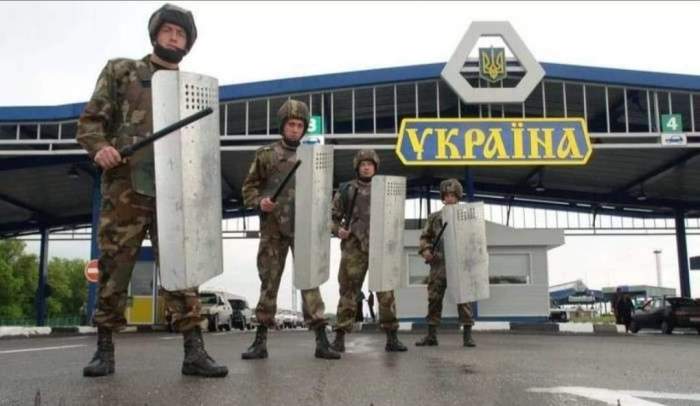
In the Kursk region, which borders Ukraine, there has been an intensification of hostilities as Ukrainian armed forces have reportedly broken through the border and occupied several settlements. According to local authorities, this event has become a serious test of the region's stability, raising questions about the safety of both the civilian population and strategic infrastructure.The conflict between Russia and Ukraine has been ongoing for several years, but the recent escalation in the Kursk region demonstrates a new level of tension. Despite numerous international efforts to stabilize the situation, there has been an increase in incidents along the border recently. These events are further complicated by the presence of strategically important facilities, such as the gas pipeline through which Russia transits gas to Europe.
According to reports received on Tuesday, Ukrainian forces advanced 10 kilometers into Russian territory and entrenched themselves in several settlements. Social media and some media outlets claim that the Ukrainian Armed Forces have managed to occupy up to eleven villages, and the city of Sudzha is under threat of encirclement and capture. This city is of strategic importance because it hosts the last gas pipeline connecting Russia to Europe through Ukraine.
Russian President Vladimir Putin described the events as a "large-scale provocation" by Kyiv. The Russian Ministry of Defense reported losses among Ukrainian units and their subsequent retreat, but also emphasized that the operation to destroy the remaining Ukrainian forces continues. According to the ministry, about 300 Ukrainian military personnel, supported by 11 tanks and more than 20 armored vehicles, attacked Russian border positions in the Nikolayevka-Daryino and Oleshni areas.
While Kyiv has not officially commented on the breakthrough of Ukrainian forces across the border, a representative of the National Security and Defense Council of Ukraine, Andrey Kovalenko, expressed doubts about Russia's ability to control the border situation. In a message on Telegram, he accused the Russian authorities of misinformation and exaggerating their successes.
The international community is closely monitoring developments as the escalation of the conflict could affect Europe's energy security and lead to new diplomatic disagreements. Western countries have already expressed concern about the situation and called on both sides to cease fire immediately and return to negotiations.
The conflict in the Kursk region has become a subject of heated discussions on social media and pro-war Telegram channels. The channel "Rybar," closely associated with the Russian Ministry of Defense, claims that Ukrainian forces have entrenched themselves in the villages of Nikolayevka-Daryino, Daryino, and Sverdlovka. Fighting continues in Goncharovka and Oleshni, and the number of settlements captured by the Ukrainian Armed Forces continues to grow.
Meanwhile, the information war between the two countries is intensifying. Russian and Ukrainian sources provide conflicting data on the progress of hostilities, making it difficult to obtain an objective picture of the situation. It is important to understand that the information disseminated in the media may be used as a propaganda tool to shape public opinion.
The escalation of the conflict is having a severe impact on the lives of civilians. Medical professionals in the Kursk region have reported 24 civilian casualties, including six children, and five fatalities. Medical specialists from federal centers have been dispatched to the region to assist the victims. Authorities have urged residents to actively donate blood to ensure adequate supplies in local hospitals.
The evacuation of civilians and the destruction of infrastructure pose significant humanitarian challenges, requiring prompt response and coordination of efforts at both regional and federal levels.
The escalation of the conflict in the Kursk region could have serious long-term consequences for the region and the entire country. If Ukrainian forces have indeed entrenched themselves on Russian territory, it creates serious threats to both domestic security and Russia's international relations. The breakthrough across the border raises questions about Russia's ability to defend its borders and maintain regional stability.
The international community will be watching developments closely, as any intensification of the conflict could lead to new sanctions and increased pressure on Russia. The escalation of hostilities may also pose additional challenges in Russia's relations with its Western partners, which could, in turn, impact Europe's energy security.
Under the current circumstances, local residents can only hope for a quick stabilization of the situation and a return to normal life in the region. However, it remains unclear how quickly this can be achieved and what other surprises this confrontation may bring.


Similar news