Oil revenues in Azerbaijan are falling: causes and prospects



By Sabina Alizade
The latest monthly report from the International Energy Agency (IEA) presented updated data and forecasts on global oil demand, supply, and stocks up to 2024. The agency's analysts noted several key trends affecting the current and future market dynamics.
According to the latest forecasts, global oil demand in 2024 is expected to be 103.06 million barrels per day, an increase of 974 thousand barrels compared to the previous year. This is a slight increase of 12 thousand barrels per day compared to the previous forecasts by IEA analysts. However, forecasts for 2025 have been revised downward, and demand is expected to decrease by 979 thousand barrels to 104.04 million barrels per day. This change is due to particularly weak demand growth in the second quarter of 2024.China, which has long been the main driver of global oil demand growth, reduced consumption in April and May of this year. This has become part of a general trend of decreasing global market dependence on China's demand, whose share has fallen from 70% last year to about 40% in 2024-2025. Instead, the role of growth drivers has shifted to other developing economies, such as India and Brazil.
Global oil supply in 2024 is expected to grow to an average of 103 million barrels per day, setting a new record. Most of the production increase is expected from non-OPEC+ countries, with an increase of 1.5 million barrels per day. At the same time, OPEC+ countries plan to cut production by 740 thousand barrels per day.
The structure of oil product consumption is also changing: the share of jet fuel in overall demand growth has decreased from 50% last year to less than 30% this year. This is due to the gradual recovery of air travel after the pandemic and changing demand for transportation services.
Azerbaijan, an important player in the global oil market, faces several challenges and prospective changes in its oil industry. In the first half of 2023, oil production in the country decreased by 5.3% compared to the previous year, reaching 14.4 million tons, including condensate. Major fields, such as Azeri-Chirag-Guneshli (ACG) , Shah Deniz , and Absheron , play a key role in the overall oil production in the region.
One of the key events in Azerbaijan's oil industry was the start of the project to increase production at the Azeri-Chirag-Guneshli field. In April 2024, a new platform, ACE, designed to produce up to 100 thousand barrels of oil per day, was put into operation. This project aims to significantly slow down the decline in production, which previously stood at about 35-40 thousand barrels per year, and to stabilize and increase production at the field. It is planned that by 2026, production at the ACE platform will reach its design capacity of 100 thousand barrels per day.
The decline in oil production at major fields, including ACG, has a serious impact on the country's economy. According to the State Oil Fund of Azerbaijan, oil export revenues in the first half of 2024 decreased by 10.2% compared to the same period last year, amounting to 3 billion 5.3 million US dollars.
Global trends, including oil production quota agreements between OPEC+ countries, also affect production in Azerbaijan. In June 2024, the country reduced its oil production quota under OPEC+ agreements by 8,662 tons, demonstrating the need to comply with international energy agreements.
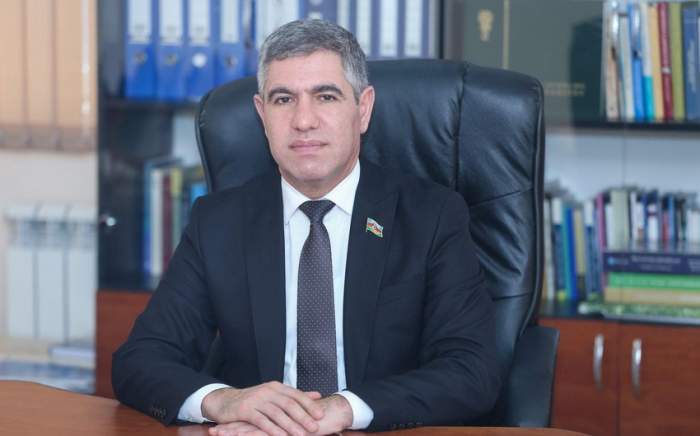
Economic expert Vugar Bayramli noted in an interview with News.Az that despite the more intensive use of green energy, global oil demand remains high.
"In recent weeks, we have seen an increase in global oil prices, which affects forecasts and leads to increased production. The largest oil producers are Saudi Arabia, Russia, and the USA, and they continue to increase production volumes. Their forecasts directly affect global oil production volumes. Thus, the increase in production in these countries is reflected in the overall level of oil production. Investments in increasing production in the Middle East and Persian Gulf countries also play an important role in production growth," said Vugar Bayramov.
The economist also emphasized the importance of the State Oil Fund's revenues for Azerbaijan.
"The oil sector annually transfers about 12 billion manats to the state budget of Azerbaijan, which is approximately half of all budget revenues. These funds come mainly through transfers from the State Oil Fund. Therefore, the priorities are the stability of the Fund's revenues, the sustainability of revenues from the sale of oil products, and the effective management of the Fund's assets," the expert noted.

In turn, Doctor of Economics, Professor Elshad Mammadov noted that the growth in oil and gas demand indicates the inaccuracy of Western claims about the imminent replacement of traditional generation with alternative energy.
"We continue to see the preservation and even growth in demand for oil and gas. This is explained by the fact that, from a purely technological point of view, the role of oil and gas in the economy is not decreasing. In Southeast Asia, where there is significant growth in demand for traditional electricity generation, this is a key driver of global economic growth. Oil and gas remain very profitable and promising directions, and their development indicates that they will continue to play an important role in the economy. Therefore, I believe that the increase in the share of alternative generation does not lead to a decrease in demand for traditional energy resources," said the expert.
E. Mamedov noted that in Azerbaijan, oil production is decreasing from a technological point of view, while prices remain stable with slight increases.
"The decline in production volumes has and will continue to have a serious impact on the economy. We should focus on oil refining and the formation of regional energy markets, as well as the production of high value-added oil products. This can have positive socio-economic results," the economist stated.


Similar news