TRIPP does not threaten – it unites


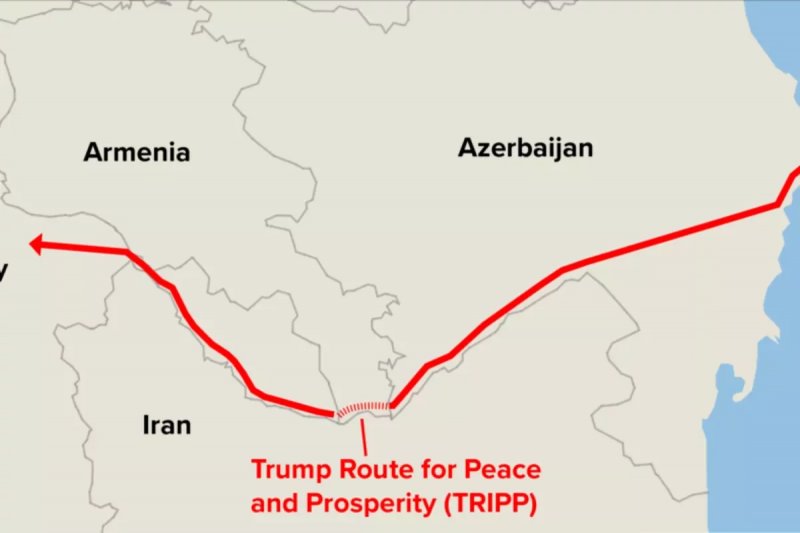
The developments in the Middle East have put many positive initiatives in the region at risk. Among them is TRIPP (Trump Route for International Peace and Prosperity), a project intended to become a second major artery linking Europe and Asia.
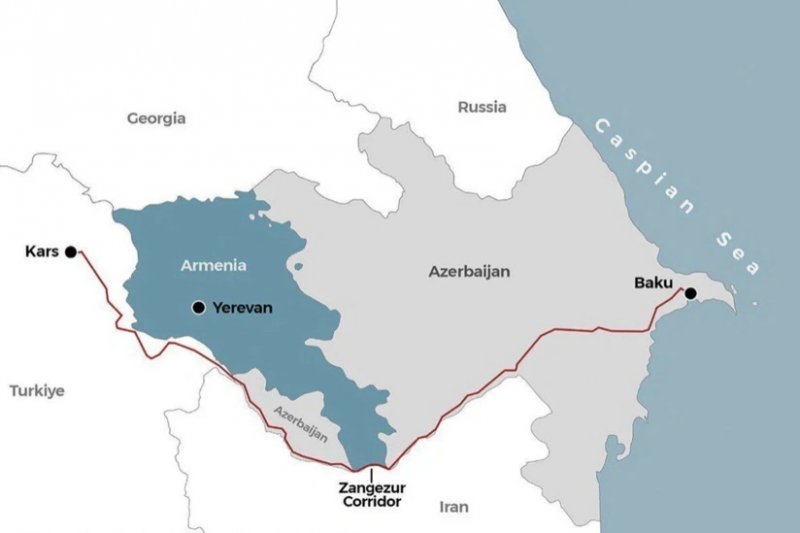
The Zangezur corridor, renamed TRIPP following the Washington meeting on 8 August 2025, initially provoked a negative reaction from Iran. A project that poses no threat was perceived in Tehran as creating risks for Iran’s borders and regional security. Before the involvement of the United States, Armenia largely aligned itself with Iran’s position, attempting to prevent the construction of the corridor. However, as the peace process progressed, Yerevan began to recognise the importance of the project for Armenia itself. Moreover, under its new name, the initiative no longer generated the same level of public sensitivity within Armenian society.
In April, a US delegation was expected to visit Armenia in connection with the launch of TRIPP’s implementation. Naturally, given the current situation, the visit was postponed. While Washington and Tel Aviv had anticipated very different outcomes from the conflict with Iran, its likely consequence will be the strengthening of the Iranian factor in the region. As a result, the TRIPP agenda may be pushed aside entirely, as it cannot be ruled out that communications between western Azerbaijan and Nakhchivan could be viewed by Iran as a potential military target. Such a scenario may be welcomed by the pro-Russian Armenian opposition, but it is certainly not in the interests of Azerbaijan, Türkiye, or the current Armenian government.

Source: APA
Recently, Armenian Prime Minister Nikol Pashinyan stated that Armenia would open a railway connection with Azerbaijan. According to him, the country is entering a new phase of economic development. The railway link will initially be launched within the framework of the TRIPP project.
However, this optimism is not shared by the opposition, which believes that the war involving the United States and Israel against Iran has effectively buried TRIPP. Even if the project is implemented, they argue, the route could become a legitimate military target for Iran.
Meanwhile, TRIPP remains a purely geo-economic project that poses no threat to any of Azerbaijan’s or Armenia’s neighbours.
Today, TRIPP is viewed as one of the key infrastructure projects in the South Caucasus, capable not only of reshaping the region’s logistics map but also of becoming an important driver of economic growth and sustainable peace. Its significance goes far beyond a simple transport corridor — it represents a complex system integrating transport, energy, and digital infrastructure.
TRIPP is a multifunctional infrastructure corridor that includes railways, highways, pipelines, power transmission lines, and fibre-optic networks. Its primary goal is to connect Azerbaijan with Nakhchivan through Armenian territory and to integrate the South Caucasus into the broader Eurasian transport network, including the Middle Corridor (Trans-Caspian International Transport Route).
TRIPP is not merely a 43-kilometre road linking two parts of Azerbaijan. It is part of the formation of new overland routes between Europe and Asia, capable of reducing dependence on congested or politically unstable directions. One of its key advantages is its potential to transform the region into a major transit hub between East and West. TRIPP reduces delivery times, increases cargo volumes, and diversifies trade routes — an especially important factor given the instability of traditional routes through Russia and Iran.
For Azerbaijan, this means strengthening its role as a logistics hub; for Armenia, it offers a way out of transport isolation and an opportunity to become a transit country.
Does any of this pose a threat to Iran? No.
TRIPP also includes energy infrastructure — oil and gas pipelines, as well as electricity transmission lines. This creates new export routes for energy resources, enhances the resilience of regional energy systems, and opens opportunities for the transfer of green energy. In other words, it strengthens energy integration in the region — an area in which Iran itself could participate effectively and successfully.
Projects of this kind attract investment, create jobs, expand and modernise infrastructure, and improve connectivity. According to experts, the economic impact of TRIPP will extend beyond the participating countries to neighbouring states involved in transit chains. Increased economic integration will also contribute to regional security, as economic interests reduce the likelihood of conflict.
Source: Trend
Despite political speculation surrounding the project, its essence remains purely economic and infrastructural. Allegations circulated by opponents are unfounded. In reality, TRIPP has no military component and does not envisage the deployment of military bases, territorial control, or border changes. It is strictly a transport and energy project aimed at developing trade and communication.
The project is being implemented on Armenian territory with full respect for its sovereignty, including control over borders, customs, and security. There is no question of “extraterritoriality” or loss of control — terms that were frequently used in Armenian expert discourse and supported by Iran just a year ago.
Due to the lack of substantive arguments from its opponents, no meaningful discussion has taken place around the project. Critics of TRIPP have had little to present beyond stubbornness and unsubstantiated threats. Such rhetoric continues to be voiced by some representatives of Iran’s security structures even today. Azerbaijan has repeatedly stated at the official level that it sees no threat in TRIPP and considers it solely a connectivity project. On the contrary, its implementation is expected to reduce tensions, build trust, and strengthen peace — an outcome that appears self-evident.
TRIPP is not a zero-sum game. It will benefit all parties, including Iran. A country that has remained isolated for many years could gain new opportunities by integrating into emerging transport routes. Iran could connect to the Middle Corridor, which currently bypasses it, and become an indispensable link in the South-West corridor. This is particularly important in light of the challenges Iran may face after the current conflict.


Similar news