Orbit realignment: Armenia drifts back to Russia


By Tural Heybatov
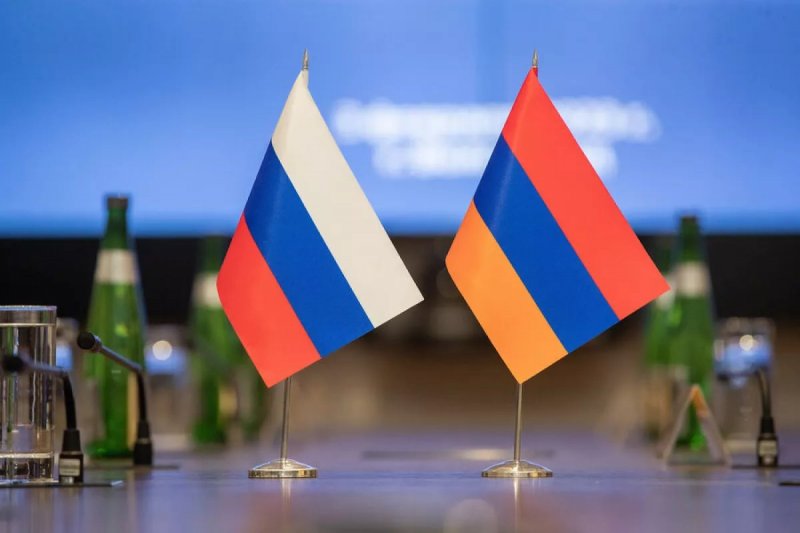
Recent developments in Armenia suggest a growing strategic recalibration in Yerevan, as the country vacillates between its traditional ties with Moscow and its stated ambition to integrate with the West. While Armenian officials continue to insist that no geopolitical shift is underway, the facts on the ground paint a far more nuanced—and conflicted—picture.
During a recent press interaction, Speaker of the Armenian Parliament Alen Simonyan appeared visibly irritated when asked about Armenia’s evolving relationship with Russia. Though he rejected suggestions of a pivot away from Moscow, he failed to offer any substantive rationale to support his claim. Instead, Simonyan vaguely remarked that “questions have arisen and will continue to arise,” avoiding a direct response about the visible thaw in relations between Yerevan and the Kremlin.
The ambiguity reflects deeper tensions. In Armenian political discourse, Russia is often accused of "betrayal"—a reference to Moscow’s lack of intervention during the 44-day Nagorno-Karabakh war in 2020 and subsequent security crises. For a nation that spent nearly two centuries aligning itself with Russian imperial and later Soviet interests—often receiving territorial and political rewards in return—Russia’s neutrality came as a profound shock.
Source: Caliber
This perceived abandonment prompted Yerevan to explore new strategic alignments. Following the outbreak of war in Ukraine and the imposition of sweeping Western sanctions on Russia, Armenia intensified its outreach to the West. Talk of visa liberalization with the European Union gained momentum, and Armenian officials openly floated the idea of EU accession. The country’s parliament even began drafting legislation to formalize this trajectory. At the time, Armenia appeared poised to embrace a Western path.
However, geopolitical winds shifted yet again. The change of administration in Washington recalibrated U.S. regional priorities. Enthusiasm in Brussels cooled. Armenia’s dream of Western integration—though never grounded in solid guarantees—began to fade. A symbolic declaration of strategic partnership with the U.S. Democrats, largely driven by Armenian diaspora lobbying, was signed but yielded no tangible benefits. Today, it is widely recognized as more performative than practical.
Faced with dwindling Western enthusiasm and increasing economic pressures, Yerevan has quietly started to mend fences with Moscow. According to Armenian media, Prime Minister Nikol Pashinyan has instructed government agencies to resume active cooperation with their Russian counterparts and re-engage in joint initiatives. In a strikingly paradoxical move, this policy U-turn came just one day before the Armenian parliament adopted a draft bill to begin the EU accession process.
Armenia’s attempt to maintain equidistance—or, more accurately, dual allegiance—is proving increasingly untenable. Russian officials have taken notice. “If Armenia is moving toward Europe, then we will have to reconsider the entire scope of our economic relations,” warned Russian Deputy Prime Minister Alexey Overchuk, adding bluntly: “You cannot sit on two chairs at once.”
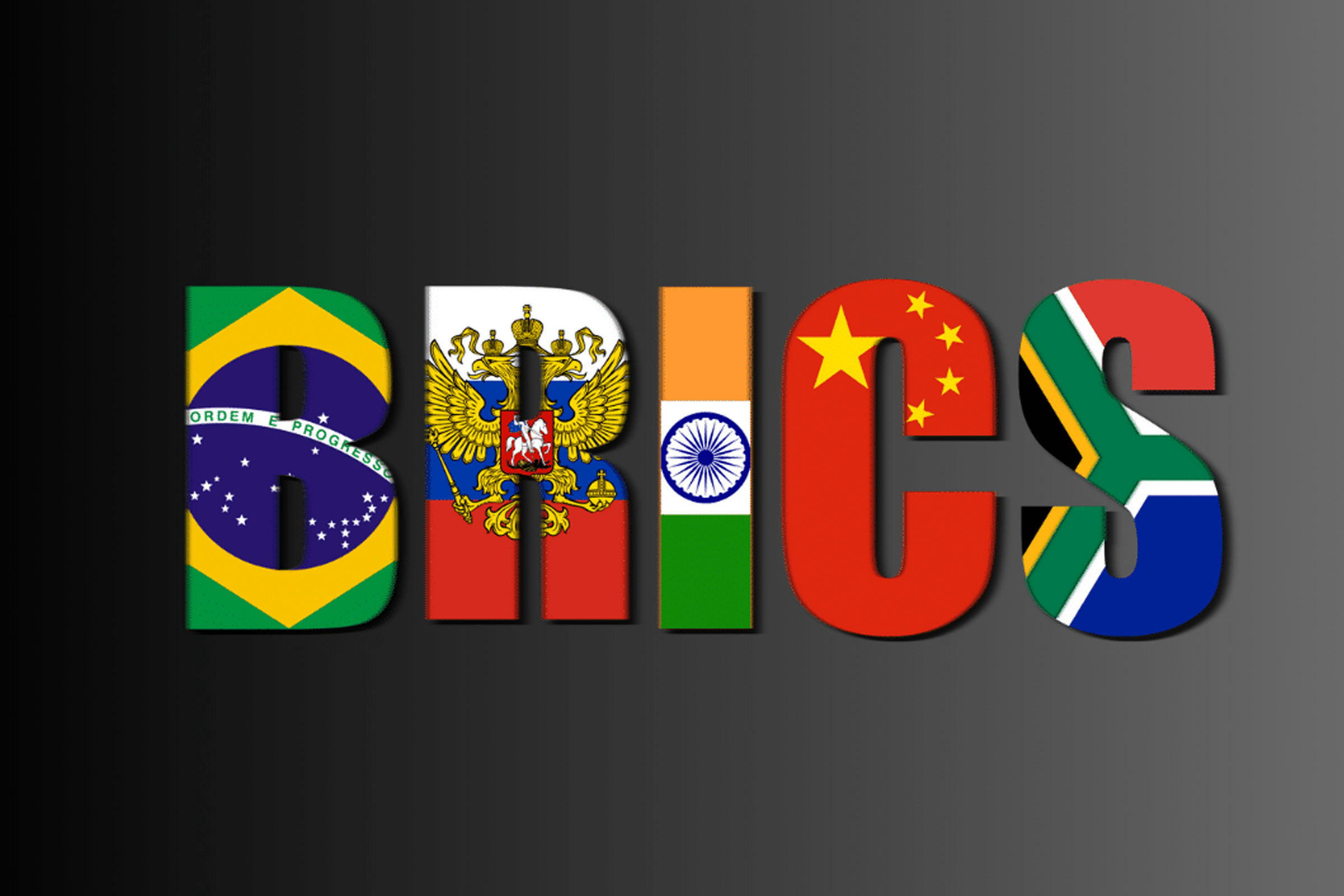
Signs of rapprochement with Moscow are becoming difficult to ignore. After years of anti-Russian rhetoric dominating the public discourse in Armenia, Foreign Minister Ararat Mirzoyan’s recent birthday call to his Russian counterpart Sergey Lavrov took many by surprise. Mirzoyan later announced that Armenia was seeking observer status in BRICS—a bloc that includes Russia and China and positions itself as a counterweight to Western-led institutions. This marks a significant departure from earlier government statements explicitly dismissing any intention of joining BRICS.
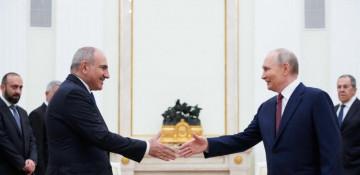
Source: TASS
Furthermore, speculation is growing that Prime Minister Pashinyan will attend the Victory Day Parade in Moscow on May 9—a significant symbolic act, particularly after years of distancing Armenia from Eurasian structures. His name has already appeared on the list of confirmed attendees. This marks a dramatic shift for a leader who had previously cast himself as a champion of Western integration.
The return to a more cooperative stance with Moscow may not be entirely voluntary. Armenia’s post-2020 economic boom—driven by re-exports of sanctioned goods and a temporary influx of Russian IT professionals—is rapidly fading. With the prospect of sanctions on Russia being lifted under a potential second Trump administration, Armenia’s fragile economic model could unravel. Western powers, preoccupied with more strategic priorities, are unlikely to step in with financial lifelines. The notion of Armenia joining the EU or NATO has always been aspirational; today, it appears almost delusional.
This forced realignment is producing tangible diplomatic consequences. Yerevan has recently shown flexibility on several previously unresolved points in peace negotiations with Azerbaijan—an implicit acknowledgment of changing geopolitical constraints. The collapse of illusions about Western patronage is pushing Armenian officials to recalibrate their positions, even if reluctantly.
The broader lesson here is that small states cannot afford strategic ambiguity in a world increasingly defined by binary alignments. Armenia’s geography and history tie it to Russia in ways that Brussels and Washington have neither the incentive nor the capability to replicate. The mirage of European integration has dissipated. What remains is a stark geopolitical calculus.

Unless U.S. administration chooses to prioritize Armenia as part of its regional agenda—and unless that commitment is backed by concrete security and economic guarantees—France’s symbolic gestures will remain insufficient. Armenia’s fundamental challenge is structural: it cannot exist without a patron. And with the West receding, only one option remains.
Armenia is not so much choosing Russia as it is being pulled back into its orbit by gravitational inevitability.


Similar news