Qatar strengthens its position in the global energy market: A bet of over $3 billion


By Samir Muradov
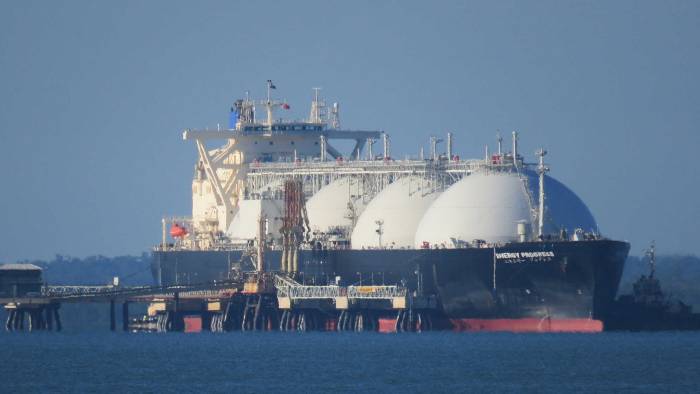
Qatar plans to invest $3.3 billion in the construction of a new fleet for transporting liquefied natural gas (LNG). This initiative was reported by South Korean media, citing sources in the shipbuilding industry. According to industry representatives, leading South Korean shipbuilding companies such as HD Korea Shipbuilding, Samsung Heavy Industries, and Hanwha Ocean are in negotiations with QatarEnergy. The discussions focus on the construction of ten large Q-Max-sized LNG carriers, each capable of transporting up to 270,000 cubic meters of LNG. These vessels will play a key role in Qatar's ambitious plans to expand its natural gas exports to the global market. Since 2022, QatarEnergy has been actively expanding its fleet of LNG carriers, signing a series of long-term time-charter agreements for the operation of 104 LNG carriers.This move is aimed at supporting QatarEnergy's massive increase in LNG production capacity, which will be a crucial factor in achieving Qatar's energy strategy. As part of this strategy, Qatar plans to significantly increase its LNG production and export volumes, utilizing an upgraded and expanded fleet. Special attention is being paid to projects at the North Field, the world's largest gas field. Two major interconnected projects are being implemented here: North Field East (NFE) and North Field South (NFS). The NFE project involves the construction of an LNG plant with a capacity of 32 million tons per year, which will increase Qatar's total production capacity to 110 million tons per year by 2025. Meanwhile, the NFS project includes the construction of another plant with a capacity of 16 million tons per year, bringing the country's total production capacity to 126 million tons per year by 2027. These projects are key to achieving Qatar's energy production goals and ensuring the long-term stability of LNG supplies to the global market.
In addition to projects in Qatar, QatarEnergy is actively involved in international initiatives. Notably, the company has a significant stake in the Golden Pass LNG project in the United States, where it owns 70% of the shares, with the remaining 30% held by ExxonMobil. The plant's construction was initially planned with a capacity of 15.6 million tons of LNG per year, but it is now expected to expand to 18.1 million tons. The first of three production lines is expected to begin operations as early as 2024. This project plays a crucial role in QatarEnergy's global strategy to strengthen Qatar's position as a leading global LNG exporter. By the end of the decade, Qatar plans to increase its total LNG production to 142 million tons per year.
To achieve this goal, QatarEnergy has already signed a number of significant contracts. In 2023, the company signed an agreement with the South Korean shipbuilding company HD Hyundai Heavy Industries (HHI) for the construction of 17 LNG carriers with a total value of $3.9 billion. These new vessels will be incorporated into QatarEnergy's fleet and will play a key role in ensuring sustainable LNG supplies to global markets. In April 2024, QatarEnergy signed long-term time-charter agreements with four international shipowners, allowing it to operate 19 new LNG carriers for the transportation of liquefied natural gas. These tankers will be used to ensure stable and long-term LNG supplies to key markets around the world. The signed contracts demonstrate Qatar's commitment to strengthening its position in the global energy market, as well as ensuring the stability and reliability of LNG supplies in response to growing global demand for natural gas.
These steps vividly demonstrate Qatar's ambition to become the undisputed leader in the global liquefied natural gas (LNG) market. The substantial investment in expanding and modernizing its fleet of LNG carriers is just one component of a broader strategy aimed at strengthening the country's position as the largest exporter of natural gas. In a world where the demand for energy resources is growing, particularly as many countries transition to cleaner energy sources, LNG is becoming an increasingly sought-after commodity. Qatar, with some of the world's largest natural gas reserves, is striving to maximize the efficient use of its resources to meet this rising demand.
The expansion of the LNG carrier fleet, along with participation in international projects like Golden Pass LNG in the United States, not only strengthens Qatar's presence in the global market but also gives the country the flexibility to respond to changes in global energy policies. These initiatives enable Qatar to offer competitive supply terms for LNG, securing long-term contracts with key global consumers. It is important to note that collaboration with leading South Korean shipbuilding companies and major international shipowners underscores the high level of trust in Qatar as a reliable partner in the global energy market.
Moreover, investments in expanding and modernizing production capacities at the North Field, as well as at other facilities, including projects outside Qatar, signal the country’s serious intent to secure a leading position in global energy production. QatarEnergy's strategy is focused on ensuring long-term energy security, not only for Qatar but also for its partners worldwide. The goal to increase LNG production to 142 million tons per year by the end of the decade reflects the ambitious nature of the country's plans and its readiness for global expansion.
Thus, the current investments and signed contracts are merely a part of a larger strategy aimed at transforming Qatar into a key player in the global energy market. In the coming years, Qatar intends not only to solidify its position but also to set an example for other countries, demonstrating how to effectively utilize natural resources to achieve economic prosperity and energy stability on the international stage.


Similar news