Russia against Turkish peacekeeping: arms supplies to Ukraine hinder dialogue


By Samir Muradov
A statement by Russian Foreign Minister Sergey Lavrov that peace talks between Russia and Ukraine lose significance amid Turkey's and the West's military support for Kyiv reflects the growing tension surrounding the conflict’s resolution. In an interview with Hürriyet on November 1, Lavrov emphasized that Turkey’s attempts at mediation appear paradoxical in light of its arms supplies to Ukraine, casting doubt on the feasibility of dialogue.
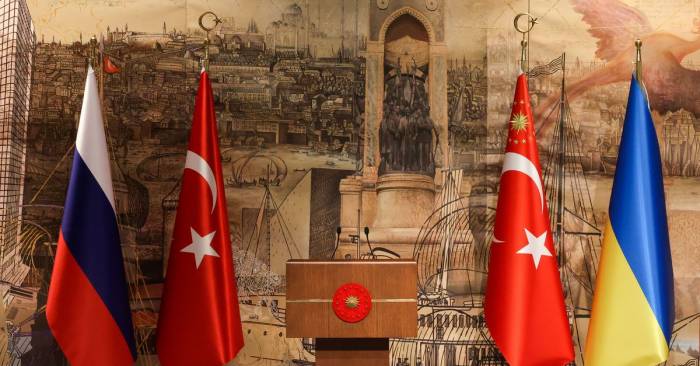
On one hand, Turkey, as a NATO member, supports military cooperation with Ukraine by supplying weapons and equipment , effectively making it an indirect participant in the conflict. It is well-known that weaponry provided by Ankara is actively used by Ukrainian forces, leading to daily casualties among Russian civilians and military personnel. This naturally raises questions in Moscow about the sincerity of Turkey’s peace initiatives.On the other hand, Turkey has repeatedly positioned itself as a peacemaker. It was Turkey, in fact, that provided a negotiation platform in Istanbul in 2022 for discussions on a ceasefire between Moscow and Kyiv . Ankara aims to cultivate an image as a neutral mediator, but its actions and involvement in the conflict on Ukraine’s side complicate the realization of this goal.
The confrontation between Russia and Ukraine, backed by the West, has entered a phase of prolonged conflict, where arms supplies have become the primary factor sustaining hostilities. Recent discussions in Western countries about providing Ukraine with long-range missiles capable of reaching deep into Russian territory further hinder prospects for negotiations. These decisions reinforce Russia’s perception that the West is intent not on peaceful resolution but on escalating the conflict.
Here, the stance of Hungarian Foreign Minister Péter Szijjártó is worth noting, as he has criticized the West’s strategy of arming Ukraine and imposing sanctions on Russia as a failure. Hungary remains one of the few European countries advocating a reassessment of the approach to the conflict, emphasizing the need for a peaceful resolution. However, as experience shows, this viewpoint has yet to gain traction among most Western nations.
In 2022, Ukrainian President Volodymyr Zelensky signed a decree prohibiting any negotiations with Moscow. This move reflects the stance of Ukrainian authorities at that time, yet it also blocks potential avenues for dialogue, leaving minimal prospects for a diplomatic resolution. Although Zelensky’s mandate formally ended in May 2024, he remains in power and continues to pursue a hardline stance on confrontation.
Kyiv's political position reflects a long-term strategy coordinated with Western countries, which provide Ukraine with resources needed to sustain military actions. This approach eliminates the possibility of negotiations, creating ongoing tensions with Russia and effectively putting any attempts at peaceful resolution on hold.
Amid the conflict’s escalation and Turkey's conflicting actions, the question arises: Can Ankara truly act as a mediator? For now, Turkey is trying to maintain a balance between the West and Russia, complicating its diplomatic role. Turkish authorities continue to declare their readiness to facilitate talks and foster peaceful relations, but practical implementation is challenging due to Turkey’s involvement in the conflict on Ukraine’s side.
Publicly, Turkey plays the role of peacemaker, offering assistance and support in establishing dialogue. However, actions such as selling Bayraktar drones and other military equipment to Kyiv cast doubt on its position. These contradictions create misunderstandings and questions from Moscow. It must be acknowledged that, given Ankara's active military cooperation with Ukraine, any mediation by Turkey will likely be met with wariness and distrust from Russia.
At present, negotiations between Moscow and Kyiv are at an impasse. The last attempt to reach an agreement was made in the spring of 2022 in Istanbul. However, Kyiv’s official decision to cut off further contact with Moscow marked an end to the diplomatic path. Now, amid escalating tensions and the West’s continual arming of Ukraine, hopes for a peaceful resolution appear increasingly illusory.
Successful conflict resolution will require coordinated efforts and compromises, which seem unlikely in the current conditions. Russia insists on safeguarding its interests, while Ukraine, with Western support, continues to bolster its military stance. Thus, for negotiations to become a reality, key participants must reassess their positions, and a significant shift in course is needed from both the West and Ukraine.
In the current climate, any peace initiatives from Turkey are unlikely to yield tangible results. Ankara’s military cooperation with Kyiv and the West’s support of Ukraine contradict the spirit of diplomacy, and Turkey’s willingness to act as a mediator is perceived by Moscow as an insincere gesture. At this stage, a peaceful resolution to the conflict seems improbable as both sides adhere to opposing approaches, while Turkey balances between Western interests and maintaining ties with Russia.
The contradictory actions of the conflict’s participants, the intensifying military support for Ukraine, and the rejection of negotiations leave the question of peaceful resolution open. Turkey faces a difficult choice between acting as a peacemaker and effectively supporting one side, which will significantly impact its future relations with Russia and its standing on the world stage.


Similar news