Six principles for a new world order: What has Putin proposed to the world?


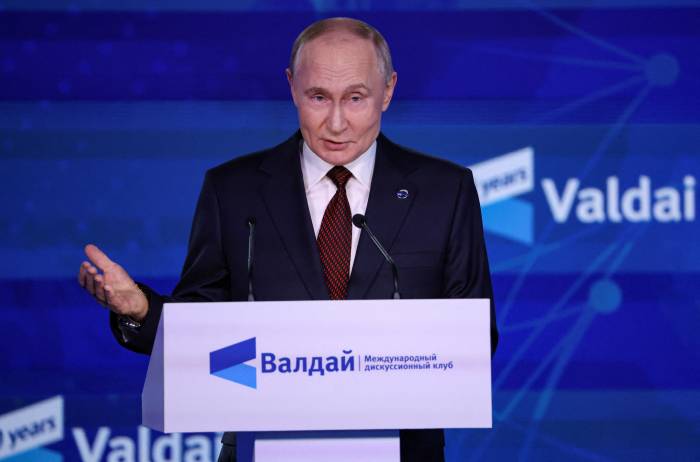
On November 7, 2024, Russian President Vladimir Putin delivered a speech at the 21st meeting of the Valdai International Discussion Club in Sochi. The main theme of the session was “A Lasting Peace – On What Basis? Universal Security and Equal Development Opportunities in the 21st Century.” Putin’s speech included key statements about the future of the international order, Russia’s role in global politics, and the principles he believes will foster equality and justice for all nations.
Six principles for a new world orderOne of the focal points of Putin’s address was the presentation of six principles that he believes should form the foundation of a new world order. These principles reflect Russia’s aim to promote a diverse, multipolar world where Western hegemony and the dominance of a single culture over others are rejected.
1. Openness to cooperation. Putin emphasized that most countries and peoples aspire to open international relations built on cooperation and the free exchange of ideas and technology. He noted that attempts to erect artificial barriers and apply sanction pressure only hinder international development, particularly amid global challenges such as natural disasters and socio-political upheavals.
2. Diversity as a foundation for stability. The Russian president called for a polycentric and “polyphonic” world order, where the voices of both developed economies and developing countries are heard and respected. According to Putin, this diversity is essential for achieving global stability.
3. Principle of maximum representation. With the world moving towards multipolarity, Putin urged the creation of mechanisms that allow all international relations participants to contribute meaningfully to addressing global problems. Regional organizations should play a significant role in this process, as neighboring countries often share interests in maintaining regional security and stability.
4. Security for all. Putin stressed that the modern international system should be open and flexible and that a bloc-based approach is incompatible with the nature of a new world order. He cited BRICS as an example, which seeks to establish non-bloc, voluntary relations based on cooperation and mutual understanding rather than coercion.
5. Justice for all. Russia advocates for the removal of politically motivated obstacles to development, which hinder the economic and social growth of many countries. Issues like food security, energy, and access to education and healthcare should transcend political conflicts and form the basis for global cooperation.
6. Sovereign equality. Putin called for a reassessment of outdated stereotypes that divide the world into “developed” and “underdeveloped” nations. In his view, all countries have the right to their own visions and cultural identities, and respect for each nation’s sovereignty and unique characteristics should underlie international cooperation.
Ukraine crisis and NATO confrontation
In discussing the Ukraine conflict , Putin highlighted NATO’s actions, which he argued were intentionally setting the stage for escalation by positioning bases near Russia’s borders and supporting politically extreme forces. He underscored that Russia is defending not only its interests and sovereignty but also standing up for the rights and freedoms of many states facing Western pressure. In response to sanctions and political pressures, Putin stated that Russia is open to dialogue, but only on the basis of mutual respect for each side’s interests.
Energy in the new world order and climate agenda
A significant part of the session focused on energy issues and climate change. In light of global warming and the threat of devastating ecological impacts, Putin drew attention to Russia’s particular vulnerability, where temperatures have increased by 0.5°C over the last decade and by 0.7°C in the Arctic. Much of Russia’s territory lies within permafrost zones, and warming in these regions could lead to considerable economic and environmental consequences.
With one of the world’s most “green” energy structures, Russia ranks among countries with low emissions. Natural gas accounts for 40% of Russia’s energy generation, while low-emission sources make up 85% of the country’s total energy generation. However, Putin highlighted that the “green agenda” is increasingly being used as an economic weapon, with developed nations pushing developing countries to adopt renewable energy without providing the necessary financial and technological support.
Green agenda and economic barriers
Putin criticized Western countries for using the environmental agenda as a tool to limit the development of lower-income nations. He pointed out that countries aggressively promoting renewable energy still continue to increase coal production, particularly in Europe. This, he argued, reflects double standards in international policy and turns the “green agenda” into a tool of neo-colonialism. Putin called for a fair distribution of resources and conditions under which all countries could transition to new technologies without jeopardizing their economic development.
Russia-China partnership
According to Putin, Russia-China relations have reached an unprecedented level of mutual trust. Energy cooperation between the two countries, including the supply of gas, oil, and the development of nuclear energy, has laid the foundation for mutually beneficial economic relations and China’s energy security. Amid geopolitical instability, this partnership enables both countries to expand cooperation in energy and technology.
In contrast to the strained relations with the West, cooperation with China is based on trust and mutual interests, highlighting the difference in international approaches. Russia and China have built a partnership model based on independence, allowing them to confidently expand cooperation despite Western pressure.
Relations with the U.S. and congratulating Trump
Congratulating Donald Trump on his election victory in the U.S., Putin expressed a willingness to restore relations between the two countries. However, he noted that the U.S. should take the first step, considering the accumulated contradictions and political barriers. Putin stated that Moscow is open to cooperation if Washington respects Russia’s sovereign interests. Nevertheless, relations remain uncertain, and much will depend on the positions of the new American leader.
Internet and artificial intelligence
Special attention was given to the development of the Internet and artificial intelligence (AI). Putin noted that Internet regulation should align with the internal laws of each country and be based on sovereign algorithms. The Russian leader also emphasized the need for a national AI platform, as Western developments often reflect the liberal and politically motivated views of their creators. According to him, Russia has all the necessary resources to develop its own AI, allowing the country to avoid dependence on foreign technologies.
Putin’s speech at the Valdai Forum marked another step in strengthening Russia’s position in international politics. The six principles of a new world order underscore Russia’s desire to create a multipolar world where all countries can develop freely and establish mutually beneficial relations. Amid global challenges such as climate change, energy crises, and international political tensions, Russia positions itself as a proponent of justice, openness, and mutual respect.
(If you possess specialized knowledge and wish to contribute, please reach out to us at opinions@news.az).


Similar news