Talks stalled, missiles unveiled: Iran and the U.S. head toward confrontation




Editor's note: Moses Becker is a special commentator on political issues for News.Az, a PhD in political science and an expert on interethnic and interreligious relations. The article expresses the personal opinion of the author and may not coincide with the view of News.Az.
Recent developments surrounding Iran and Yemen are becoming increasingly alarming. The sudden cancellation of Israeli Prime Minister Benjamin Netanyahu’s visit to Azerbaijan is not only linked to the growing tensions in the region—which, incidentally, has never been free of volatility—but more likely tied to the ongoing negotiations between the United States and Iran. After all, Netanyahu recently visited Hungary, which suggests the cancellation had more to do with shifting diplomatic priorities than logistics.
It appears that the negotiation process is dragging on, much to the frustration of U.S. President Donald Trump, who has already grown impatient with the lack of progress. On May 7, 2025, Trump issued a stark warning: Iran must not possess nuclear weapons, and if the leadership of the Islamic Republic decides otherwise, the U.S. response will be severe. Both sides are currently working to arrange a new round of talks on May 10–11. Previous consultations scheduled for May 3 collapsed. While Omani mediators cited “technical difficulties,” uncertainty is mounting around the prospects for any meaningful agreement between Tehran and Washington.
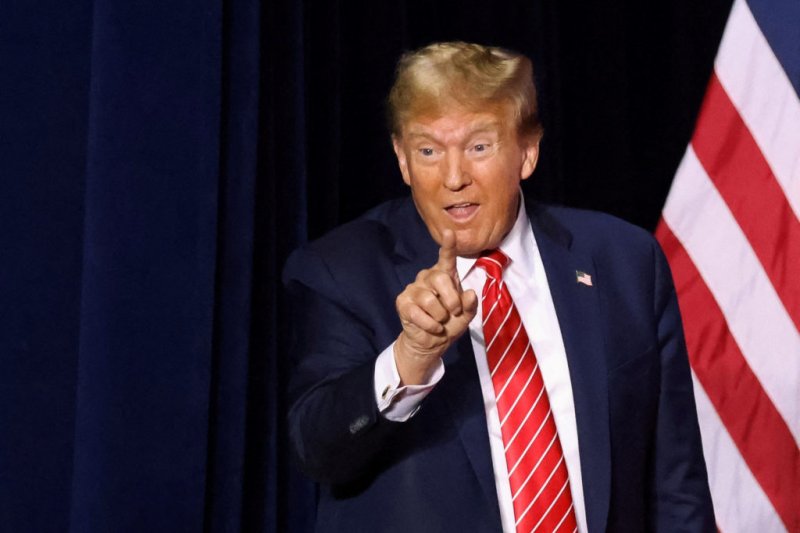 Photo: Reuters
Iranian negotiators are known for their ability to stall and deflect substantive discussion. Bargaining in the East is an art form that often eludes Western comprehension. Initially, Trump set a two-month deadline for reaching an agreement, a period set to expire on May 12. Yet despite the approaching deadline, the two sides remain far from mutual understanding. Tehran is unwilling to back down, viewing the nuclear issue as a final red line—and a vital source of leverage to maintain its status as a regional power.
U.S. Special Envoy for the Middle East Steve Witkoff has confirmed Washington’s willingness to proceed with the new round of talks this coming weekend, though he noted that the meeting may again be postponed. Trump is scheduled to embark on a Middle East tour from May 13 to 16, during which he hopes to align positions with U.S. allies on Iran’s nuclear and missile programs—issues of shared concern throughout the region.
Tehran, fully aware of its fragile position, has expressed a continued commitment to diplomacy and dialogue. Iran’s Foreign Ministry stated that the country is “ready to be flexible” with regard to the timing of talks. “What matters to us is the behavior and attitude of the U.S. negotiating team,” said officials in Tehran, adding that “contradictory” statements from Washington are “useless and will not affect Iran’s determination to uphold its position.”
This was a clear reference to Trump’s remarks calling for the complete dismantling of Iran’s nuclear program—despite earlier indications from the U.S. that peaceful nuclear activity could be considered. These policy shifts play into Tehran’s hands, which has long mastered the art of exploiting an adversary’s uncertainty.
In an effort to push Iran into concessions, Trump once again threatened tighter sanctions against buyers of Iranian oil. In response, Iranian Foreign Minister Abbas Araqchi urged Washington to avoid making “unrealistic demands” during what he described as “delicate negotiations.” On the sanctions issue, Tehran asserted that it had “taken all necessary measures” to counter their impact. Iran’s position remains firm: it seeks recognition of its right to peaceful nuclear energy, removal of sanctions, and a halt to discussions regarding its influence over regional affairs. In short, Tehran wants everything to remain as it is.
However, at the regional level, the ayatollahs’ regime no longer inspires fear. Nor does it have the financial resources to maintain or gain new allies. Israel, for its part, will never accept the existence of Iranian nuclear infrastructure, which is a cause of concern for all U.S. allies in the region. Washington is unlikely to allow Iran to continue enriching uranium, especially given the ease with which enrichment could be escalated from 3.67% to 60%, and ultimately to weapons-grade levels. This central contradiction undermines the entire negotiation process.
Tehran has claimed it is capable of “resolving all concerns” about acquiring nuclear weapons. However, the U.S. is unlikely to focus solely on Iran’s nuclear program, given that the regime’s foreign policy is inherently expansionist and aimed at regional domination. Even in its weakened state, Iran still poses a threat, and its nuclear ambitions remain the last leverage it has to restore its previous status quo. That is why Tehran is unlikely to accept American terms.
Amid growing uncertainty, Iran is signaling its readiness to confront both the United States and Israel. The Islamic Republic’s Ministry of Defense recently unveiled a new ballistic missile that Tehran claims is virtually immune to U.S. and Israeli missile defense systems. Iranian officials warned that U.S. military facilities could be targeted if aggression occurs. Still, such rhetoric alone is insufficient. In response, Israel showcased its own ultra-precise, high-speed missile just days ago—reinforcing the stark contrast between the two countries’ military capabilities.
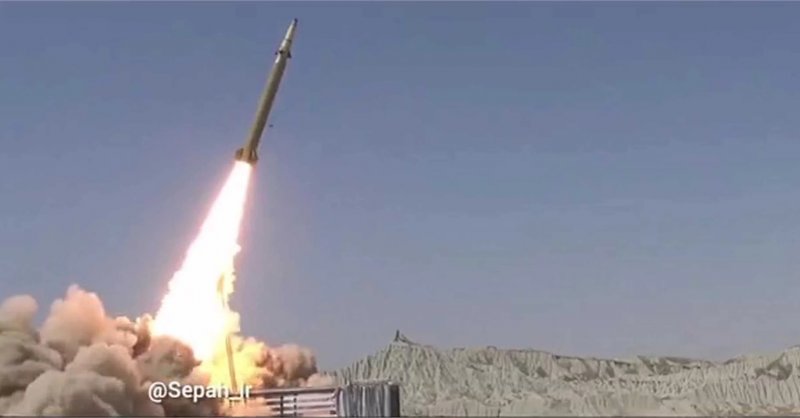 Iranian test of an 1,200 kilometer range “Qassem Basir” missile, April 16, 2025. (Photo: Iran Defense Ministry)
Perhaps for this reason, a surprising and encouraging announcement came overnight. “The Houthis told us they no longer wish to fight. We respect that and will cease airstrikes,” Trump said during a meeting with Canadian Prime Minister Mark Carney. Omani authorities confirmed that the United States and Yemen’s Houthi rebels had reached a ceasefire agreement. “Following recent discussions and contacts aimed at de-escalating tensions, the parties have agreed to a ceasefire,” said Omani Foreign Minister Badr al-Busaidi.
According to him, “neither side will attack the other, ensuring freedom of navigation and uninterrupted movement of international commercial vessels in the Red Sea.”
Meanwhile, on May 5 and 6, the Israeli Air Force conducted massive strikes on Yemen’s capital, Sanaa. The strikes primarily targeted civilian infrastructure. Jerusalem emphasized that the air raid was a response to a Houthi missile attack on Ben Gurion Airport. The Israeli military also struck Yemen’s Hodeidah Port and a cement factory near Bajil. The IDF claimed the port was used to transport Iranian weapons and military supplies, while the cement factory supported the construction of tunnels and other military infrastructure. Israeli jets also targeted key power stations in Sanaa used by the Houthis.
Eyewitnesses reported that the airport was “completely destroyed,” and a source in Sanaa told Ynet: “The sky is filled with smoke. There’s fear and panic all around.”
As a result, Iran’s last significant ally—the Yemeni Houthis—appears to be bowing out of the conflict due to severe shortages of fuel, munitions, and other resources. All eyes now turn to Tehran: how will the ayatollahs’ regime respond to mounting U.S. pressure and the wave of industrial disasters crippling its ports, plants, and power stations?
(If you possess specialized knowledge and wish to contribute, please reach out to us at opinions@news.az).


Similar news