Gold seen reaching new records as Russia cuts reserves


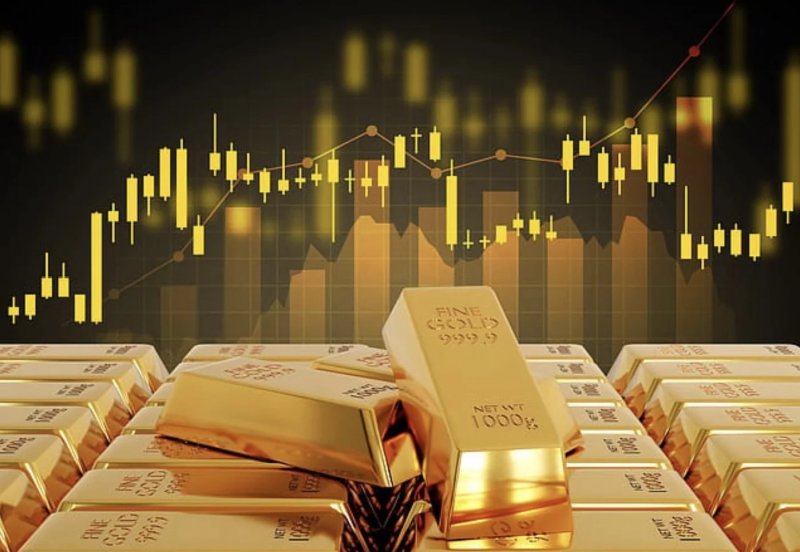
The global gold market is undergoing its biggest transformation in decades. According to the annual Gold Focus 2026 report by consulting firm Metals Focus, reviewed by The Insider, investment is becoming the main source of demand for gold amid record prices, while traditional consumption in the jewelry sector is falling rapidly.
Of course, inflation since then means that the dollar-denominated price of gold has been far higher than those reached in 1980, News.Az reports, citing The Insider.
RECOMMENDED STORIES
The average price in 2025 was $3,432 per troy ounce, and in January 2026 gold hit a record high of $5,595, though Metals Focus analysts forecast that the average price seen in 2026 will be $4,920 an ounce.
Why gold keeps getting more expensive
Analysts say the price increase is not only about supply and demand. Investors are increasingly worried about rising U.S. government debt, trade conflicts, geopolitical instability, and uncertainty over U.S. economic policy.
Against that backdrop, gold is increasingly viewed as a reliable way to preserve capital. Many central banks also continue to increase the share of gold in their reserves, thereby reducing their dependence on the dollar.
Investors have become the main buyers of gold
The most notable trend in recent years is the changing structure of demand, as high prices have forced consumers to cut back on jewelry purchases. In 2025, global demand for gold jewelry fell 19%, reaching one of the lowest levels ever recorded. Buyers are increasingly choosing lighter pieces or postponing purchases altogether.
At the same time, interest is growing in gold bars, coins, and other investment products. Last year, physical investment in gold rose 16%, reaching their highest level in 12 years.
Gold purchases were especially active in China and India. In China, investment demand exceeded jewelry demand for the first time. Metals Focus forecasts that in 2026, investment demand will overtake jewelry demand globally for the first time.
Central banks continue to bet on gold
Central banks continue to be among the largest buyers of the metal. In 2025, they purchased 848 tons of gold. Although that was below the record levels of previous years, it remains very high by historical standards. Poland, Brazil, and several African countries were among the most active buyers.
Metals Focus believes central banks are unlikely to sharply raise interest rates to fight inflation. Analysts say authorities are more likely to tolerate higher price growth than risk slowing the economy.
In that situation, money held in bank deposits and bonds may earn returns below inflation. Investors are therefore continuing to look for ways to protect their savings, and gold remains one of the most popular tools.
Mining is growing, but gold is still in short supply
High prices are encouraging mining companies to increase production, but supply is growing much more slowly than demand. In 2025, global gold production reached a record 3,817 tons. A new high of 3,907 tons is expected in 2026.
Even record production, however, cannot saturate the market. Owners of scrap gold are also in no hurry to sell, expecting prices to rise further.
What is happening in Russia
Russia remains one of the key players in the global gold market. According to Metals Focus, the country remained the world’s second-largest gold producer in 2025, behind China.
Russian production rose to 345 tons from 330 tons a year earlier, an increase of 5%. That puts Russia behind only China, which produced 384 tons, and well ahead of Australia, which mined 293 tons.
Analysts said the increase came despite lower production by Polyus, Russia’s largest gold miner. Overall output rose because of increased ore processing and stronger results at several deposits in different regions of the country.
Russia also remains one of the world’s largest holders of gold. Metals Focus estimates that by the end of 2025, Russia’s gold reserves stood at about 2,327 tons. That placed Russia sixth in the world after the United States, Germany, Italy, France, and the International Monetary Fund. Gold accounts for about 44% of Russia’s international reserves, one of the highest shares among major economies.
Russia sells gold to finance its war against Ukraine
The report also notes an important shift in Russia’s reserve management policy. According to Metals Focus, Russia reduced its gold reserves by 6 tons in 2025. It was the first annual decline in Russia’s gold reserves since 2005. Analysts linked the move to the need to finance rising war spending amid a growing budget deficit.
The company suspects that gold sales have continued in 2026. Metals Focus says Russia’s reserves are shrinking by an average of about 7 tons a month. Analysts expect the process to continue and say that this year Russia could be one of the largest gold sellers among central banks and state institutions.
The report does not disclose who is buying Russian gold or through which channels the transactions are taking place. It contains no data on specific buyers, intermediary banks, or destination countries. Russia, however, is mentioned among the suppliers of gold to the Chinese market.
By Ulviyya Salmanli


Similar news