The reality behind Russia's "Oreshnik" missile claims


ua.depositphotos.com
Editor's note: Russian military-political analyst, expert in the field of strategic security, specialist in the Middle East and Africa Vladimir Bekish. The article expresses the personal opinion of the author and may not coincide with the view of News.Az.
In my line of work, at one time, I was somewhat familiar with missiles, specifically ballistic missiles. While I, as a military researcher, and my laboratory at a secret military research institute focused on intercontinental missiles, other types of missiles—medium-range and all ballistic missiles in general—were also part of our studies.Today, as I hear daily the unbounded delight of Russian politicians, public figures, and parliament members about the unique "Oreshnik" missile, I find myself perplexed. The excitement is palpable, broadcast from leading TV channels and even voiced by the President of Russia. We are told that Oreshnik is the newest, most unique missile. That it is hypersonic. That its accuracy, combined with its payload capacity even in conventional equipment, is comparable to a tactical nuclear warhead. And, above all, that it cannot be intercepted.
As someone with some knowledge of missiles, ballistics, missile warheads, flight trajectories, and the space-time structure of missile strikes, I find myself confused. Here’s why.
First, they claim the missile is hypersonic and unique. My question is: what exactly is hypersonic? Is it the launch vehicle or the warheads? If they are referring to the launch missile, there is nothing unique about it. All ballistic missiles—medium-range, long-range, and intercontinental—are hypersonic. Missiles from every country with ballistic missile technology accelerate to several kilometers per second. By the way, when I hear claims that Americans still don’t have hypersonic missiles while simultaneously hearing about a Yemeni Houthi hypersonic missile launched against Israel, I can’t help but smile.
The only thing I can assume is that these “experts” are referring to the warhead—the hypersonic cruise vehicle. If so, further clarification is needed. Is this hypersonic unit merely a warhead with an explosive payload? Or does it include an engine and control system? If it’s just a warhead accelerated to high speeds in the atmosphere, then why can’t it be intercepted? Existing missile defense systems, in use by those who have them, are capable of intercepting ballistic missile warheads that re-enter the atmosphere at speeds of up to 6 km/s.
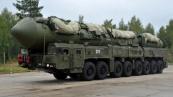
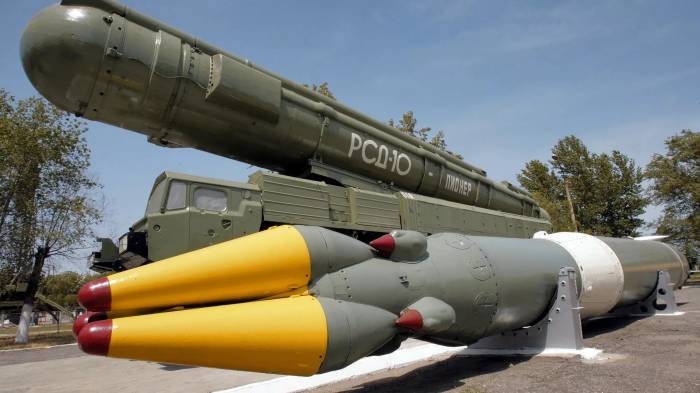
Next, based on leaked information, it appears that Oreshnik’s missile carrier is a medium-range missile developed during the Soviet era, specifically the 15Zh45 or perhaps its modification, the 15Zh53, also known as "Pioneer." If this is accurate, the payload capacity of this missile is approximately 1.5 tons. If the missile carries six warheads—hypersonic or otherwise—the weight of each warhead would be no more than 250 kilograms.
© Sputnik / Anton Denisov
How, then, can the explosive power of Oreshnik’s conventional payload be compared to that of a tactical nuclear warhead? Even a total payload of 1,500 kilograms of TNT is far from a single kiloton. For context, there have been reports of Russian forces using 3-ton air bombs in Ukraine. What, then, is the strategic advantage of a warhead carrying just 250 kilograms of TNT? What is the battle plan? These are just a few of the nuances of this latest achievement of Russian science and technology that I cannot comprehend.
There is another curious point to consider. During a recent public forum, Russian President Vladimir Putin, while praising Oreshnik, mentioned that not everyone in the Ministry of Defense was initially supportive of this missile’s development. He stated that he personally played a significant role in ensuring the project moved forward and ultimately succeeded.
This brings to mind the late 1980s when U.S. President Reagan announced the Strategic Defense Initiative, commonly known as "Star Wars," as part of an effort to halt the Soviet Union’s progress in the strategic arms race. In response, the USSR scrambled to develop countermeasures, including a missile that would remain within the atmosphere during intercontinental flights, thereby avoiding interception by space-based laser systems. These missiles were to carry gliding cruise warheads—hypersonic warheads capable of maneuvering during flight and reaching targets in the United States.
Enormous resources were poured into the development of this system. However, it ultimately failed; the Soviet Union could not produce the technology. Years later, it became clear that Reagan’s Star Wars program was largely a bluff designed to push the USSR into unsustainable military expenditures. This bluff succeeded spectacularly, with the ensuing arms race playing a significant role in the Soviet Union’s eventual collapse.
Today, listening to the rapturous praise for Russia’s latest advancements in missile technology, I cannot escape a sense of déjà vu. History has shown us the dangers of overextending national resources in pursuit of military supremacy. I cannot help but wonder: are we witnessing a replay of past mistakes, and will it end the same way?
(If you possess specialized knowledge and wish to contribute, please reach out to us at opinions@news.az).


Similar news