Trump in Riyadh: Historic arms deal, AI investments, and a new US-Saudi partnership


.jpg)
Editor's note: Nijat Babayev is an Azerbaijan-based journalist. The article expresses the author's personal opinion and may not coincide with the view of News.Az.
US President Donald Trump on Tuesday arrived Riyadh, Saudi Arabia, marking the first stop on his four-day tour of the Middle East. On Wednesday, Trump will travel to Qatar, where he’ll meet with Sheikh Tamim bin Hamad Al Thani. He will conclude the trip Thursday in the United Arab Emirates, where he will meet with President Mohammed bin Zayed Al Nahyan before returning to the US.
Trump received a grand welcome in Riyadh. Saudi fighter jets escorted Air Force One, and Crown Prince Mohammed bin Salman greeted him on the tarmac. His motorcade was ceremonially flanked by a procession of Arabian horses en route to the Saudi royal court.
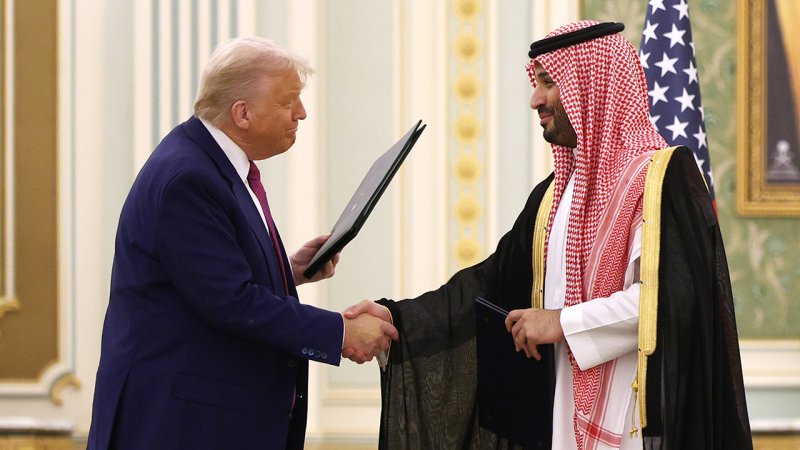
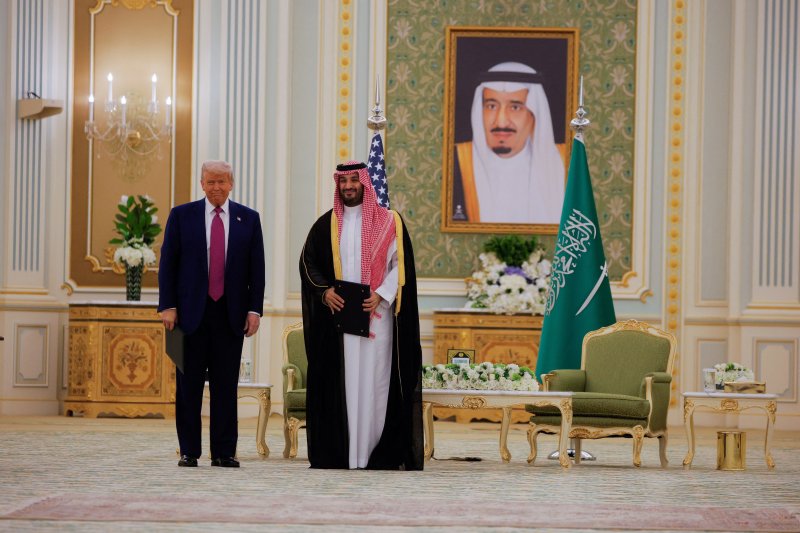 U.S. President Donald Trump and Saudi Crown Prince and Prime Minister Mohammed Bin Salman attend a Memorandum of Understanding (MOU) signing ceremony at the Royal Court in Riyadh, Saudi Arabia, May 13, 2025. REUTERS/Brian Snyder
A new era in US-Saudi relations
During his visit, Trump and Crown Prince Mohammed bin Salman signed a series of agreements aimed at deepening the bilateral partnership. In a formal ceremony at the Royal Court, the two leaders endorsed memoranda of understanding, letters of intent, and a strategic economic partnership framework covering multiple sectors.
The centerpiece of Trump’s visit was a historic $142 billion arms deal—the largest in U.S. history—complemented by a broader $600 billion investment package spanning defense, technology, and infrastructure.
Described by the White House as a “historic and transformative” moment, the agreement represents a new era in US-Saudi relations, reinforcing strategic ties and unlocking immense economic opportunities across critical industries including energy, defense, infrastructure, healthcare, and technology. At the forefront of the agreement is a $20 billion pledge from Saudi data infrastructure leader DataVolt to develop AI data centers and energy infrastructure throughout the United States. In addition, US tech giants like Google, Oracle, Salesforce, AMD, and Uber, will jointly invest $80 billion alongside Saudi partners to drive innovation in emerging technologies across both nations.
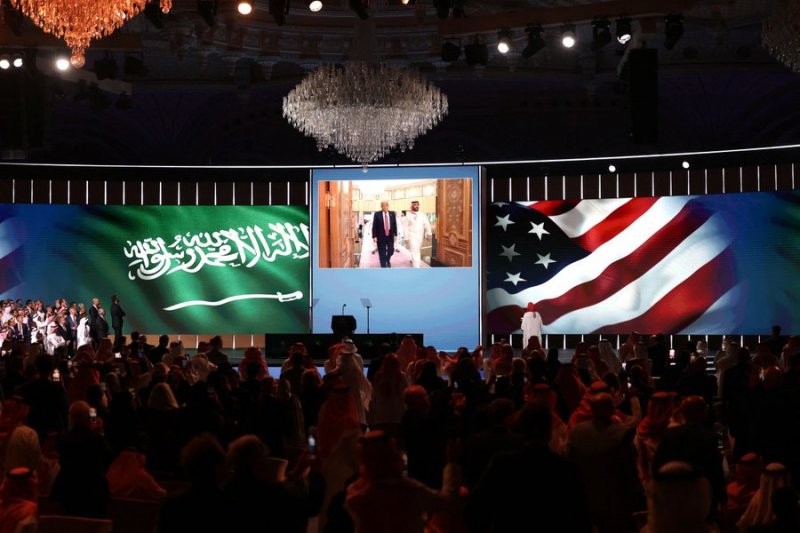 Riyadh hosted the US-Saudi Investment Forum on May 13, 2025. Photo: AFP
US-Saudi Investment Forum draws top US business leaders, including Elon Musk
Another major component of the visit was the US-Saudi Investment Forum, attended by high-profile US business leaders, including Tesla CEO Elon Musk, OpenAI CEO Sam Altman, Palantir CEO Alex Karp, and BlackRock Chairman Larry Fink.
At the forum, organizers announced the signing of 145 deals totaling over $300 billion. These included a significant sale of 18,000 AI chips by Nvidia to the new Saudi-backed tech firm Humain, and Saudi regulatory approval for Elon Musk’s Starlink satellite internet service.
Musk’s participation underscored the growing focus on advanced technologies in the U.S.-Saudi relationship. Discussions included potential projects involving humanoid robotics and autonomous vehicles—key areas of interest for Musk’s companies such as Tesla and Neuralink. These initiatives support Saudi Arabia’s push to diversify its economy and establish itself as a global hub for artificial intelligence and innovation.
Speaking at the forum, Trump touted the relationship between the US and Saudi Arabia, saying “the transformation that has occurred under the leadership of King Salman and Crown Prince Mohammed has been truly extraordinary.”
He also expressed his “dream” that Saudi Arabia join the Abraham Accords — the treaties negotiated during Trump’s first term between several Arab nations and Israel — but indicated that the country would only normalize relations with Israel when it is ready.
Strategic Goals of Saudi Arabia, UAE, and Qatar
Saudi Arabia is seeking US support for developing a civilian nuclear program, including domestic uranium enrichment—a point of contention due to concerns about nuclear proliferation. Backing from the White House could pave the way for major US firms to secure lucrative contracts.
United Arab Emirates is prioritizing investment as a pathway to deepen its relationship with Washington. In March, the UAE unveiled a $1.4 trillion, 10-year investment plan targeting AI, semiconductors, manufacturing, and energy.
Qatar hosts the largest U.S. military base in the region, considered “indispensable” to US operations by the State Department. The country also plays a critical diplomatic role, mediating conflicts in Gaza and Afghanistan, reinforcing its strategic relevance to US interests. Experts say it is part of an effort to remain relevant in the eyes of Washington.
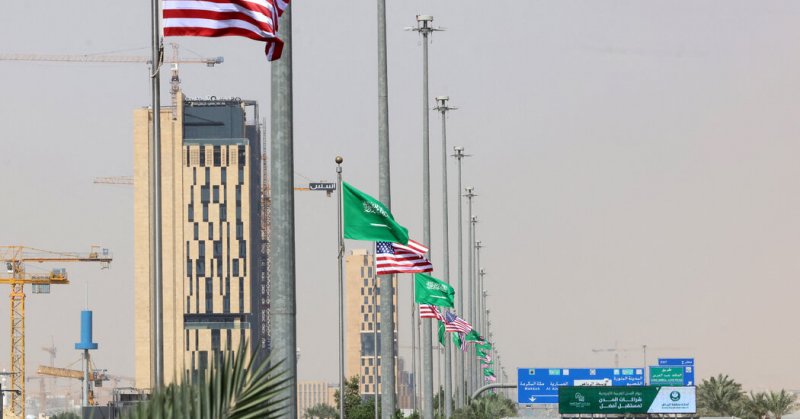 American and Saudi flags line a road in Riyadh, Saudi Arabia, on Monday ahead of a visit by President Trump. Photo: AFP
Controversies and regional implications
While the visit has been lauded for its economic and strategic outcomes, it has not been without controversy. The substantial arms deal has raised concerns among critics who question the implications for regional security dynamics, particularly regarding Israel's security and the broader Middle East arms race . Moreover, Trump's decision to lift US sanctions on Syria has sparked debate about the administration's approach to Middle Eastern geopolitics and its potential impact on U.S. alliances in the region
Conclusion
Trump's visit to Saudi Arabia signifies a strategic recalibration of US foreign policy in the Middle East, emphasizing economic collaboration and technological innovation alongside traditional defense partnerships. By fostering a multifaceted alliance, the US aims to solidify its position as a key partner in Saudi Arabia's ambitious modernization efforts, while navigating the complexities of regional politics and security concerns. As the partnership evolves, it will be crucial to balance economic interests with diplomatic considerations to ensure long-term stability and mutual benefit.
(If you possess specialized knowledge and wish to contribute, please reach out to us at opinions@news.az).


Similar news