Trump, Putin, and the ceasefire that never came


Editor's note: Alan Cafruny is Professor of International Relations at Hamilton College. The article expresses the personal opinion of the author and may not coincide with the view of News.Az.
The Alaska summit between Donald Trump and Vladimir Putin was billed in advance as a potential turning point, a meeting that some dared to compare with Yalta or Nixon’s groundbreaking visit to China in 1972. These comparisons carried weight because such encounters have historically reshaped the global order. Yalta redrew the world map after World War II, and Nixon’s meeting with Mao shifted the balance of the Cold War. In contrast, when the dust settled in Alaska, the optics seemed far less impressive. The two leaders spoke for just three hours. No agreements were signed, no roadmap announced, and even a scheduled luncheon was abruptly canceled. Asked about Ukraine, Trump admitted that he and Putin had not “gotten there.” On the surface, it seemed anticlimactic, if not disappointing.
And yet, dismissing Alaska as inconsequential would be a serious mistake. Beneath the silence and absence of drama, there are signals that could, in time, prove transformative. What looked like an empty photo opportunity may ultimately mark the beginning of a political recalibration with profound consequences for Ukraine, Europe, and the international system.
First, the summit demonstrated that U.S.–Russian rapprochement remains possible, however unlikely it may appear to the skeptics. Dialogue at the highest level, even when lacking deliverables, has its own symbolic weight. History shows that breakthrough agreements often emerge after periods of failure and stalemate. If Alaska opens the door even slightly to talks on arms control, trade, energy, or cooperation in the Arctic, it could reshape strategic realities. For all the drama of great power confrontation, Washington and Moscow still share overlapping interests, from nuclear stability to climate change in the Arctic.
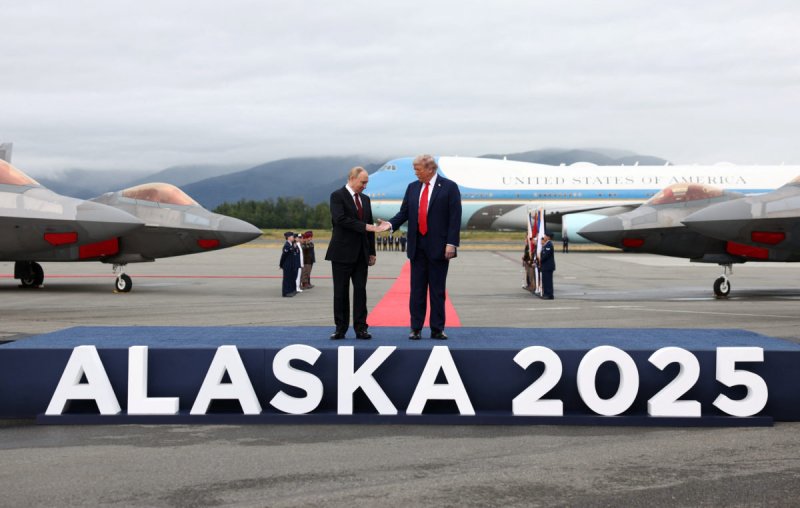 Photo: AP
Second, Alaska revealed something Europe has long feared but rarely admitted: Washington is increasingly acting over its allies’ heads. Under Biden, the United States presented itself as the leader of a united transatlantic front. Under Trump, Brussels and London risk becoming mere spectators. The contrast is striking. In the same week, British Prime Minister Keir Starmer declared that if a ceasefire were reached, European troops might be deployed to Ukraine. Trump’s message from Alaska, by contrast, was that a ceasefire was no longer necessary for diplomacy to proceed. The Atlantic, always wide, suddenly feels wider still.
For Moscow, this shift was the summit’s key outcome. The demand for a ceasefire, long a staple of Western diplomacy, appears to be fading. Trump made it clear on Truth Social: negotiations could continue without one. For Europe, this was a blow; for Russia, a quiet victory. Kyiv, however, faces the harshest implications. Without the ceasefire condition, Ukraine risks entering talks while still bleeding on the battlefield, without respite, without regrouping, without leverage.
The battlefield reality is already grim. Russia’s forces are advancing, if slowly, across multiple fronts. Its use of drones and electronic warfare has improved significantly. Ukrainian conscripts are exhausted, morale is fragile, and resources are dwindling. Western aid that once flowed freely has begun to falter, caught in political battles in Washington and fatigue in European capitals. In many ways, Ukraine stands closer than ever to fighting alone.
Trump’s own challenge is equally daunting. His influence over Ukraine far exceeds his leverage over Russia. Putin’s demands have remained consistent since 2021 and the aborted Istanbul talks of early 2022: neutrality for Ukraine, recognition of Crimea, and acceptance of eastern territories as Russian. These red lines have not shifted, nor are they likely to. At most, there may be flexibility over constitutional arrangements, neutrality guarantees, and the shape of Ukraine’s postwar borders—but Crimea is simply not on the table. If negotiations resume, they will be brutal and deeply unpopular for Kyiv.
This makes Zelenskyy’s upcoming meeting with Trump pivotal. Can Trump convince him to take part in serious talks? Or will Ukraine continue down the path of attrition, with more lives lost, more cities destroyed, and sovereignty eroded piece by piece? The meeting will reveal whether Alaska was merely symbolic or whether it represents the beginning of a reluctant, painful march toward diplomacy.
The obstacles are immense. Trump faces strong domestic opposition from neoconservative hawks in Washington, who reject any compromise with Russia and fear a “Munich moment” of appeasement. Putin, meanwhile, continues to frame the war in terms of “root causes,” stressing that NATO’s expansion and Western disregard for Russian security concerns made conflict inevitable. Between these hard lines lies little space for easy compromise.
 Photo: Shutterstock
And yet the alternative to dialogue is clear, and it is grim. Without negotiations, Ukraine will continue to suffer catastrophic losses. The West’s willingness to underwrite Kyiv’s resistance is visibly eroding. Europe is fractured, with some governments calling for escalation and others pressing for restraint. The United States, under Trump, may seek to end the war on terms far closer to Moscow’s than Kyiv’s. In that scenario, Ukraine faces the prospect not only of territorial loss but of political isolation.
Critics argue that Trump is naïve in thinking he can strong-arm Ukraine into compromise. But one must also ask: what is the alternative? To continue a war that Russia believes it is winning, while Ukraine’s support system frays? To pretend that endless Western weapons and money will alter the strategic equation? At some point, hard choices must be made, and Trump has positioned himself—willingly or not—as the figure who will force them.
Alaska was not Yalta. It was not Nixon in Beijing. But it may be remembered as something subtler yet still decisive: the moment the United States acknowledged, however reluctantly, that the war cannot be ended by force alone. Peace, however imperfect, will require concessions—concessions that no side wants to admit publicly but that all sides may soon have no choice but to accept.
The Alaska summit, quiet and anticlimactic though it seemed, may prove in time to have been the beginning of that reckoning.
(If you possess specialized knowledge and wish to contribute, please reach out to us at opinions@news.az).


Similar news