Trump’s proposal on Ukraine: A strategic deal or political rhetoric? – Expert opinions


.png)
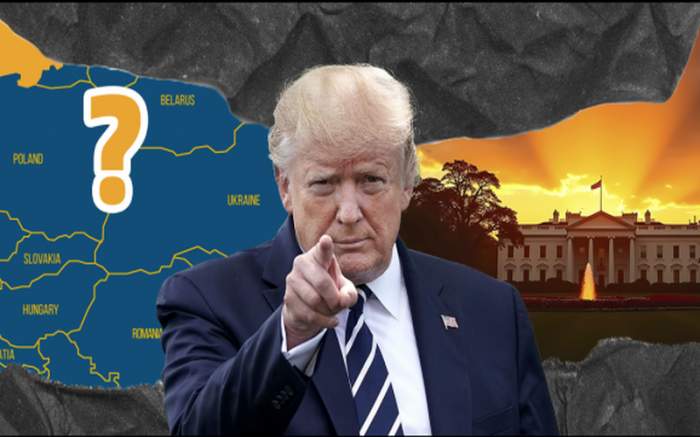
U.S. President Donald Trump has proposed supplying military aid to Ukraine in exchange for access to rare earth metals in the Donbas region. Ukrainian President Volodymyr Zelensky has welcomed the idea, though its implementation remains uncertain, as the area in question is currently under Russian control.
To assess the implications of Trump’s proposal, News.Az reached out to political analysts from Russia and Ukraine.
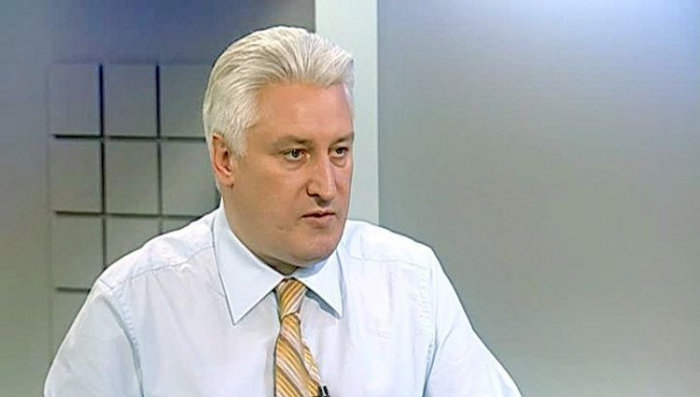
Igor Korotchenko, Director General of the Caspian Institute for Strategic Studies, dismissed Trump’s suggestion as unrealistic. Speaking to News.Az, he argued that Trump lacks a proper understanding of the geopolitical and economic complexities involved.
“Trump is far removed from these issues. It seems that someone is simply preparing reports for him,” Korotchenko said. “Of course, sourcing rare earth elements from Ukraine would be more convenient than extracting them in Africa, but in practice, things are not that simple.”
He warned that attempting to implement such a deal could escalate the war, given that these mineral-rich territories are under Russian control.

Commenting on Trump’s broader claims about resolving the conflict in Ukraine within 100 days, Korotchenko dismissed them as “populist and irresponsible.”
“Trump makes statements without considering how they can be implemented. No one in Washington has a concrete plan for ending the war,” he added. “The so-called Trump plan is just rhetoric. He is a businessman who raises the stakes in negotiations—but international relations are far more complex and risky than business deals.”
Korotchenko emphasized that Russia’s position remains unchanged: “President Putin has made it clear that Ukraine must withdraw its troops, recognize the new territorial boundaries—including Crimea—and commit to demilitarization and neutrality.”

Ukrainian political analyst Valeriy Dymov framed Trump’s proposal as a strategic move to justify U.S. military support in the eyes of American voters.
“This is about legitimizing support for Ukraine,” Dymov told News.Az. “Trump wants guarantees—he needs to show that Ukraine is not simply receiving aid but offering something in return.”
Dymov referenced Trump’s campaign promise to end the war in 24 hours and quoted Charles de Gaulle’s famous remark: ‘In politics, one must either betray one’s country or one’s voters.’
“Trump’s approach is about optics,” Dymov argued. “He wants to convince voters that U.S. aid to Ukraine serves American interests rather than being an open-ended expenditure.”
He highlighted Ukraine’s vast reserves of rare earth metals, which are critical to industries such as aerospace, battery production, and the green energy transition.
“China has been using rare earth elements to gain a technological edge over the U.S.,” Dymov said. “Ukraine holds about 500,000 tons of lithium—one-third of Europe’s reserves—as well as significant deposits of titanium and uranium. In 2023, Forbes estimated Ukraine’s mineral wealth at $14.8 trillion, with over 70% of these resources concentrated in Donetsk, Luhansk, and Dnipropetrovsk.”

Asked whether Trump’s proposed exchange could prolong the conflict, Dymov rejected the notion.
“Supporting Ukraine is not just about Ukraine—it’s about defending the U.S. and the West as a whole,” he said. “Putin doesn’t see this as a war against Ukraine alone; he views it as a confrontation with the entire West.”
He added that the war was started by Russia, not Ukraine or the Biden administration and that failing to support Kyiv would amount to a broader geopolitical defeat for the U.S. and its allies.
While Trump’s proposal may resonate with parts of his electorate, its feasibility remains highly questionable—both due to the realities on the ground and the geopolitical stakes involved.


Similar news