Turkish expert: The US and Russia appear to be repeating a Yalta-style strategy – INTERVIEW


The ongoing crisis in Syria has once again escalated, drawing in regional and global powers with conflicting interests. With tensions rising and the balance of power shifting, questions arise about the future of Syria’s territorial integrity, the role of external actors, and the possibility of a large-scale intervention by Türkiye.
In an exclusive interview with News.Az, İbrahim Kelesh, a retired Colonel and former Strategy Expert at ASSAM (Justice Defenders Strategic Research Center), analyzes the current dynamics of the Syrian conflict, highlighting the interests of key players such as the US, Russia, Israel, and Iran. He explores the potential implications of a covert agreement between Washington and Moscow reminiscent of the Yalta Conference, discusses the prospect of Syria’s partition, and evaluates Türkiye’s strategic options in the evolving landscape.
What is driving the latest wave of hostilities in Syria? How does Türkiye perceive the threats emanating from its southern neighbor? And could we be witnessing a silent geopolitical realignment in the Middle East? İbrahim Kelesh provides his expert insight into these pressing issues.
Source: i24 News
-The situation in Syria has once again escalated. What triggered this crisis? Who is behind the escalation?
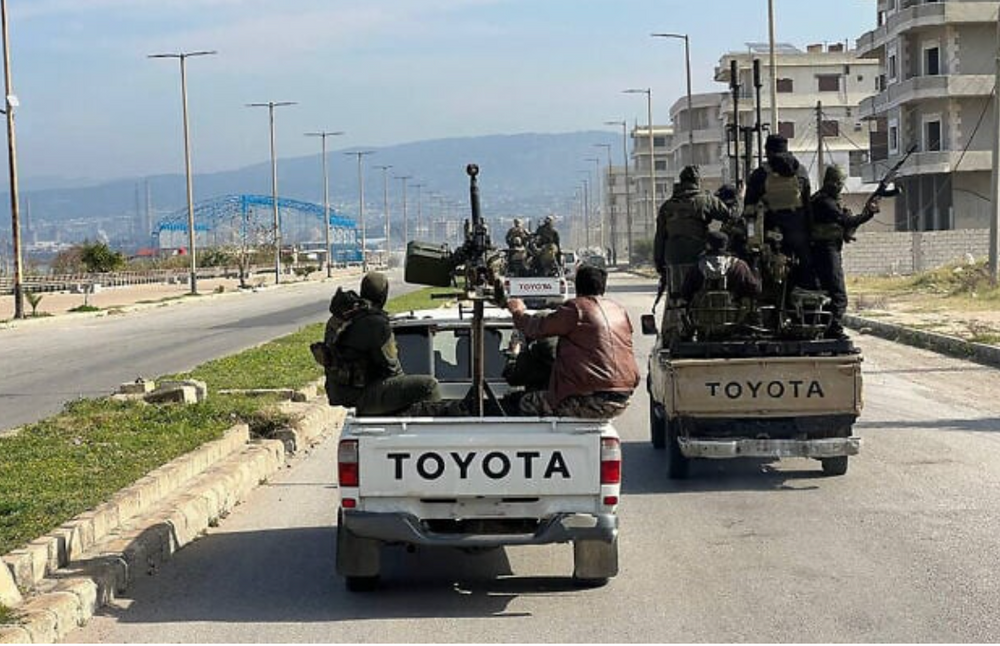
-There has been a regime change in Syria: Bashar al-Assad's government was overthrown due to opposition actions, but it is too early to talk about the full restoration of the state system. The country is experiencing a deep institutional crisis: key government structures, especially in the financial and defense sectors, have been dismantled. The army has practically ceased to exist, with no air force or air defense systems, making Syria extremely vulnerable to external threats. In a way, it resembles a weakened organism incapable of resisting infections.
Syria is a major state occupying a strategically significant position in the region, which inevitably attracts the attention of numerous external players. An additional destabilizing factor is the country’s ethno-religious diversity: it is home to Alawites, Sunnis, Christians, Armenians, and other groups. With the weakening of central authority, external forces actively manipulate these communities for their political and military objectives.
Among the countries most interested in the current developments, Israel stands out. The Israeli military has already occupied a 20-kilometer zone south of Damascus, establishing military bases and reinforcing its presence there. This bold policy is largely due to support from the United States, which apparently has its own long-term plans for Syria. This is confirmed by a recent statement from US Secretary of State Marco Rubio, who effectively equated the current Syrian government with a terrorist organization, blaming it for clashes in Latakia and Tartus.
The second key player is Iran. Tehran has no intention of abandoning its strategic positions in the region and continues to exert influence through Lebanon’s Hezbollah, using it as an instrument of its religious-political expansion.
Looking at the situation in a historical context, one can see parallels with France’s plans in the 1920s to divide Syria after the fall of the Ottoman Empire. Back then, Paris proposed splitting the country into six parts: Lebanon became an independent state, Hatay was ceded to Türkiye, and the remaining territories continued to exist within a unified Syria. Today, we are witnessing a revival of this process.
The plan to partition Syria envisions the creation of autonomous entities: a Kurdish state in the north, a Druze state in the Suwayda and Quneitra regions, an Alawite territory in Latakia and Tartus, and a separate administrative structure in the northern areas populated by Turkmens.
Who stands to gain the most from such a scenario? First and foremost, Israel. Tel Aviv has traditionally viewed a strong neighboring state as a threat and has thus taken active steps to weaken Syria. Israeli Prime Minister Benjamin Netanyahu has repeatedly stated that his country will not allow Syria to become a powerful state.
Thus, the key external players influencing the Syrian conflict and preventing the country from maintaining its current borders remain Israel, the US, and Iran.
Notably, the idea of creating an Alawite state in Latakia has received support from Israel. At the same time, the Druze in Suwayda and Quneitra are also expressing aspirations for independence, again with visible Israeli influence. In the northeast, the PKK/PYD (SDF) terrorist organization continues to push for the establishment of its own quasi-state, while Israeli representatives openly declare their alliance with Kurdish groups.
Moreover, the Syrian branch of PKK/PYD has refused to disarm and continues to collaborate closely with Israel, indicating Tel Aviv’s long-term plans in the region. Both Israel and the US appear to be working toward the creation of a controlled autonomous entity in northern Syria.
Source: VOA
-Can we assume that the US and Russia have reached a tacit agreement on Syria, similar to what happened with Ukraine?
-After World War II, at the Yalta Conference, the US and the USSR effectively divided their spheres of influence, which, among other things, led to the division of Germany into two parts—West Germany under US control and East Germany under Soviet influence. Today, we are witnessing a similar situation with Ukraine: the two major powers appear to be adhering to certain limits of mutual interests, which may indicate the existence of informal agreements.
Under President Donald Trump, the US froze military aid to Kyiv, and now Elon Musk is discussing the possibility of disabling Starlink satellite communications in Ukraine. These events may suggest a shift in the American strategy toward Russia—from direct confrontation to pragmatic engagement, primarily aimed at containing China.
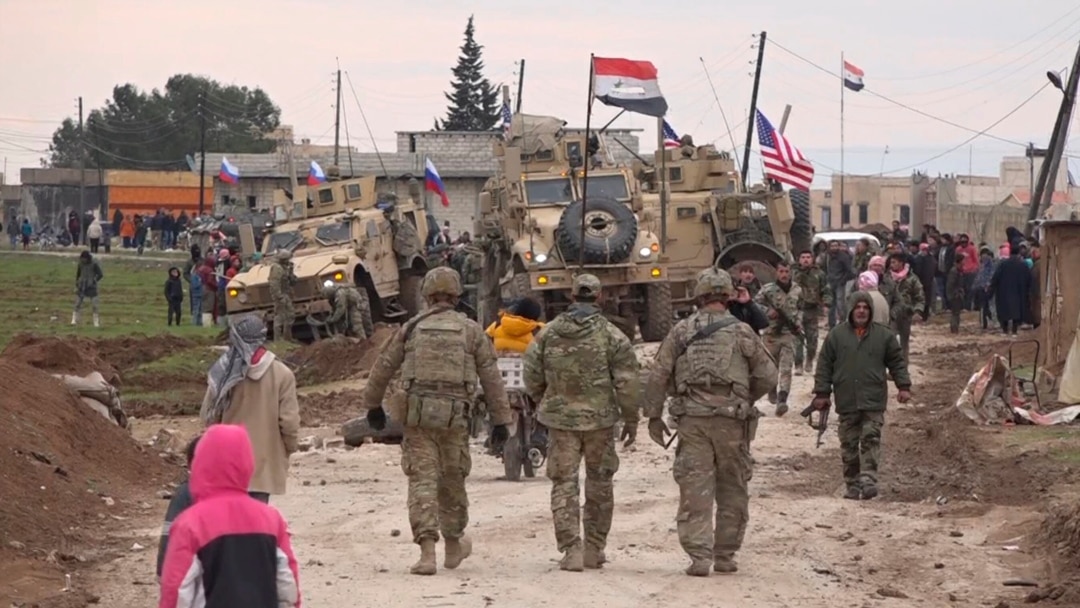
Regarding Syria, it appears that Washington is essentially "preparing" the country for increased Russian influence. Following the change in Syrian leadership, negotiations were held between Moscow and the new administration, and Russia’s bases in Latakia and Tartus remain untouched, signaling the preservation of Russia’s presence in the region. In the coming days, Moscow is expected to make significant statements on Syria. For example, near the Latakia airbase, there is a camp housing 8,000 people—Alawites who have taken refuge after recent military clashes. This could serve as a formal pretext for further strengthening Russia’s position.
The situation in Syria has reached a critical point: over a thousand people have died in combat within a few days. A joint intervention by the US and Russia cannot be ruled out. An indirect confirmation of this possibility is the initiative of both countries to convene an emergency session of the UN Security Council. This may indicate potential plans for altering Syria’s borders, including discussions on the creation of an Alawite state. If news of the country’s partition emerges soon, it should come as no surprise—the US and Russia seem to be reapplying a Yalta-like strategy.
 Source: Daily Sabah
-Is a full-scale military intervention by Türkiye in Syria possible?
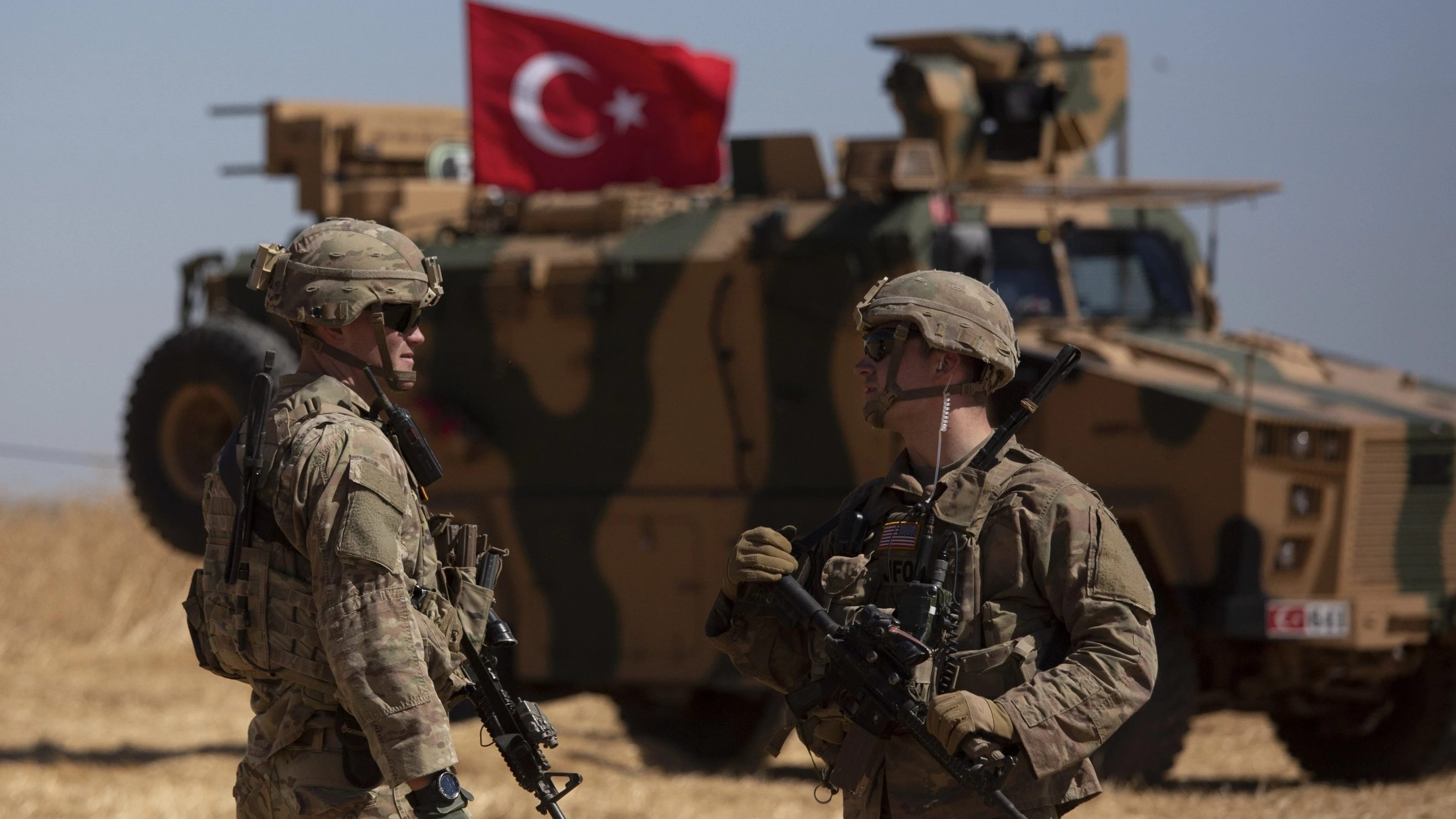
-Türkiye maintains a firm and consistent stance in its fight against terrorist organizations. Ankara has repeatedly emphasized that militants must either voluntarily lay down their arms or be eliminated. This issue is urgent and requires decisive action.
The Syrian government also views armed groups on its territory as a national security threat but lacks the strength to conduct a large-scale military operation. Türkiye has already declared its readiness to intervene in the situation.
Initially, Ankara sought to resolve the issue through diplomatic means, offering terrorist groups the opportunity to disarm and cease their activities voluntarily. However, the process is now transitioning into an active phase. Türkiye possesses sufficient military capability to neutralize threats in any region, and if the Syrian army, together with the National Defense Forces, initiates an operation, Ankara could provide combat experience and advanced technology to ensure success.
According to UN norms, a state under attack has the right to request military assistance from another country. If the official Syrian authorities formally request military support from Türkiye, Ankara will consider it.
In 2015, Bashar al-Assad invited Russia to intervene, but its involvement only complicated the situation in the region. Now, the Syrian leadership may turn to Türkiye with a similar request, but this time with the goal of stabilizing the situation. In such a case, Ankara will undoubtedly rise to the challenge.


Similar news