UN veto power and Gaza: Can global institutions protect civilians?


Editor's note: Aysel Mammadzada is an Azerbaijan-based journalist. The article expresses the author's personal opinion and may not coincide with the view of News.Az.
The world is once again confronted with a painful question: What is this contradiction? While civilians in Palestine are killed, schools are bombed, and millions are uprooted from their homes, we live in a time when those who speak the loudest take the least meaningful action. America proclaims its commitment to “peace,” the United Nations repeatedly invokes “international law,” and Israel defends its actions as “legitimate defense.” Yet none of these words alter the grim reality on the ground: destroyed homes, grieving families, dead children, and countless desperate people trapped in an unending cycle of violence.
The contradiction is stark and unmistakable. The United States, long heralded as the “peace broker” in the Middle East, paints a picture of hope through the rhetoric of a “two-state solution.” But when we peel back this rhetoric, what do we see? Billions of dollars in military aid flow to Israel every year, strengthening a military machine that continues to wage war rather than peace. Almost every UN resolution favoring Palestinian rights is vetoed by the United States, undermining the international community’s efforts to hold Israel accountable. This duplicity exposes a glaring hypocrisy: America’s public commitment to peace rings hollow when measured against its actions that perpetuate conflict.
Israel, on the other hand, insists it acts in “legitimate defense” against constant threats. While no one can deny Israel’s right to security, the measures it employs raise serious moral and legal questions. The ongoing blockade of Gaza, the relentless expansion of illegal settlements in the West Bank, and the refusal to comply with repeated UN resolutions cannot be dismissed as mere defensive tactics. For Palestinians, these acts represent systematic “occupation,” “ethnic cleansing,” and blatant violations of human rights. The language of defense becomes a shield for policies that entrench inequality and suffering.
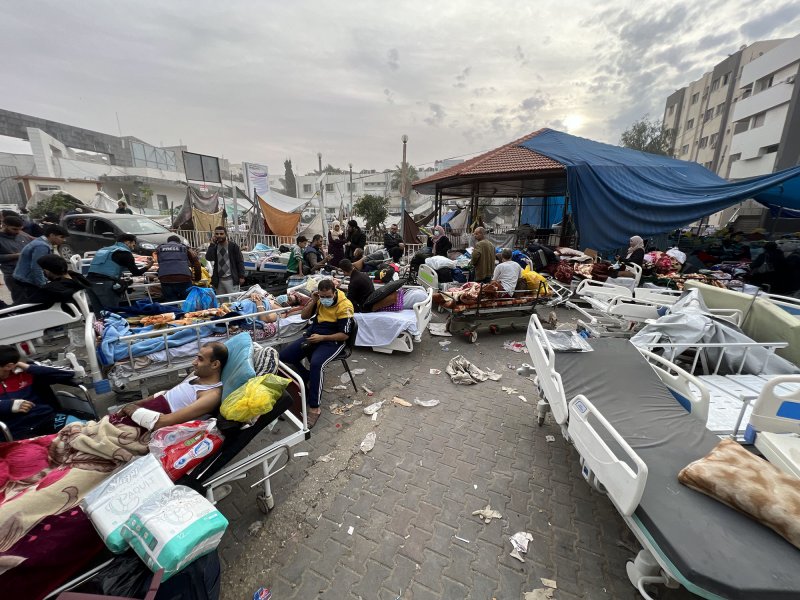
It is crucial to understand that this conflict is no longer simply a territorial dispute. For Palestinians, it is a fight for dignity, freedom, and survival in the face of overwhelming odds. On one side stand groups branded as “terrorists” by the international community, often without fair consideration of their grievances or context. On the other side are innocent civilians, children, women, and the elderly, bombed in hospitals, schools, and refugee camps. The disproportionate use of force and the targeting of civilian infrastructure reveal a painful truth: justice is not the guiding principle of this conflict.
What deepens the tragedy is the glaring imbalance in international responses. The policies of the United States and other major powers reveal a disturbing bias that erodes the legitimacy of the entire international system. When justice is selective, when human rights are conditional, the very idea of a fair and impartial world order collapses. The Palestinian people’s growing disillusionment with global institutions is not surprising; it reflects a bitter reality that the world’s most powerful countries often protect their interests at the expense of the vulnerable.
This brings us to the core question: What role does the United Nations play in all this? Isn’t the UN supposed to be the guardian of peace and human rights? The UN Charter explicitly prohibits aggression, and the Geneva Conventions mandate the protection of civilians during conflict. The Security Council has passed numerous resolutions, starting from 1967, calling for Israel’s withdrawal from occupied territories. The Universal Declaration of Human Rights guarantees everyone’s right to life and security. Legally, the international framework to ensure peace and justice is robust.
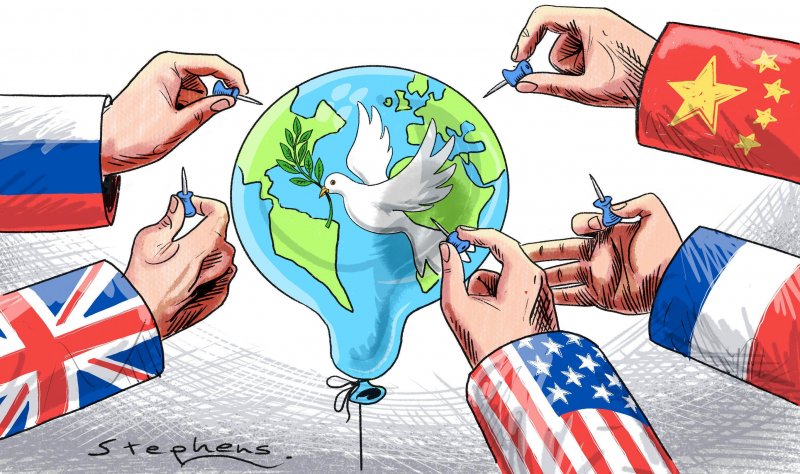
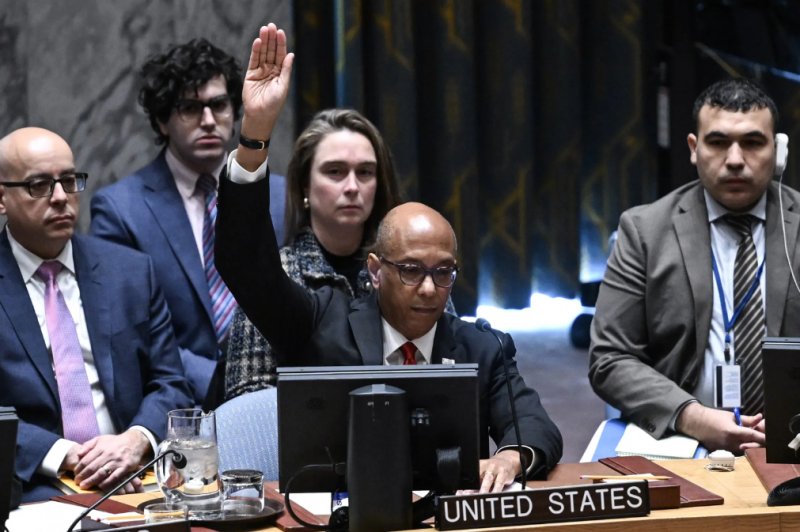
Yet in practice, the UN’s power is hollow. The root cause of this impotence lies in the Security Council’s veto system. Any of the five permanent members, particularly the United States, can block resolutions that threaten their geopolitical interests. The US routinely uses its veto power to shield Israel from international accountability. This structural flaw renders many UN resolutions ineffective and reduces the UN to a talking shop rather than an enforcer of justice.
Moreover, there is a glaring double standard when it comes to prosecuting war crimes. Powerful countries, even when clearly in violation of international law, evade prosecution. The international community’s inaction emboldens further violations. Many decisions of the UN are non-binding, and there is no global mechanism to enforce compliance or punish defiance. Geopolitical interests, economic gains from energy resources, and the lucrative arms trade consistently trump the principles of law and justice.
Despite these failures, it is important to acknowledge that the UN does achieve significant progress in humanitarian areas. Organizations such as UNICEF, WHO, and the World Food Programme provide crucial aid, saving millions of lives in conflict zones. They improve education, health, and living conditions for the most vulnerable. These achievements, however, stand in stark contrast to the UN’s inability to stop conflicts before they start or escalate.
This contrast leads to a bitter conclusion: The United Nations succeeds in alleviating human suffering but fails catastrophically in its primary mission to maintain peace and uphold international law. The ongoing tragedy in Palestine is not merely a regional conflict; it is a profound indictment of the international order and the system of global governance. When America speaks of “peace” but fuels war with arms shipments; when the UN passes resolutions but cannot enforce them; when Israel claims “legitimate defense” yet bombs hospitals and schools, what hope is left for justice?
In my view, the world’s indifference and the failure of major powers to act decisively amount to a betrayal of humanity’s fundamental values. The international community cannot afford to remain silent or neutral in the face of such suffering. True peace will never emerge from double standards, political convenience, or selective justice. It requires an unwavering commitment to fairness, accountability, and the protection of human rights for all.
If the United Nations is to regain credibility and fulfill its noble purpose, it must reform itself to overcome the veto paralysis that undermines its authority. Powerful nations must be held accountable when they violate international law, regardless of their status. The principles enshrined in the UN Charter and human rights conventions must be more than lofty ideals, they must become practical realities.
Ultimately, the contradiction we witness today is not just about America, Israel, or Palestine. It is a mirror reflecting the weaknesses and failures of the global system. Until the world confronts these uncomfortable truths and acts on them, the cycle of violence and injustice will continue. The silence of the UN and the duplicity of powerful nations leave millions to suffer in silence. We owe it to them, and to ourselves, to demand justice and genuine peace, not empty words.
(If you possess specialized knowledge and wish to contribute, please reach out to us at opinions@news.az).


Similar news