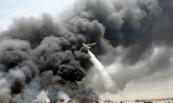
U.S. landing in Armenia: What’s behind the arrival of the troops? - FOTO


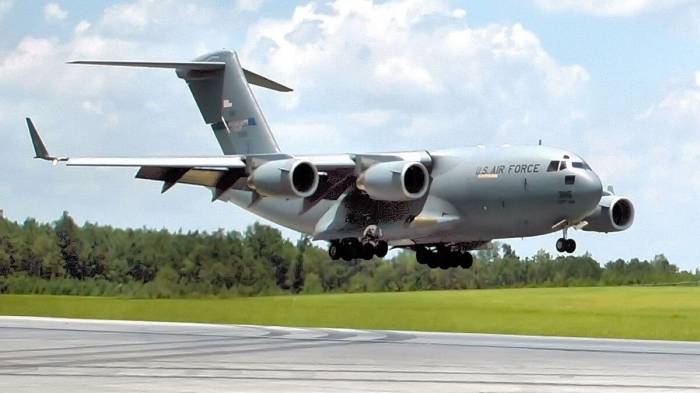
The deployment of U.S. troops on Armenian territory , particularly in the strategically important Zangezur region, where the interests of several major global powers intersect, represents an event with potentially far-reaching consequences for the entire geopolitical situation in the South Caucasus. Given the region's historical tensions and the current balance of power, the U.S. actions should be viewed as more than just a military presence; this move carries political and strategic implications aimed at altering the regional balance of power.
The arrival of U.S. Air Force military transport planes at Armenia's Zvartnots Airport shortly after the conclusion of the Eagle Partner 2024 exercises raises numerous questions. Official statements from the U.S. Embassy, which emphasized the completion of the exercises and claimed that all personnel had already left Armenia, appear to be an attempt to divert attention from the real situation. If the exercises concluded in July, why was there a need for additional troop deployments in early August? And why is the composition and purpose of their mission being so carefully concealed? This increasingly appears to be a strategic deployment of forces as part of a long-term operation aimed at strengthening U.S. influence in the region.
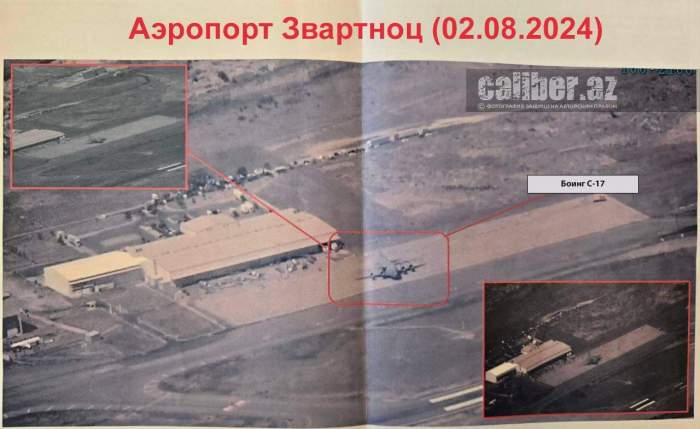 It is noteworthy that among the U.S. military personnel arriving in Armenia, there is a significant presence of citizens of Armenian origin and individuals from post-Soviet countries. This move can be seen as an attempt to minimize negative perceptions among the local population while simultaneously concealing the real presence of foreign troops near the borders with Azerbaijan and Iran. However, such an approach does not eliminate risks and does not rule out the possibility of escalating tensions. On the contrary, it could heighten suspicions and concerns in Baku and Tehran.
For Azerbaijan, the deployment of U.S. troops in Armenia is a direct challenge. This move can be perceived as a security threat, especially considering that the troops will be stationed near the border with Azerbaijan. Baku, already in a complex geopolitical situation, will be forced to reconsider its strategic priorities. This could lead to strengthened military-political cooperation with Turkey and the search for new allies to contain potential threats from Armenia and its new partners.
Iran, which has repeatedly stated the inadmissibility of non-regional forces' presence in the South Caucasus, faces a serious dilemma. On the one hand, ignoring the presence of U.S. troops near its borders would demonstrate weakness. On the other hand, a strong reaction could lead to direct confrontation with the United States and increased tension in the region. This could prompt retaliatory measures from Washington and further isolate Tehran on the international stage.
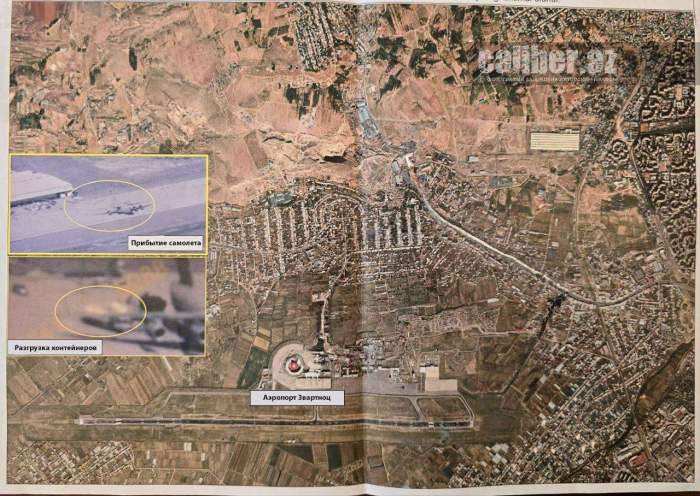 It is highly likely that, in this situation, Iran will attempt to strengthen its influence in Armenia through diplomatic and economic channels to counterbalance the presence of U.S. troops. However, this is unlikely to lead to a quick resolution and may create new lines of tension both within Armenia and in its relations with neighboring countries.
Russia's reaction will also likely not be long in coming. Moscow has traditionally regarded the South Caucasus as a zone of its strategic interests and is unlikely to calmly observe the increase in U.S. influence in the region. There could be a strengthening of military-political cooperation with Iran and Armenia, as well as a tougher stance towards the U.S. and NATO within the framework of the global geopolitical game.
Thus, the appearance of U.S. troops in the South Caucasus is far from a random episode but part of a broader strategy aimed at reshaping the regional order. Azerbaijan, Iran, and Russia find themselves in a situation where they will have to make difficult and possibly painful decisions to protect their interests and maintain control over the situation. These decisions will have long-term consequences and will determine the future fate of this strategically important region. The question is how decisively and promptly the interested parties will respond and what this will lead to in the near future.
The arrival of U.S. Air Force military transport planes at Armenia's Zvartnots Airport shortly after the conclusion of the Eagle Partner 2024 exercises raises numerous questions. Official statements from the U.S. Embassy, which emphasized the completion of the exercises and claimed that all personnel had already left Armenia, appear to be an attempt to divert attention from the real situation. If the exercises concluded in July, why was there a need for additional troop deployments in early August? And why is the composition and purpose of their mission being so carefully concealed? This increasingly appears to be a strategic deployment of forces as part of a long-term operation aimed at strengthening U.S. influence in the region.
It is noteworthy that among the U.S. military personnel arriving in Armenia, there is a significant presence of citizens of Armenian origin and individuals from post-Soviet countries. This move can be seen as an attempt to minimize negative perceptions among the local population while simultaneously concealing the real presence of foreign troops near the borders with Azerbaijan and Iran. However, such an approach does not eliminate risks and does not rule out the possibility of escalating tensions. On the contrary, it could heighten suspicions and concerns in Baku and Tehran.For Azerbaijan, the deployment of U.S. troops in Armenia is a direct challenge. This move can be perceived as a security threat, especially considering that the troops will be stationed near the border with Azerbaijan. Baku, already in a complex geopolitical situation, will be forced to reconsider its strategic priorities. This could lead to strengthened military-political cooperation with Turkey and the search for new allies to contain potential threats from Armenia and its new partners.
Iran, which has repeatedly stated the inadmissibility of non-regional forces' presence in the South Caucasus, faces a serious dilemma. On the one hand, ignoring the presence of U.S. troops near its borders would demonstrate weakness. On the other hand, a strong reaction could lead to direct confrontation with the United States and increased tension in the region. This could prompt retaliatory measures from Washington and further isolate Tehran on the international stage.
It is highly likely that, in this situation, Iran will attempt to strengthen its influence in Armenia through diplomatic and economic channels to counterbalance the presence of U.S. troops. However, this is unlikely to lead to a quick resolution and may create new lines of tension both within Armenia and in its relations with neighboring countries.Russia's reaction will also likely not be long in coming. Moscow has traditionally regarded the South Caucasus as a zone of its strategic interests and is unlikely to calmly observe the increase in U.S. influence in the region. There could be a strengthening of military-political cooperation with Iran and Armenia, as well as a tougher stance towards the U.S. and NATO within the framework of the global geopolitical game.
Thus, the appearance of U.S. troops in the South Caucasus is far from a random episode but part of a broader strategy aimed at reshaping the regional order. Azerbaijan, Iran, and Russia find themselves in a situation where they will have to make difficult and possibly painful decisions to protect their interests and maintain control over the situation. These decisions will have long-term consequences and will determine the future fate of this strategically important region. The question is how decisively and promptly the interested parties will respond and what this will lead to in the near future.


Similar news