Why Russia won't attack the Baltics: A strategic and historical view


By Einars Graudins
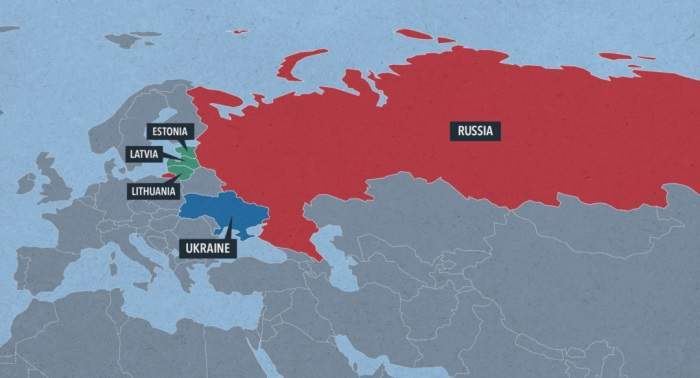
As tensions persist in Eastern Europe, the question of a potential military conflict between Russia and the Baltic states remains a topic of intense debate.
Is a war between Lithuania, Estonia (the Baltic states ), and the Russian Federation possible? Could the Russian Federation launch a military strike against these countries? If so, when and what could be the consequences?
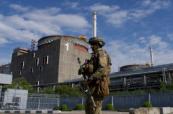
To address these questions, we need to consider two key aspects. The first is the emotional factor present in the Baltic states, which stems from historical trauma and collective memory. This is something that cannot be overlooked. It’s ingrained in our psyche from birth, tied to the two occupations by the Soviet Union, which not everyone fully understands. The first occupation occurred in 1940, with fake elections and the whole set of elements that we are witnessing today in places like Kherson and Zaporizhzhia, when they became subjects of the Russian Federation. The second occupation came later, after the defeat of German forces in World War II, when the Soviet Union didn’t leave the Baltic territory after defeating the Nazis.
We perceive this as a second occupation, and I can confirm this from the standpoint of international law. This occupation was never recognized by the U.S., the U.K., or the Vatican. While they didn’t use the word "occupation," opting for "incorporation" instead, the essence remains unchanged. Calling moonshine "a strong homemade alcoholic beverage" doesn’t alter its nature.
The Soviet Union carried out deportations in 1941 and 1949, deporting tens of thousands of people, and the execution of the elite left a deep scar on the collective psyche of the Baltic people. There isn’t a single family that escaped Soviet repression. This emotional and psychological factor continues to influence the mindset in the Baltic states. But if we put emotions aside and pragmatically examine the situation, we can assess the possibility of a military confrontation between Russia and the Baltic states.
In my opinion, a direct military assault similar to Ukraine, where Russia crosses the land border with armored vehicles and strikes military and civilian infrastructure, will not happen in the coming years. Let me explain why. First, it’s a matter of economics. As someone who graduated from a military-financial-economic academy — the only one of its kind in the world — I can say that wars are waged not by armies, but by economies.
Second, wars aren’t fought to seize specific territories. The aim is to control trade routes and logistics pathways. Yes, ice-free ports played a key role in the 20th century, but today Russia lacks the resources and capacity to attack the Baltic states in the coming years. I rule out the possibility of a military conflict for at least five years.
Currently, in Ukraine, Russian armed forces are struggling to deal with the Ukrainian military even on Russian territory, particularly in the Kursk region. Russia needs an additional 180,000 troops along the entire front line, as confirmed by intelligence reports and analyses from leading military institutes worldwide. Russia isn’t announcing a full mobilization but is instead increasing payments for signing military contracts. This indicates significant internal social difficulties, and mobilization is impossible due to public sentiment.
NATO reports suggest that Russian conscripts are being forced to sign professional contracts and sent to war to fill gaps on the front. If Russia is having difficulty recruiting 180,000 contractors to fight in Ukraine, it's highly unlikely that it’s planning an attack on NATO-member Baltic states today. That’s one factor.
There is also a myth about the Pskov Airborne Division, which supposedly can "restore order" in Riga within four hours. This myth persisted for a long time. Having served in the airborne reconnaissance of the Latvian Armed Forces, I can say that we considered this scenario seriously in the early 2000s. But today, the 76th Guards Air Assault Division is only capable of conducting small-scale operations, not large strategic tasks.
If we look at history, large-scale airborne operations, such as Operation Mercury to capture Crete in May 1941, resulted in such heavy losses that Hitler banned mass parachute drops. Even in the current war in Ukraine, Russian airborne forces failed in their operations in Hostomel against Ukrainian conscripts and territorial defense forces.
The tank situation in Russia is also a serious problem. Most of the tanks remaining in storage will be depleted by 2025, and Russia produces a maximum of 330 tanks per year. In 2023 alone, Russia lost over 1,000 tanks in Ukraine. Russia cannot fully compensate for its losses.
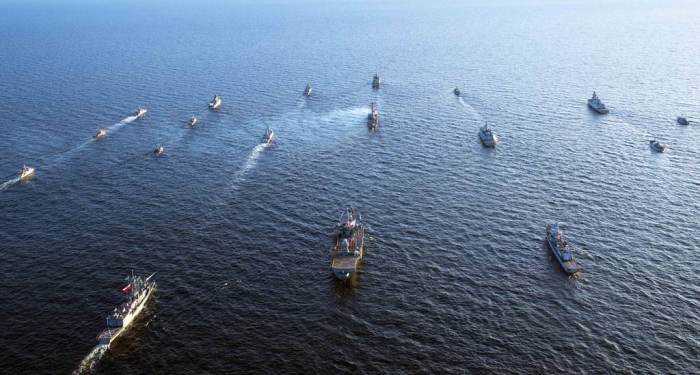
Regarding the myths of a possible breakthrough through the Suwalki Gap, this scenario is also highly unlikely. NATO has developed plans for a response to any attack by Russia and Belarus , and any conflict would immediately result in retaliation against Kaliningrad. The Baltic Sea is entirely controlled by NATO countries, and the Russian navy would likely struggle to actively engage in combat.
Since Finland joined NATO , the border with Russia has expanded to 1,271 km. Russia can no longer manage additional fronts, and Finland will certainly join the conflict in case of an attack on the Baltic states. If Russia can’t gather 180,000 troops for the war in Ukraine, it’s hard to imagine it attacking the Baltic states within the next five years.
Western countries no longer fear Russia as they did during the Soviet era, and this is evident from Russia's actions in Ukraine, where its forces are facing significant challenges. This fear of Russia is fading into the past.
The author is a military expert, retired senior officer of the Latvian Armed Forces.


Similar news