Why the Baku–Tashkent partnership is becoming a strategic anchor in Eurasia


Editor's note: Seymur Mammadov, a special commentator for News.Az, is the director of the international expert club EurAsiaAz. The article expresses the personal opinion of the author and may not coincide with the view of News.Az.
In a world increasingly shaped by shifting alliances, logistical chokepoints, and the race for energy and infrastructure dominance, the deepening partnership between Uzbekistan and Azerbaijan offers a refreshing example of pragmatic diplomacy and forward-looking strategy.
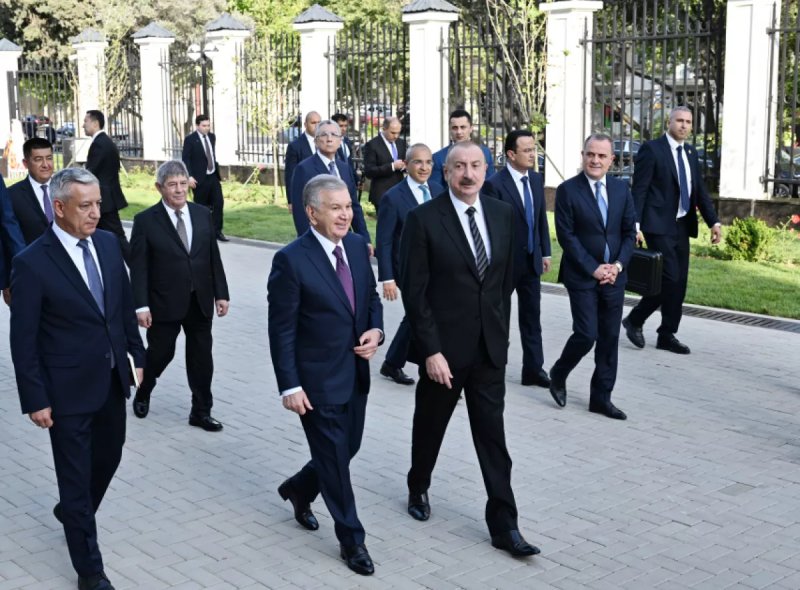
President Shavkat Mirziyoyev’s high-level visit to Baku is not just another ceremonial exchange. It represents a calculated step toward building one of the Caspian region’s most consequential bilateral relationships—one grounded in economic realism, cultural affinity, and regional foresight.
At the core of this evolving alliance is a roadmap to 2029 that lays the groundwork for enhanced cooperation in trade, infrastructure, industry, and renewable energy. With bilateral trade already rising by 25% year-on-year, and a $4 billion joint investment portfolio in place, the two nations are translating goodwill into tangible results.
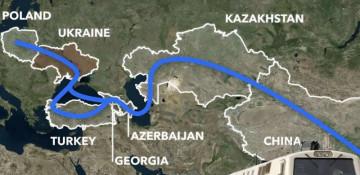
What makes this partnership particularly strategic is its shared commitment to the Middle Corridor—a critical east-west trade route connecting China and Central Asia to Europe via the Caspian Sea and South Caucasus. As global shipping lanes become politicized and vulnerable, this corridor is no longer just an alternative—it is becoming essential.
Uzbekistan’s cargo volume via this route has surpassed 1 million tonnes, with new digital permits easing friction in cross-border logistics. Both countries are not merely participants in global trade—they are positioning themselves as architects of regional connectivity.
This isn’t just about economics. It’s about anchoring political stability and sovereign autonomy through regional interdependence.
Equally important is their shared green energy agenda. In a geopolitical environment where access to clean energy is becoming a soft-power tool, Tashkent and Baku are aligning their renewable strategies—not just to meet domestic goals, but to enter European markets as reliable green exporters.
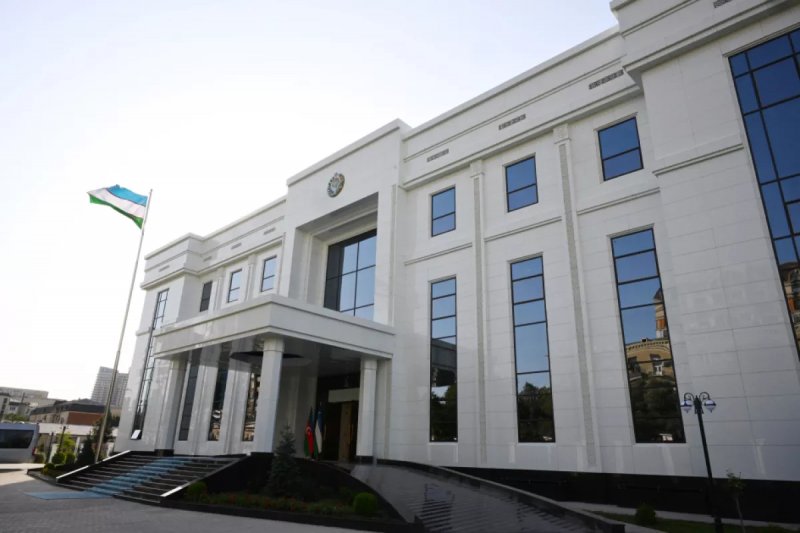
Cultural diplomacy is also playing a surprising yet impactful role. The symbolic laying of the foundation stone for an “Uzbekistan” park in Baku and the inauguration of Uzbekistan’s new embassy—with a ceremonial hall proposed to be named after Karabakh—signal deep mutual respect. These gestures matter. In a region where memory, pride, and sovereignty are often intertwined, symbolism often precedes strategy.
This growing alliance also reinforces the increasingly relevant Organization of Turkic States, offering a new model of regionalism rooted in shared language, history, and economic pragmatism. Unlike older bloc-style alliances, this one is agile, multi-vector, and open to adaptation—precisely what this multipolar era demands.
The Uzbekistan–Azerbaijan partnership is not without its challenges. Both nations operate in a neighborhood marked by great-power rivalry, unresolved conflicts, and volatile markets. Yet, they are showing that regional agency matters—that smaller, historically sidelined countries can shape their destinies through cooperation, investment, and strategic clarity.
As the global center of gravity continues to tilt eastward, Tashkent and Baku may well emerge not only as pivotal regional players, but as co-authors of a new Eurasian order—one built on trust, infrastructure, and shared prosperity.
Their partnership is not merely symbolic. It is systemic—and it may prove to be one of the most durable and quietly transformative alliances of the decade.
(If you possess specialized knowledge and wish to contribute, please reach out to us at opinions@news.az).


Similar news