Why Trump is reshaping US foreign policy around resources


Editor’s note: Moses Becker is a special political commentator for News.Az, a PhD in political science, and an expert on interethnic and interreligious relations. The article reflects the author’s personal views and does not necessarily represent the position of News.Az.
The return of Donald Trump to the Oval Office marked a revision of the entire foreign and domestic policy of the United States. It is clear that this did not happen spontaneously but resulted from a shift in the concept of global economic development. In earlier times, when automobile giants dominated the market, the primary fuel used in engines was gasoline refined from oil. Hydrocarbons defined the vector of economic development for many years.
However, in recent times, the internal combustion engine has been rapidly displaced by electric vehicles. It is enough to note that in 2023, every fifth car sold worldwide was electric. According to IEA forecasts, the transition from internal combustion engines to electric vehicles will reduce global oil demand by at least 5 million barrels per day by 2030. In this context, the importance of rare earth metals is increasing. These elements are widely used in the production of batteries and magnets in engines, catalysts, and more. They are also essential components in the construction of large wind turbines, electric motors, and energy-saving lightbulbs. They play a major role in hard drives, flat-screen TVs, lasers, and fiber-optic cables. In recent years, the military industry has also developed an acute need for them.
This is why the United States is paying growing attention to countries like Russia and Ukraine, which possess significant reserves of these elements. This is also why Donald Trump seeks to end as quickly as possible the senseless war between these two states. Enormous financial interests and the promised prosperity of the American economy are at stake. It is no coincidence that the main negotiators with Russian President Vladimir Putin are Trump’s most trusted and close diplomats – Jared Kushner and Steve Witkoff.

Source: Reuters
Aiming to increase the competitiveness of the American economy, the White House also seeks to bring Venezuelan oil under its control in order to shorten the logistics chain for delivering this raw material to American consumers.
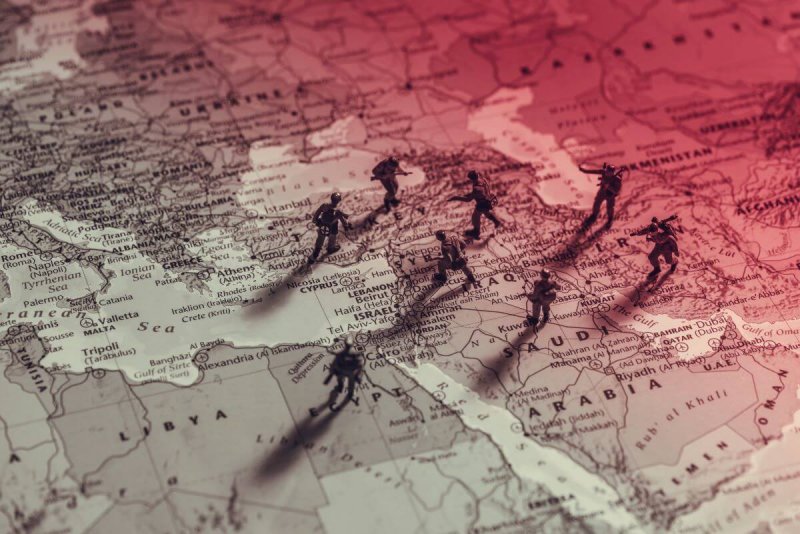
Against this backdrop, Donald Trump’s Middle East policy becomes understandable. His goal is to establish lasting peace in the region, ensure the uninterrupted supply of cheap hydrocarbons to global markets in line with U.S. interests, minimize the influence of radical groups and their patrons, and create a strong core of Arab states and Israel so that they can ensure their own security in the future. Only through joint efforts can these countries confront the heirs of the former Persian and Ottoman empires.
The actions of the White House administration create a well-grounded impression that the United States seeks to relieve itself of the burden of responsibility for the region. Against this background, the “gift” of an airplane from Qatar sounded like a plea not to abandon Arab states to their fate. It is no coincidence that Doha, under Washington’s pressure, abandoned Hamas, whom it had supported for many years, and distanced itself from Iran.

Source: CNN
A struggle is now unfolding over Syria, which Washington seeks to turn into a state friendly to Saudi Arabia, the UAE, Bahrain, and soon, Israel. In this regard, the United States assigns a special role to Azerbaijan as a peacemaker. Today, Azerbaijan serves as a vivid example of pragmatic foreign policy for the rest of the Islamic world. As a Muslim country, Azerbaijan maintains close friendly relations with both Israel and all members of the OIC.
The main obstacle to achieving lasting peace in the region remains Iran’s uncompromising position. Despite its defeat in the 12-day war, Tehran still attempts to portray itself as a leading regional power. However, given the complex economic situation, aggravated by severe drought and a chronic economic crisis, the country is unlikely to play a significant role in the Middle East in the near future. Most likely, internal turmoil and a widening split within the elite will lead to a shift in course or even the possible dismantling of the Islamic regime.
The situation is further complicated by increasing instability in the global oil market. Recently, OPEC reduced its forecast for oil supply growth from non-OPEC+ countries by 0.1 million barrels per day. The forecast for 2026 was also reduced by 0.1 million barrels per day, down to 1 million barrels per day. In absolute terms, non-OPEC+ countries will account for 54.2 million barrels per day of oil supply in 2025, and 55.2 million barrels per day in 2026. In 2025, the strongest production growth is expected in the U.S., Brazil, Canada, and Norway, while the biggest decline is expected in Angola. In 2026, significant growth will again come from the U.S., Brazil, and Canada, with the sharpest decline expected in Norway.
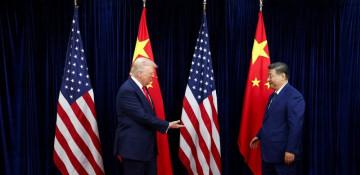
Against this background, the Trump administration’s strategy toward its main competitor — China — envisions a dual approach aimed at restraining Beijing’s global influence while preserving economic ties and maintaining the current Taiwan status quo. In practice, this means “preventing conflict over Taipei by maintaining military superiority.” The document outlining U.S. policy calls for “sustaining genuinely mutually beneficial economic relations” with China, prioritizing “reciprocity and fairness” while reducing U.S. dependence on Chinese supply chains. According to the strategy, this reset is key to supporting U.S. economic growth from “$30 trillion in 2025 to $40 trillion in the 2030s.”

Source: www.cbo.gov
The strategy presented to the world describes alliances as instrumental rather than intrinsic, referring to them as “a broad network uniting treaty allies and partners in the most strategically important regions of the world,” used as tools within Trump’s broader goal of disrupting traditional norms. “President Trump employs unconventional diplomacy, American military power and economic leverage to surgically extinguish the smoldering embers of conflict between nuclear-armed states and the brutal wars fueled by centuries-old hatred.”
Particular attention in the updated U.S. strategy is devoted to the Indo-Pacific region. The U.S. believes this area will “remain one of the key economic and geopolitical battlegrounds of the century.”
“The Indo-Pacific region already accounts for nearly half of global GDP, and this share will undoubtedly grow throughout the 21st century,” the document notes. The U.S. intends to maintain “balanced trade” with China, but only in non-strategic goods. Washington seeks to preserve “mutually beneficial economic relations with Beijing.”
The strategy emphasizes that Washington no longer views the Middle East as the dominant factor that once defined the contours of American foreign policy. The region “is no longer a constant irritant and a potential source of imminent catastrophe,” the White House said. At the same time, the U.S. is interested in expanding the Abraham Accords to a larger number of Middle Eastern states. This is why Washington seeks to minimize the role of regional powers by creating an economically based alliance of high-tech Israel and Arab states as a counterweight.
(If you possess specialized knowledge and wish to contribute, please reach out to us at opinions@news.az).


Similar news