4,000-year-old wooden doors found in Türkiye


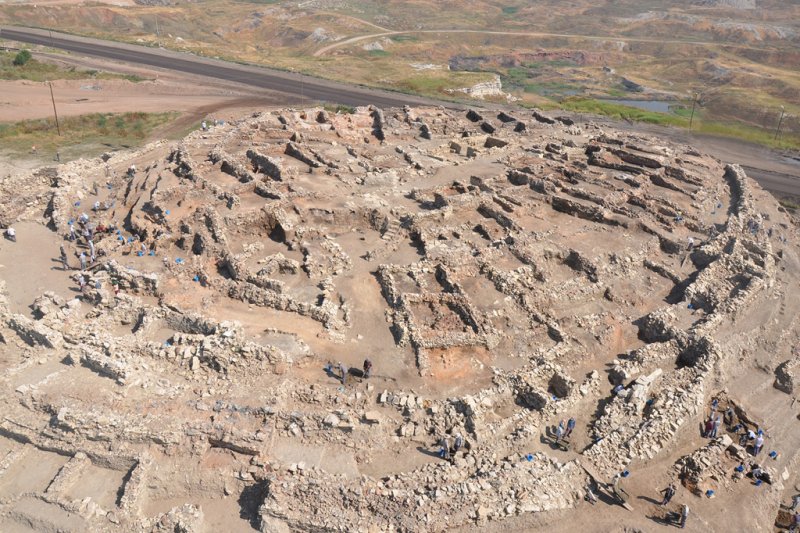
Archaeologists in Türkiye have identified rare remains of what may be nearly 4,000-year-old wooden doors at the ancient site of Seyitömer Höyük, offering new insight into daily life during the Middle Bronze Age.
The findings, published by archaeologist Semra Kaygısız in the Dumlupınar University Journal of Social Sciences, focus on carbonized wooden fragments discovered inside buildings dating back to around 2000 BCE. Unlike stone or clay, wood rarely survives in archaeological contexts, making the discovery especially significant, News.Az reports, citing Arkeonews.
The remains were found in three structures within the settlement’s Layer IV, located near modern-day Kütahya. Researchers believe the fragments once formed single-leaf wooden doors based on their rectangular shapes, plank-like construction, and alignment with door openings.
RECOMMENDED STORIES
Although the wood was preserved only in a charred and fragmented state—likely due to ancient fires—its position on building floors suggests the doors may have opened inward before collapsing. Measurements of the remains closely match the dimensions of nearby entrances, strengthening the interpretation.
Seyitömer Höyük, excavated since 1989, is a key archaeological site in western Anatolia, containing layers from multiple historical periods, including the Bronze Age, Iron Age, and Roman era. Out of 174 Middle Bronze Age structures identified at the site, only three yielded possible wooden door remains, underlining the rarity of the find.
Experts say the discovery helps reconstruct how homes were organized, how spaces were secured, and how people moved within buildings thousands of years ago. It also provides rare physical evidence of wooden architectural elements, which are usually lost over time.
The findings add to a growing body of unusual organic preservation at the site, offering a clearer picture of everyday life in ancient Anatolia, where even simple objects like doors can reveal complex aspects of social and domestic life.
By Aysel Mammadzada


Similar news