Alibaba stock down 31% from its peak


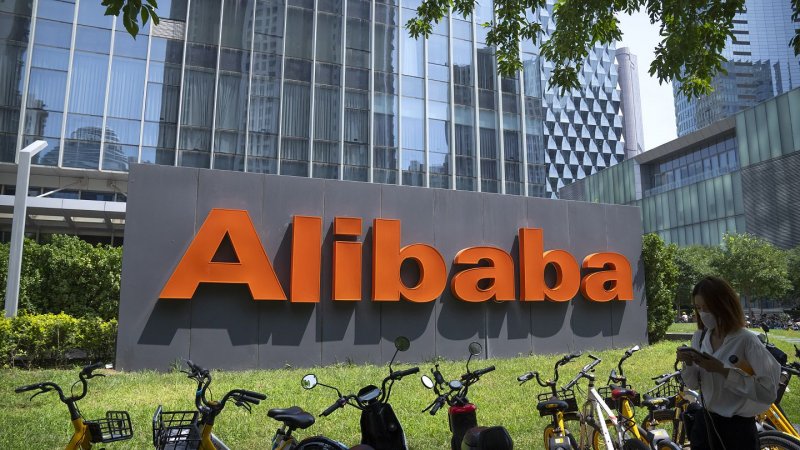
Alibaba (BABA) has dropped 31% from its 52-week high of $192.67, with the market remaining divided on the future of China's leading AI company.
Bulls see 36% cloud revenue growth, a $100 billion AI revenue target, and a chip program no Chinese rival can match. Bears see a 66% collapse in quarterly net income, negative trailing levered free cash flow, and geopolitical risk that proved its speed earlier this year, News.Az reports, citing foreign media.
RECOMMENDED STORIES
On February 13, 2026, the Pentagon briefly published an updated 1260H list adding Alibaba alongside Baidu and BYD as companies allegedly tied to China’s military, then withdrew it the same day. The stock fell approximately 3% in Hong Kong trading. Alibaba denied any military connection and signaled legal action. The episode underscored one permanent reality for BABA investors: headline risk moves the stock before facts can catch up.
Then came tariffs. President Trump imposed a 34% reciprocal tariff on Chinese goods, China retaliated, and BABA hit its max drawdown of 36.77% on April 7, 2026.
The most recent earnings, released March 19, 2026, added little comfort. Total revenue came in at RMB 284.8 billion, up 2% year over year but below analyst estimates of RMB 289.7 billion.
Net income fell 66%, and adjusted EBITDA dropped 57%, both driven by deliberate investment in AI infrastructure and quick commerce. The stock fell 1.99% on the day. CEO Eddie Wu framed the logic directly: “With the dawn of the AI agent era, the addressable market for AI infrastructure providers like Alibaba is set to grow exponentially.”
Is Alibaba Undervalued Today?
The entire debate comes down to one question: Is the profit compression temporary or structural?
The damage looks real. LTM net income margin is 16.8%, down from 27.7% over the prior five years. Trailing levered free cash flow is negative. Capital expenditure surged to RMB 84.3 billion in fiscal year 2025, a 205% year-over-year jump, as Alibaba committed at least RMB 380 billion ($52 billion) to AI and cloud over three years, more than its total AI and cloud spend over the prior decade. EBITDA margins are expected to compress from 20.3% in fiscal year 2025 to around 12% in fiscal year 2026 before recovering toward 23% by fiscal year 2030, per TIKR consensus estimates.
The underlying segments tell a different story. Cloud Intelligence Group revenue from external customers grew 35% this past quarter, with AI-related products delivering triple-digit growth for the tenth consecutive quarter. Taobao and Tmall Group generated RMB 449.8 billion in revenue for fiscal year 2025, with RMB 196.2 billion in segment operating income. Neither is in distress. They are mature cash generators funding the next platform, the same structural trade-off that made Amazon investors uneasy for a decade before the thesis paid off.
Alibaba’s direct tariff exposure is narrower than the stock move implies. Its domestic commerce operations dominate revenue, and international commerce carries minimal direct U.S. exposure. The tariff pain is sentiment, not revenue.
Quick commerce is the more legitimate pressure point. Management is targeting over RMB 1 trillion in gross merchandise volume by fiscal year 2028 and profitability by fiscal year 2029. Until those milestones arrive, consolidated margins remain compressed.
By Ulviyya Salmanli


Similar news