Ancient Nile branch discovery may explain how Egyptian pyramids were built


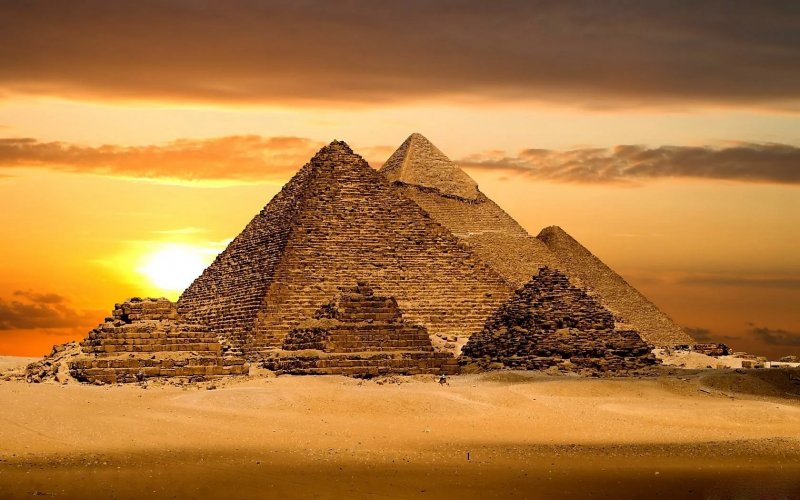
A landmark discovery of an ancient branch of the River Nile may have provided new insight into how the pyramids in Egypt were constructed thousands of years ago.
Researchers suggest that a now-dried waterway near Giza could have been used to transport massive building materials required for the construction of the pyramids, News.Az reports, citing Indy 100.
The ancient river branch, which once flowed through the Giza region, is believed to have supported the movement of stone blocks and other heavy materials. Its proximity to multiple pyramid sites may also help explain why such a large concentration of pyramids exists in that area of Cairo.
The discovery was made by Dr Eman Ghoneim, who used radar satellite data to examine the Nile Valley and revealed what she described as an “invisible world of information beneath the surface.” She presented her findings at the 13th Congress of Egyptologists earlier this year.
RECOMMENDED STORIES
According to Ghoneim, the ancient waterway, known as the Ahramat Branch, was not a small channel but a major branch of the Nile. In some areas it may have reached widths of around half a kilometer or more, comparable to the modern Nile’s size. The branch is believed to have extended from Giza to Faiyum and passed through 38 pyramid sites.
Researchers say the location of the pyramids, positioned close to the ancient riverbank, could indicate they functioned as “valley temples” that may have operated like ancient ports used for transporting materials. However, there is still no definitive confirmation of whether the river was active during the Old and Middle Kingdom periods, around 4,700 years ago.
The study could help explain not only pyramid construction but also lost parts of ancient Egyptian civilization. As the Nile shifted over time, ancient towns and settlements are believed to have disappeared under layers of silt.
Ghoneim noted that as river branches vanished, entire cities and towns were lost, leaving their exact locations unknown today, suggesting that significant parts of ancient Egypt may still remain undiscovered beneath the desert landscape.
By Leyla Şirinova


Similar news