Armenia's exit from CSTO geopolitical defeat for Russia


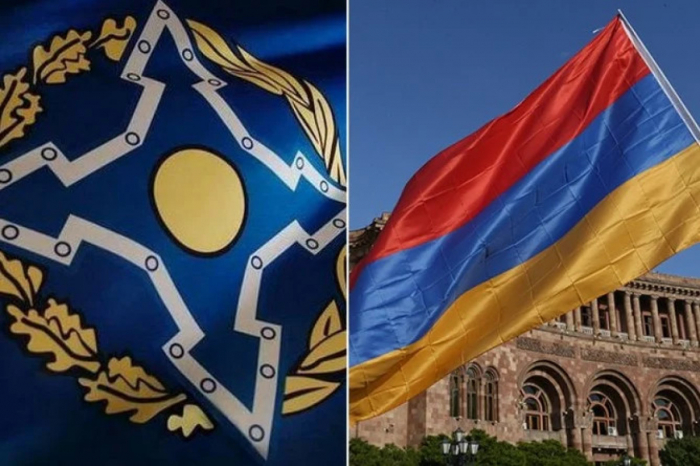
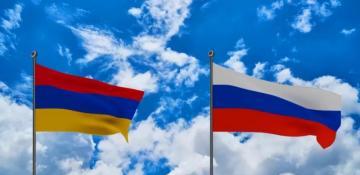
In a sensational statement in parliament, Armenia's Prime Minister Nikol Pashinyan announced his country's intention to quit the Russian-led Collective Security Treaty Organization (CSTO), although the exact timing of this move has not yet been determined. This decision stems from several factors, including Armenia's dissatisfaction with the CSTO's actions during the conflict with Azerbaijan and the feeling that the organization failed to fulfill its obligations to Armenia.
Earlier this year, the Armenian Foreign Ministry announced the country's intention to refrain from participating in the financing of CSTO activities in 2024, emphasizing Armenia's lack of desire to continue its membership in the organization. This decision is part of a broader trend as Armenia re-evaluates its relationships with regional and international partners.
In response to Pashinyan's statement, the Russian Foreign Ministry noted that Armenia maintains its financial obligations to the CSTO, although it had stated that it would not pay its membership fee. Russian authorities emphasized the importance of maintaining financial discipline in the global context and expressed their readiness to discuss complex issues with their Armenian partners.
It is worth noting that Armenia's move has caused concern both domestically and internationally. During Pashinyan's speech in parliament, protesters gathered outside, demanding his resignation. This reflects increasing internal tension and disagreements over foreign policy orientation in the country.
Armenia's decision to leave the CSTO could also have potential implications for security and stability in the region. The organization, based on principles of mutual defense, is a key element of regional stability, and the departure of one of its members could weaken its overall effectiveness.
However, despite this move, it is essential to consider that Russia-Armenia relations remain important for both sides. The meeting between Russian President Vladimir Putin and Armenian Prime Minister Nikol Pashinyan in Moscow this May indicates both countries' desire to continue dialogue and develop mutually beneficial cooperation.
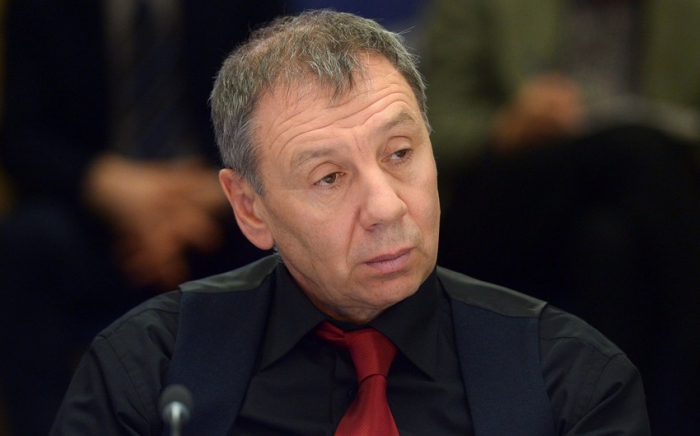
In an interview with News.Az, Russian statesman, diplomat, and political scientist Sergey Markov stated that Russia has a sharply negative view of Armenia's potential withdrawal from the CSTO. This is perceived as a significant geopolitical defeat for Russia, which could indirectly weaken its position in many other regions.
"This would signal to all countries that Russia is in a weakened state, the Americans are advancing, and Russia's allies are fleeing, thereby showing that Russia is suffering. In other words, it would be a geopolitical defeat in the broader geopolitical conflict with the United States," he said.
Markov emphasized that no one views Pashinyan as an independent politician, and no one believes there is any conflict between Russia and Armenia.
"Everyone believes that it is the Americans, the British, and the European Union who are pulling Armenia away from Russia and taking it as their ally. This suggests that Armenia's withdrawal from the CSTO could have extensive but rather uncertain geopolitical consequences. The West and the United States are likely to use Armenia against Russia," the expert noted.
Markov highlighted that specific security problems in the region mean Armenia's withdrawal from the CSTO would not significantly impact Russia's security in the region.
"Russia has a military base in Gyumri, but its operations are based on bilateral relations between Russia and Armenia, and this agreement is in place until 2044. Moreover, the Gyumri base is not of significant strategic importance to Russia. It could be used for intelligence purposes against Iran by America and Israel. In essence, it serves no specific purpose. The base in Gyumri remains not because Russia needs it but because Armenia needs it. Thus, from a security perspective, Russia does not need the base in Gyumri. Firstly, the base was supposed to tie Russia to Armenia in terms of security. Secondly, losing the base in Gyumri would be seen as a sign of weakness for Russia. Generals who once made history in the 19th century by showing military prowess and establishing this base in Gyumri would see their legacy handed over by current generals in the 21st century. This is shameful and a difficult decision to make. The base in Gyumri is important for Russian generals from a moral responsibility perspective. But overall, Russia does not need the base is not needed by Russia," he noted.
Markov pointed out that CSTO membership is important not for Russia but for Armenia. Armenia needed to be in the CSTO to be close to a major leader like Russia.
"We need to understand the logic behind the creation of the Collective Security Treaty Organization. There were two key points, with a third added by Armenians. The first and most important point was that the CSTO was created to fend off possible attacks by radical Islamists from Afghanistan on Central Asian countries and Kazakhstan. It was established for the radical Islamic threat and invasion from the Taliban or later the Islamic State in Afghanistan. Currently, there is a branch of the Islamic State called Wilayat Khorasan in Central Asia. During the civil war in Tajikistan, there was a similar model with the potential for invasion. Moreover, there is the Fergana Valley, spanning several states, which can become volatile at any moment," Markov said.
"Russia decided to establish the CSTO to provide the armed forces and security services of Central Asian countries, prevent the collapse of statehood, avoid massacres against Russians, and stop the mass migration of millions of refugees. When the CSTO was established, the Armenian leadership took the initiative and said, 'Listen, we will have a conflict with Azerbaijan, but let's bring Russia here.' Therefore, Armenia's membership of the CSTO has always been in favor of Armenia, not Russia. But the idea in the CSTO was very simple: if there is a war between Armenia and Azerbaijan, Russian troops will fight against Azerbaijan on Armenia's side. However, when Russia refused to do so, Armenia started to withdraw from the CSTO," he added.
The political scientist noted that if Armenia leaves the CSTO, there will be a geopolitical void, a geopolitical influence vacuum in Armenia, which Western countries will quickly fill, and there will be Western military bases, NATO, and America. Armenia hopes that in this case, NATO members will fight on Armenia's side against Azerbaijan. "But these are naturally very naive hopes. For Russia, it is a significant threat if American and French military bases appear there. Incidentally, this is also a considerable threat for Iran, as American military bases, of course, have beautiful names like training centers. These will be used for war against Iran. Incidentally, this is why Iran is now conducting military exercises with Azerbaijan to show that it will not allow the creation of American military bases on Armenian territory. Furthermore, creating such bases poses a threat to both Georgia and Azerbaijan. Because it is entirely possible that France, Armenia, and the USA might intervene against Azerbaijan and Georgia in the future. This is the geopolitical combination that Pashinyan is currently spinning," he added.

At the same time, Igor Korotchenko, Director General of the Caspian Institute for Strategic Studie s (Russia) , stated in an interview with News.Az that Armenia no longer participates in CSTO activities as the country's Prime Minister Nikol Pashinyan announced that Yerevan has suspended its participation in the statutory bodies of the CSTO.
"Additionally, since last year, Armenia has not participated in the CSTO's military and political events. Specifically, during the summit of CSTO heads of state held in Minsk in November 2023, Pashinyan ignored this event. Similarly, during the recent meeting in Kazakhstan, Armenia's Defense Minister Suren Papikyan ignored the work of the CSTO Defense Ministers' Council. Armenia has stopped paying its membership fees to the CSTO budget, thus not only suspending its participation but also ceasing any support," he added.
The Russian political analyst noted that Yerevan took on obligations when it joined the CSTO. However, Pashinyan, by making new accusations in parliament, has threatened that Yerevan might soon leave the organization. With these threats, Armenia is significantly altering the balance of power and configuration in the South Caucasus region. By leaving the CSTO, it is seeking a new umbrella, which includes Western military support.
"In this regard, during the recent talks in Yerevan, there were very characteristic statements about reaching the level of strategic partnership between Yerevan and Washington," he noted.
Korotchenko emphasized that Yerevan and Washington recently signed a new strategic cooperation agreement with the participation of high-ranking officials from the US State Department. There is already a significant mission of American military advisers directly working with the Central Apparatus of the General Staff and the Armenian Ministry of Defense.
"This mission is based on the fact that in the future, Armenia might join Western security alliances, and it prepares them for transitioning to new standards of planning and interaction. Naturally, the presence of a Russian military base in Armenia is also in question and could be withdrawn and replaced by Western military components in a short period. Of course, the fact that Armenia actively brings the West to the South Caucasus poses a threat to stability and security. On the one hand, there is strong revanchist sentiment in Armenia, and it is evident that both the Americans and the French will play on these contradictions to pit Armenia against other countries in the South Caucasus," Korotchenko said.
"Most importantly, Armenia's territory could be used for the deployment of various Western military facilities and foreign military bases. Firstly, the potential establishment of a US Air Force base in Yerevan poses a threat. This scenario is calculated and theoretically possible. Additionally, the main electronic intelligence agency of the US intelligence community, the National Security Agency (NSA), is also not opposed to establishing an electronic espionage center on Armenian territory to gather information on Iran and Russia. Therefore, today's actions of Armenian politicians contradict both Armenia's own interests and the interests of the vast majority of South Caucasus countries," he added.
The political analyst stated that Azerbaijan, Turkey, Russia, Iran, and Georgia are developing common approaches to prevent Armenia from becoming a source of instability in the South Caucasus.
"Various levels of Russian officials have already expressed negative opinions about Armenia's cooperation with the West, but unfortunately, these signals and messages from Moscow are not being accepted, and moreover, they are ignored by Yerevan. Pashinyan is increasingly behaving more freely and aggressively. He is, in fact, inciting Armenian society to take an aggressive stance against the Russian Federation because there are accusations against Russia that it has allegedly failed to fulfill certain obligations to Armenia. This is essentially Armenia's retaliation against the Russian Federation, as it did not fight for Armenia's interests in Karabakh, acknowledging the conflict. It has nothing to do with the CSTO and the Russian Federation. In 2022, Russia clearly stated that the fighting was taking place on Azerbaijan's internationally recognized territory and that there was no basis for intervening in this provoked armed conflict. Yerevan, as a result of this, suffered a catastrophic defeat in the 44-day war and was forced to surrender. However, Pashinyan and his team prefer to direct the blame for this military defeat towards Russia rather than addressing their fleeing army (as is known, there were 12,000 Armenian deserters from the battlefield) and instead direct all accusations towards a state that did not interfere at all in these events," he said.
Thus, Armenia's decision to leave the CSTO reflects a complex dynamic in regional politics and can have broad implications for the country itself, the other members of the organization, and relations with the region as a whole. However, the future of relations between Armenia and other CSTO member states remains uncertain, and future steps in this direction will depend on the future processes in the region and the domestic political situation in Armenia.


Similar news