Astronauts of Artemis II mission express gratitude to the world following historic splashdown


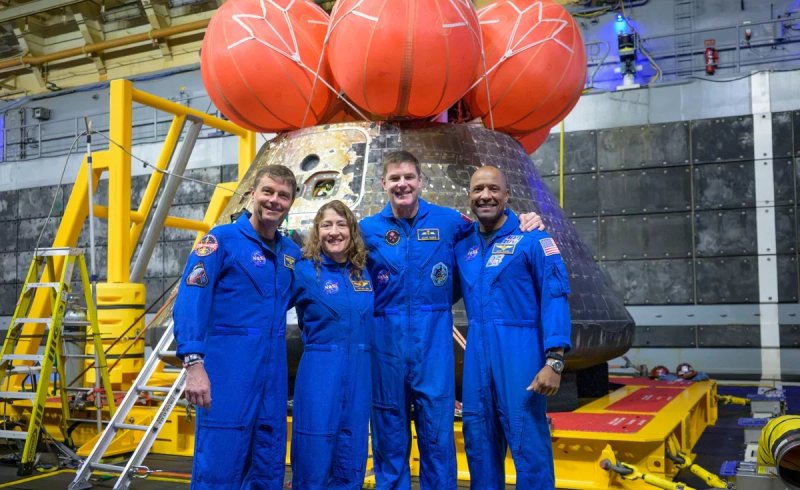
The crew of Artemis II has returned to Earth, marking the successful completion of humanity's first journey to the Moon in over half a century.
Following their splashdown in the Pacific Ocean on April 10, 2026, astronauts Reid Wiseman, Victor Glover, Christina Koch, and Jeremy Hansen shared a heartfelt message of gratitude, thanking the global community for its support throughout the ten-day mission, News.Az reports, citing Scientific American.
The crew emphasized that the mission's success belonged not just to NASA and its partners, but to all of humanity as a collective step toward a permanent lunar presence.
During the mission, the Orion spacecraft, named Integrity, traveled more than 1.1 million kilometers, breaking the record for the farthest distance ever traveled by a crewed spacecraft.
RECOMMENDED STORIES
The mission included a historic flyby of the lunar far side and the observation of a total solar eclipse from deep space. Pilot Victor Glover reflected on the experience, noting that seeing the "Blue Marble" from such a distance served as a powerful reminder of the planet's beauty and fragility, urging people on Earth to cherish and protect their shared home.
The return of the Artemis II crew marks a pivotal milestone for the Artemis program, proving the reliability of the Space Launch System (SLS) and the Orion capsule for deep-space travel.
While the astronauts are now reuniting with their families in Houston, the data gathered during their flight is already being analyzed to prepare for Artemis III, which aims to land the first woman and first person of color on the lunar surface. Despite current debates regarding future space agency budgets, the crew remains optimistic, describing their voyage as a "melody that lingers on" and a symbol of what can be achieved through international cooperation.
By Leyla Şirinova


Similar news