Berlin hosts forum on Azerbaijan-Armenia peace


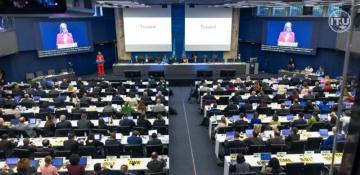
Berlin has become a platform for high-level dialogue on peace in the South Caucasus, as Germany hosted an event titled “Turning Point in the South Caucasus: Historic Peace Between Azerbaijan and Armenia”.
The event was organised by the ICI Berlin Institute for Cultural Inquiry and Ludwig Maximilian University of Munich, News.Az reports, citing AZERTAC.
This was the first event of its kind held in Germany in this format. It was attended by representatives of the German government, members of the Bundestag, experts, journalists, and prominent figures from Germany’s political, economic, and academic circles.
Speakers at the event included Germany’s Federal Minister for Foreign Affairs Johann Wadephul, Armin Laschet, Chairman of the Bundestag’s Committee on Foreign Affairs, as well as Azerbaijan’s Ambassador to Germany Nasimi Aghayev and Armenia’s Ambassador to Germany Viktor Yengibaryan.
In his address, Foreign Minister Wadephul noted that, as the former chairman of the Bundestag’s German–South Caucasus Parliamentary Group, he was closely familiar with the former Armenia–Azerbaijan conflict and had regularly discussed the issue with the ambassadors of both countries at the time. He emphasised that the results achieved in the peace process last year represent a major achievement for both countries and an important event in European history. Wadephul said these achievements provide grounds for looking to the future with hope and affirmed that Germany stands ready to continue contributing to the process. He added that peace also creates broad opportunities for both countries to establish stable and reliable relations with the European Union.
Laschet welcomed the fact that such an event, with the ambassadors of both countries in attendance, was held in Berlin for the first time. He stressed that the process is important not only for Azerbaijan and Armenia, but also for Germany, as it could open new transport and railway connections to Central Asia, which would also be significant for Europe. Laschet also recalled his participation in German President Frank-Walter Steinmeier’s first official visit to Azerbaijan and Armenia last year, highlighting in particular Azerbaijan’s rich tradition of tolerance and the peaceful coexistence of representatives of different religions.
In his remarks, Ambassador Aghayev stated that following the 2020 Patriotic War, under the far-sighted and strategic leadership of President Ilham Aliyev, Azerbaijan took practical steps towards achieving lasting peace and stability in the region. “It was Azerbaijan that initiated the peace agenda, put forward the basic principles of the peace agreement, and presented its first draft. Although negotiations were conducted in a bilateral format, Germany played a particularly constructive role in the decisive phase. In August last year, at the historic peace summit in Washington, the parties signed a joint declaration and initialled the peace agreement, opening a new page in relations,” he said.
The ambassador emphasised the need to fully align Armenia’s Constitution with the principles of the peace agreement and to promptly remove all territorial claims against Azerbaijan in order to ensure a stable and legally robust peace.
He also highlighted Azerbaijan’s concrete steps in recent months to strengthen peace, as well as the intensification of dialogue between parliaments and civil societies.
Addressing the importance of the TRIPP route, Aghayev noted that the corridor, which envisages an unobstructed connection between mainland Azerbaijan and the Nakhchivan Autonomous Republic, would further consolidate peace through shared economic interests. He added that the route is also important for diversifying trade and connectivity across a wider region, improving supply chains for Europe and Germany. The ambassador stressed the importance of the full and timely implementation of commitments to establish the route.
Following the speeches, the ambassadors answered numerous questions from participants.


Similar news