Canada, China reach initial trade deal on EVs, canola


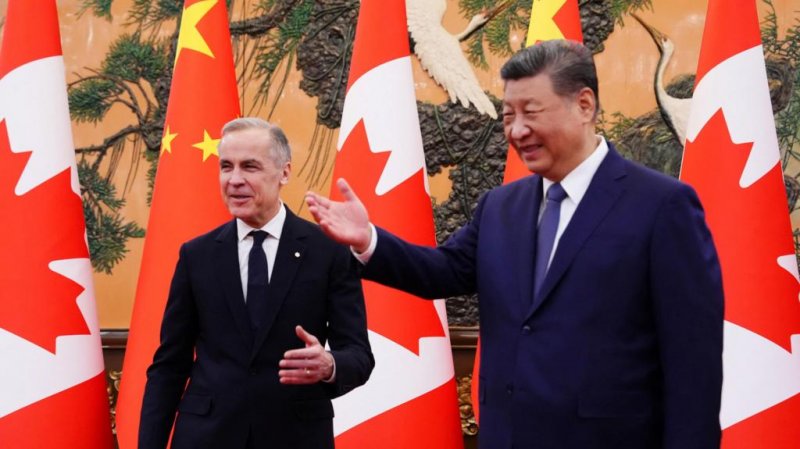
Canada and China have reached an initial trade agreement aimed at reducing tariffs on electric vehicles and canola, Prime Minister Mark Carney said on Friday, as both countries pledged to dismantle trade barriers while developing new strategic ties.
“This is a return to levels prior to recent trade frictions, but under an agreement that promises much more for Canadians,” Carney told journalists in Beijing, News.Az reports, citing Reuters.
Carney, the first Canadian prime minister to visit China since 2017, sought to repair relations with Canada’s second-largest trading partner after the U.S., following months of diplomatic engagement.
Under the initial agreement, Canada will allow the import of up to 49,000 Chinese electric vehicles under a tariff rate of 6.1 percent on most-favoured-nation terms, Carney said after holding talks with Chinese leaders, including President Xi Jinping. He did not specify the time frame for the arrangement.
The new tariff level contrasts sharply with the 100 percent tariff imposed on Chinese electric vehicles in 2024 by the government of former Prime Minister Justin Trudeau, following similar measures introduced by the United States. In 2023, China exported 41,678 electric vehicles to Canada.
Trudeau had defended the higher tariff by arguing that Chinese manufacturers enjoyed an unfair advantage in the global market due to state subsidies, a situation he said posed a threat to Canada’s domestic industry.
"For Canada to build its own competitive EV sector, we will need to learn from innovative partners, access their supply chains, and increase local demand," Carney said.
He pointed to a stronger partnership with China in clean energy storage and production, driving new investments.
Carney said he expected the EV pact would drive "considerable" Chinese investment into Canada's auto sector, create good careers in Canada and speed it towards a net zero future.
Last March, in retaliation for Trudeau's tariffs, China levied tariffs on more than $2.6 billion of Canadian farm and food products, such as canola oil and meal, followed by tariffs on canola seed in August.
That led to a slump of 10.4% in China's 2025 imports of Canadian goods.
Under the new deal, Carney said, Canada expects China will lower tariffs on its canola seed by March 1, to a combined rate of about 15%.
"This change represents a significant drop from current combined tariff levels of 84%," he said, adding that China was a $4-billion canola seed market for Canada.
In addition, Canada expects its canola meal, as well as lobsters, crabs, and peas to be freed from anti-discrimination tariffs from March 1, until at least year-end, he added.
The deals will unlock nearly $3 billion in export orders for Canadian farmers, fish harvesters, and processors as they realise the full potential of the Chinese market Carney said.


Similar news