Canada weighs EV import caps for Tesla, BYD


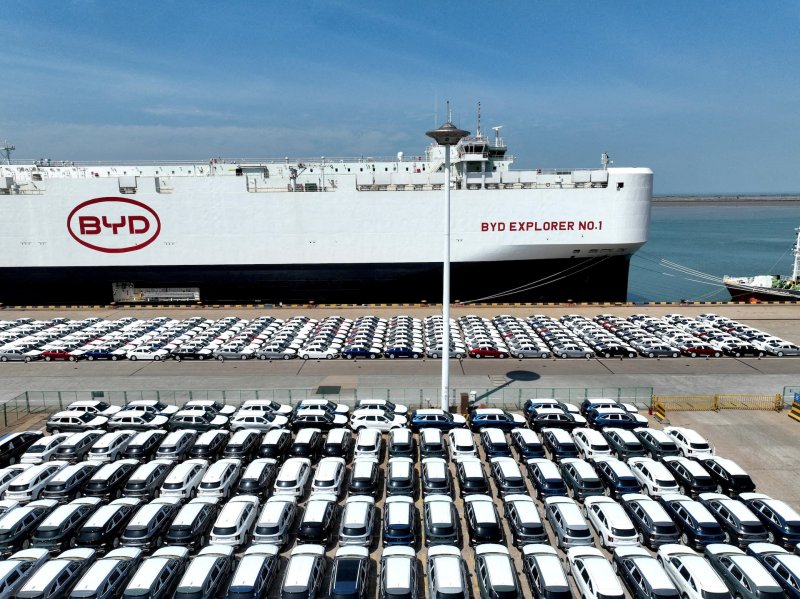
Canada is considering introducing specific import caps for individual automakers such as Tesla (NASDAQ: TSLA) and BYD (HKG: 1211) as part of its new rules governing China-made electric vehicles (EVs), News.Az reports, citing Bloomberg.
Senior government officials are currently debating how to allocate an annual low-tariff quota of 49,000 China-made EVs entering the country.
In January, during Prime Minister Mark Carney’s visit to China, Canada agreed to allow up to 49,000 China-made EVs per year into its market.
Vehicles covered under this quota will benefit from a 6.1% most-favored-nation tariff rate, replacing a previously much higher punitive tariff of up to 106.1%.
RECOMMENDED STORIES
The policy creates new opportunities for Chinese automakers such as BYD and Chery to enter the Canadian market, while also allowing global manufacturers like Tesla and Polestar to export vehicles produced in their Chinese factories to Canada.
However, the government is still considering whether to impose specific volume limits on individual companies to prevent any single automaker from dominating the quota system, the report said.
Officials are reportedly looking at internal allocation mechanisms within the 49,000-vehicle cap to ensure a balanced distribution among manufacturers.
The quota represents a small portion of Canada’s auto market, accounting for less than 3% of total new passenger vehicle and truck sales last year.
The system officially came into effect in March, with an initial 24,500 import permits issued on a first-come, first-served basis until the end of August.
As of this week, none of the allocated quota has reportedly been used, according to Bloomberg.
Tesla has recently begun marketing a Model 3 in Canada priced at C$42,132 (about $30,900) including delivery fees, a significant reduction from its previous listed price. The vehicle is believed to be sourced from Tesla’s Shanghai factory, although the company has not commented on the matter.
Chinese EV makers such as BYD are also seeking to take advantage of the tariff reduction window to expand their presence in North America.
The quota system could later evolve to favor automakers that establish stronger operations in Canada, including potential requirements for local partnerships or vehicle assembly, according to Canadian officials cited in the report.
The government reportedly hopes the framework will encourage Chinese firms to form joint ventures with Canadian partners and expand into local manufacturing.
By Nijat Babayev


Similar news