China–US relations: The world’s most consequential rivalry explained


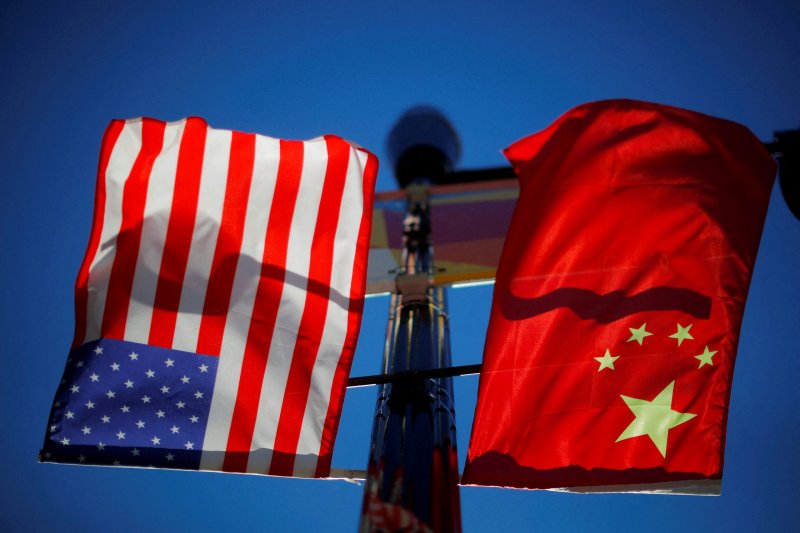
China–US relations remain one of the most decisive forces shaping global politics, economics, and security, News.az reports.
As the world’s two largest economies and most influential geopolitical actors, Beijing and Washington frequently move between phases of cautious cooperation and pointed confrontation. Their complex relationship influences global trade, technological innovation, supply chains, military alignments, and the wider international order. Understanding the long-term dynamics at the core of this relationship is essential, as its trajectory will continue to define international stability for decades to come.
A strategic rivalry decades in the making
Although China and the United States have interacted for more than a century, the modern contours of their relationship took shape after China’s economic reforms in the late 1970s. Washington hoped that deeper engagement would gradually integrate Beijing into the international order and encourage political liberalization. Instead, China harnessed globalization to accelerate its own growth while pursuing a political model distinct from Western expectations.
By the early 2000s, China’s extraordinary economic rise began reshaping global markets. As Beijing expanded its manufacturing power, invested heavily abroad, and modernized its military, the US increasingly viewed China not only as a competitor but as a systemic challenger. Today, this strategic rivalry is as much about ideology and leadership in global governance as it is about trade or military power.
Economic interdependence – and growing friction
Few bilateral relationships are as economically intertwined as China and the United States. China serves as a crucial link in global supply chains, while American consumers depend heavily on Chinese manufacturing. US companies rely on China’s vast market, and China, in turn, holds significant quantities of US Treasury bonds, making the two economies deeply interconnected.
Yet, it is precisely this interdependence that has produced friction. Washington argues that China’s industrial policies—state subsidies, technology transfer requirements, and preferential treatment for domestic firms—undermine fair competition. Beijing counters that these policies are essential for national development and reflect the unique structure of the Chinese economy.
Over the past decade, this tension has manifested in waves of tariffs, investment restrictions, and export controls. Both countries have increasingly promoted “economic security,” seeking to reduce dependence on each other, particularly in sensitive sectors such as:
-
semiconductors
-
artificial intelligence
-
telecommunications
-
critical minerals
-
defense technology
Although full economic decoupling remains unlikely because of the scale of their integration, a long-term “selective decoupling” or “de-risking” trend is firmly underway.
The tech battleground: who leads the future?
Technology has become the most visible—and consequential—arena of competition. The US aims to protect its lead in advanced chips, computing power, and AI systems. China, meanwhile, is determined to achieve technological self-sufficiency, especially after facing increasingly strict US export restrictions on semiconductors, fabrication equipment, and advanced computing components.
Key flashpoints include:
Semiconductors:
Washington has blocked the sale of high-end chips to Chinese firms and restricted US technology providers from working with China’s leading semiconductor companies. China has responded by accelerating domestic chip production and investing billions toward indigenous innovation.
5G and telecommunications:
The US has banned Huawei and pressured allies to restrict Chinese digital infrastructure, citing security concerns. China sees these restrictions as politically motivated attempts to hinder its global technological expansion.
AI and quantum technologies:
Both countries view leadership in AI and quantum computing as foundational to national strength. Their competition is driving rapid innovation but also increasing fears of an AI arms race without adequate global regulation.
As both governments tighten controls, the outcome is a fragmented global tech ecosystem where competing standards, supply chains, and digital platforms reflect broader geopolitical divides.
Military competition and the struggle for regional influence
While economics and technology dominate headlines, the most sensitive tension lies in security and military affairs—particularly in the Indo-Pacific region. Beijing sees Washington’s network of alliances and military presence as an effort to contain China’s rise. The US views China’s expanding navy, air force, and missile capabilities as destabilizing the regional balance of power.
The Taiwan question
No issue is more fraught. China considers Taiwan a breakaway province and has not ruled out reunification by force. The United States adheres to a “One China” policy but remains legally committed to providing Taiwan with defensive support. Any miscalculation, misunderstanding, or provocative move from either side risks triggering a conflict with international consequences.
South china sea and maritime disputes
China’s construction of artificial islands, expansion of maritime patrols, and sweeping territorial claims have prompted the US to conduct freedom-of-navigation operations. Southeast Asian nations often find themselves caught between economic reliance on China and security cooperation with Washington.
Alliances and regional posture
The US has strengthened partnerships with Japan, South Korea, Australia, the Philippines, and India. Groupings like the Quad and AUKUS signal Washington’s intent to maintain a robust regional presence. China interprets these moves as encirclement, while the US frames them as necessary deterrence.
The military dimension of the China–US rivalry remains one of its most dangerous arenas, where missteps could escalate quickly.
Global governance: competing visions for the future order
Beyond trade and security, the China–US relationship is shaped by their competing visions for global governance. Washington advocates a rules-based international order rooted in post–World War II institutions. Beijing argues for a system that reflects the multipolar world and provides greater voice to emerging economies.
Beijing has promoted the Belt and Road Initiative, the Asian Infrastructure Investment Bank, and other platforms that expand China’s international footprint. In response, the US and its partners have intensified their own infrastructure and development projects, seeking to offer alternatives to Chinese influence.
Competition also emerges in global standards, diplomacy, and leadership roles at institutions such as the UN, WTO, and WHO. Both countries use soft-power tools—aid, education, media, and cultural diplomacy—to shape international narratives.
Climate change: a rare path for cooperation
Despite tensions, China and the United States acknowledge that certain global challenges require cooperation. Climate change is the most prominent example. As the world’s largest carbon emitters, both countries understand that meaningful progress depends on joint action.
While their climate cooperation has faced interruptions during periods of political strain, they continue to find areas of alignment:
-
development of clean-energy technologies
-
reduction of coal dependence
-
methane emission initiatives
-
electric vehicle collaboration
-
commitments at global climate summits
These moments of collaboration demonstrate that even intense rivals can have overlapping interests when dealing with transnational threats.
Diplomacy and communication: managing competition responsibly
One of the recurring concerns is the risk of miscommunication between Beijing and Washington. Direct channels, leader-level summits, and military-to-military communication are vital to preventing escalations. Diplomatic engagement does not eliminate rivalry, but it reduces uncertainty and helps define guardrails for competition.
Both sides have emphasized the need to “manage competition responsibly,” though interpretations differ. The US stresses deterrence and transparency; China emphasizes respect for sovereignty and noninterference. Maintaining dialogue is essential, given how intertwined global stability is with their relationship.
What the future may hold
Predicting the direction of China–US relations is difficult, but several long-term trends are clear:
-
Strategic competition will remain the dominant framework.
Neither side expects the rivalry to disappear; instead, it will evolve across economic, technological, and geopolitical dimensions. -
Economic interdependence will persist—but with diversification.
Selective decoupling will reshape supply chains, but complete separation is unrealistic due to deep mutual reliance. -
Military deterrence and regional tensions will continue.
The Indo-Pacific will remain the most sensitive zone, particularly over Taiwan and maritime security. -
Technological rivalry will intensify.
Control of next-generation technologies is foundational to both countries’ national strategies. -
Cooperation on global issues will remain necessary.
Climate change, public health, and financial stability offer areas where collaboration can coexist with rivalry. -
The international order will increasingly reflect multipolar pressures.
Smaller nations will seek to balance between the two powers rather than choosing exclusive alignment.
Conclusion
China–US relations remain the world’s most consequential bilateral relationship—one defined by simultaneous interdependence, competition, and strategic mistrust. As both countries navigate their global roles, the international community closely watches their every move. Whether they ultimately lean toward managed competition, renewed cooperation, or heightened confrontation will shape the future of the global economy, regional security, and the international order itself.
This enduring rivalry is likely to remain a central theme in global affairs for decades. Understanding its key dynamics provides essential insight into how the world is changing—and where it may be headed next.


Similar news