Christian Tein case puts France’s legal system to test: 576-day investigation or political pressure?


For many years, France has presented itself as one of the leading defenders of human rights, the rule of law and judicial independence. French officials frequently emphasise the importance of protecting democratic values on international platforms and regularly assess the state of rights and freedoms in other countries. However, recent developments in territories under French control have raised serious questions about the extent to which the rule of law and judicial institutions operate independently within France itself.
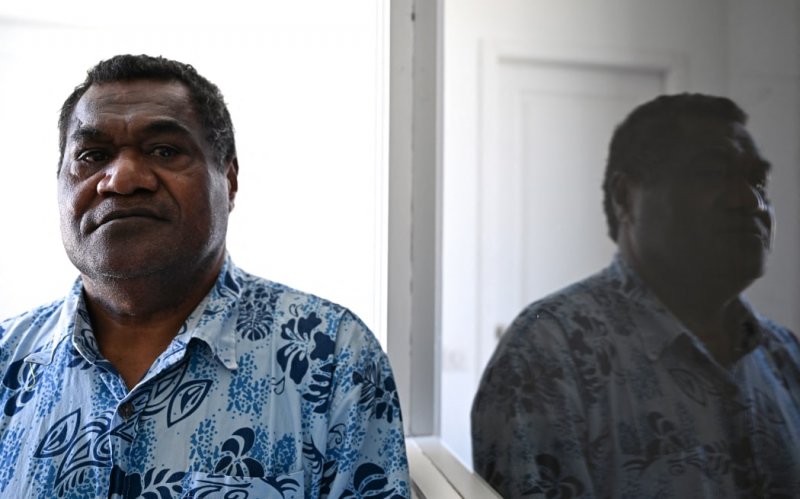
In this context, the case of Christian Tein, regarded as one of the leaders of the pro-independence movement in Kanaky–New Caledonia, has attracted particular attention. After a 576-day investigation, none of the accusations brought against him were substantiated. Nevertheless, during that period, he was detained thousands of kilometres away from his family, remained in custody, and became the focus of a broad political campaign of accusations, News.Az reports, citing Trend News Agency.
These circumstances have reignited debate over whether France’s judicial and investigative mechanisms may have been used for political purposes.
RECOMMENDED STORIES
What is the case about?
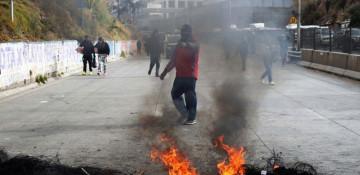
In 2024, plans by France to amend electoral legislation in Kanaky–New Caledonia triggered significant protests across the territory. Many members of the indigenous Kanak population believed that Paris was attempting to influence the region’s political future and weaken the position of pro-independence forces.
As tensions escalated and unrest broke out, the French authorities responded forcefully. Christian Tein, one of the leaders of the Field Action Coordination Cell (CCAT), was portrayed as one of the principal organisers of the disturbances. French law enforcement agencies alleged that he and other Kanak activists were responsible for orchestrating the unrest.
However, on 5 June 2026, investigating judges in Paris reached a very different conclusion. Their findings indicated that there was no concrete evidence linking Christian Tein to any criminal wrongdoing. According to the investigation, the primary arguments against him were based largely on his public speeches. The authorities found no secret communications, no messages coordinating violence and no telephone records supporting the allegations.
On the contrary, reports indicated that the investigation materials contained numerous examples showing that Tein and the organisation he led had called for calm and sought to reduce tensions during the crisis.
After approximately a year and a half of investigations, the French judiciary officially acknowledged that there was no evidence proving his guilt.
Why did the investigation last 576 days?
This is the central question surrounding the case.
If no evidence supporting the accusations was ultimately found, why did the investigation continue for 576 days?
Under normal legal practice, the purpose of an investigation is to determine whether a suspect is guilty or innocent. However, when an investigation lasts for such an extended period and ultimately concludes that the original allegations were unfounded, questions inevitably arise about the process itself.
Tein’s lawyers have highlighted precisely this issue. They argue that their client was transferred approximately 17,000 kilometres away, isolated from his family and supporters, held in detention for an extended period and subjected to continuous political accusations. In the end, all charges against him were dropped.
This situation recalls the legal concept often described as “the process as punishment”. Even if a final verdict results in an acquittal or the dismissal of charges, prolonged investigations, detention and public accusations may already have inflicted significant damage on an individual’s political activity, reputation and personal life.
Legal mechanisms as political instruments
This concern lies at the heart of the controversy surrounding the Kanak activists’ case.
International experience has shown that, in certain circumstances, judicial and investigative mechanisms can be used not necessarily to secure convictions but to limit the political activities of opponents. Lengthy investigations, complex legal procedures and sustained public campaigns of accusation may diminish an individual’s political influence regardless of the eventual legal outcome.
The facts emerging from Christian Tein’s case have fuelled similar discussions. There appears to be a significant gap between the French authorities’ initial allegations and the final conclusions reached by investigators. On the one hand, Tein was portrayed for a prolonged period as a key organiser of the unrest. On the other, the investigation ultimately failed to uncover any concrete evidence supporting those claims.
As a result, some observers argue that the process may have served not only a legal purpose but also a political one, potentially aimed at weakening leaders of the pro-independence movement both politically and publicly.
France’s colonial legacy and the New Caledonia question
The Christian Tein case is being viewed within a broader political context that extends beyond a single legal proceeding.
Kanaky–New Caledonia remains on the United Nations list of Non-Self-Governing Territories and is regarded as one of the territories where the decolonisation process has not been fully completed. A significant portion of the indigenous population has advocated independence for decades.
In such an environment, investigations targeting leaders of the independence movement inevitably acquire political significance. When those investigations ultimately fail to produce evidence supporting the allegations, doubts about the objectivity of the legal process become even stronger.
For this reason, the case of the Kanak activists is increasingly viewed not merely as a judicial matter but also as an indicator of France’s broader approach to its colonial legacy.
The possibility of an appeal raises further concerns
One factor further complicating the situation is that the Paris public prosecutor retains the right to appeal the decision.
Should such a step be taken, a legal process that has already lasted 576 days could be extended even further. Critics argue that this would intensify concerns about continued legal pressure on Kanak activists.
Once a court has determined that the evidence is insufficient, any prolonged continuation of proceedings could raise additional questions about possible political motivations behind the case.
Questions that remain unanswered
The investigation into Christian Tein and other Kanak activists has sparked significant debate about the degree of independence enjoyed by France’s judicial system. The fact that no concrete evidence was found to substantiate the allegations despite a 576-day investigation raises legitimate questions about the purpose and conduct of the legal process.
The case demonstrates how legal proceedings themselves can sometimes become instruments of political influence. For this reason, the Kanak activists’ case is increasingly viewed not only as a criminal investigation but also as an important example in discussions about the real limits of judicial independence in France, the potential use of legal mechanisms for political purposes, and the state of democracy in colonial territories.
The central question therefore remains unanswered: if an investigation lasting more than a year and a half ultimately failed to uncover evidence supporting the accusations, was the process genuinely aimed at delivering justice, or did it function as a mechanism of pressure against pro-independence political forces?


Similar news