What is the aim of the U.S. strike on Iran during ongoing talks?


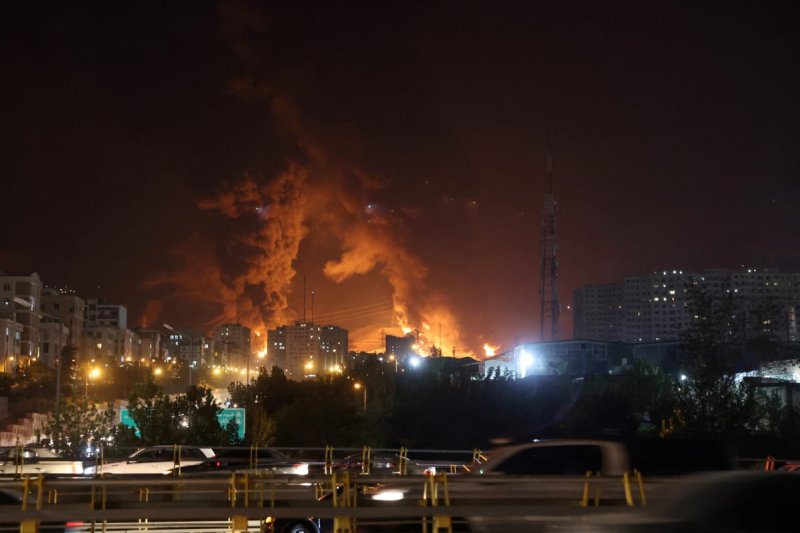
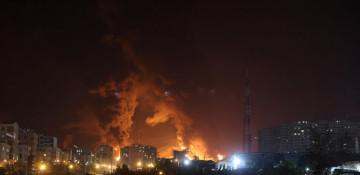
The United States launched strikes against Iranian military-related targets after accusing Iran of involvement in attacks against U.S. assets in the Persian Gulf region.
American officials described the operation as a limited and proportional response rather than the beginning of a broader military campaign, News.az reports.
The strikes came despite ongoing diplomatic contacts between Washington and Tehran aimed at reaching a wider agreement on regional security, sanctions, maritime security, and Iran’s strategic capabilities.
The timing of the strikes has generated significant international debate. If negotiations are still underway, why would Washington choose military action? To understand the rationale, it is necessary to examine the broader strategic objectives that may be driving U.S. policy.
Why would the U.S. strike Iran while negotiations are continuing?
Although military action and diplomacy are often viewed as opposites, major powers frequently use both simultaneously. Negotiations are rarely conducted in isolation from military, economic, and political pressure.
Washington appears to believe that diplomacy is more effective when backed by credible deterrence. The logic is that if Iran believes there are no consequences for actions that threaten U.S. interests, it may have less incentive to compromise during negotiations.
The strikes therefore appear to serve as a signal that the United States remains committed to diplomacy but is also prepared to respond militarily when it believes its personnel, allies, or strategic interests are threatened.
Is deterrence the primary objective?
Many analysts believe deterrence is one of the central goals.
Deterrence involves convincing an adversary that certain actions will carry unacceptable costs. From Washington’s perspective, failing to respond to attacks against American assets could encourage future incidents.
By conducting limited strikes, the United States seeks to demonstrate that attacks on American forces, military infrastructure, or commercial interests will trigger consequences. At the same time, the limited nature of the operation suggests that Washington wants to avoid a broader war.
This approach reflects a long-standing U.S. strategy in the Middle East: respond firmly enough to preserve credibility but avoid escalation that could lead to a large-scale conflict.
Are the strikes intended to improve America’s negotiating position?
Yes, this is widely considered one of the most likely explanations.
Negotiations are often shaped by leverage. Military power, economic sanctions, diplomatic alliances, and political influence all contribute to a country's bargaining position.
By demonstrating a willingness to use force, Washington may hope to strengthen its hand at the negotiating table. The message to Tehran is that failure to reach an agreement could result in increased pressure, while compromise could lead to reduced tensions and potential economic benefits.
In this sense, the strikes are not necessarily separate from diplomacy. Instead, they may be intended to influence the diplomatic process itself.
Is the U.S. trying to protect freedom of navigation in the Strait of Hormuz?
Very likely.
The Strait of Hormuz remains one of the world's most strategically important waterways. A substantial portion of global oil exports passes through the narrow passage connecting the Persian Gulf to international markets.
Any threat to maritime traffic can have significant economic consequences worldwide. Past tensions between Iran and the United States have often focused on shipping security and freedom of navigation.
By striking military assets linked to perceived threats, Washington may be attempting to reinforce its commitment to keeping the waterway open and secure. Protecting international trade routes has long been one of the principal objectives of U.S. military presence in the Gulf.
Could the attacks be aimed at limiting Iran’s regional influence?
Many observers believe this is another important factor.
Iran has built extensive political, military, and economic networks throughout the Middle East over several decades. These relationships provide Tehran with strategic depth and influence across multiple regional conflicts.
The United States and some of its regional partners view parts of this network as destabilizing. Limited military action may therefore be intended to constrain Iran's ability to expand or strengthen its regional position while negotiations are underway.
From Washington’s perspective, allowing Iran to increase its influence during talks could weaken American leverage and alter the regional balance of power.
Is Washington trying to prevent Iran from gaining advantages before a deal is reached?
This is a plausible explanation.
Negotiations often create incentives for both sides to improve their position before an agreement is finalized. If one party believes it can gain military, political, or economic advantages during the negotiating process, it may become less willing to compromise.
Military strikes can serve as a warning that attempts to alter facts on the ground through force or coercion will encounter resistance.
The objective may therefore be to preserve the existing balance while talks continue rather than allowing one side to gain additional leverage.
Are domestic political considerations involved?
Domestic politics almost always influences foreign policy decisions.
American leaders must consider how their actions will be viewed by Congress, political opponents, military institutions, allies, and the broader public.
A failure to respond to attacks on American assets could be criticized as weakness. Conversely, a major war could generate concerns about military overreach and economic costs.
Limited strikes allow policymakers to demonstrate resolve without committing to a prolonged conflict. This middle-ground approach can help satisfy domestic demands for action while preserving diplomatic flexibility.
Is the United States trying to reassure its allies?
Yes.
Regional partners closely monitor how Washington responds to security challenges. Countries throughout the Gulf, as well as Israel and other U.S. partners, rely to varying degrees on American security commitments.
If the United States failed to respond to attacks or threats, some allies might begin to question Washington’s reliability.
The strikes therefore serve not only as a message to Iran but also as reassurance to partners that the United States remains engaged and willing to defend its interests in the region.
Could the strikes be connected to Iran’s nuclear program?
Indirectly, yes.
Although the immediate trigger may be linked to recent security incidents, broader negotiations involve concerns regarding Iran’s strategic capabilities, including its nuclear activities.
Washington has consistently argued that any long-term agreement should address issues related to regional security and strategic stability. Military pressure can serve as a reminder that the United States retains options beyond diplomacy if negotiations fail.
However, the recent strikes do not appear to have been presented as direct attempts to destroy or significantly degrade Iran’s nuclear infrastructure.
Why not simply wait for negotiations to conclude?
From Washington’s perspective, waiting may involve risks.
Military planners often argue that deterrence depends on timely responses. Delayed action can sometimes be interpreted as hesitation or weakness.
If American officials believe Iran was responsible for hostile actions, they may conclude that an immediate response is necessary to discourage future incidents.
The calculation is that maintaining deterrence today may improve security conditions tomorrow, even if negotiations continue in parallel.
Is regime change the goal?
Officially, there is little evidence that the recent strikes were presented as part of a campaign aimed at overthrowing the Iranian government.
Instead, American officials have framed the operation in terms of self-defense, deterrence, and regional stability.
That said, debates continue within policy circles regarding the ultimate objectives of U.S. strategy toward Iran. Some argue that sustained pressure could weaken the Iranian leadership over time. Others believe Washington's goal is to change Iranian behavior rather than the government itself.
At present, the available evidence suggests that the immediate objective is deterrence rather than regime change.
What message is Washington trying to send?
Several messages appear to be directed at Tehran simultaneously.
First, the United States remains committed to negotiations.
Second, attacks on American interests will trigger military responses.
Third, Washington retains significant military capabilities and is prepared to use them when necessary.
Fourth, diplomacy remains possible, but only if both sides exercise restraint.
Finally, the United States wants Iran to understand that escalation carries risks that could outweigh potential gains.
Together, these messages form a classic strategy of coercive diplomacy, combining pressure with an offer to continue negotiations.
How is Iran likely to interpret the strikes?
Iranian leaders are likely to view the attacks as an attempt to increase pressure during negotiations.
From Tehran’s perspective, the strikes may be seen as a demonstration of American military power designed to improve Washington’s bargaining position.
At the same time, Iranian decision-makers must weigh the costs and benefits of retaliation. A strong response could increase domestic support and demonstrate resolve, but it could also risk a broader confrontation.
This creates a complicated situation in which both sides may continue negotiating while simultaneously engaging in military signaling.
Could the strikes undermine diplomacy?
Yes.
One of the biggest risks is that military action can make compromise politically more difficult.
Leaders on both sides face domestic audiences that may interpret concessions after military confrontation as signs of weakness. Hardline factions often gain influence during periods of heightened tension.
As a result, military incidents can complicate negotiations even when both parties still want an agreement.
The challenge for diplomats is ensuring that military actions do not create a cycle of retaliation that overwhelms the political process.
What are the risks of escalation?
Several dangers remain significant.
The first is miscalculation. Each side may misunderstand the intentions of the other and respond more aggressively than expected.
The second is retaliation. Limited strikes can trigger counterstrikes, leading to a cycle of escalating responses.
The third is regional spillover. Other actors may become involved, expanding the confrontation beyond the original dispute.
The fourth is economic disruption. Tensions in the Gulf can affect global energy markets, shipping routes, and investor confidence.
Finally, prolonged instability could weaken diplomatic efforts and reduce the likelihood of a negotiated settlement.
Does history offer any parallels?
Yes.
Throughout modern history, military pressure has frequently accompanied negotiations.
The United States has used combinations of sanctions, military deployments, limited strikes, and diplomatic engagement in various negotiations involving adversaries.
The underlying logic is often similar: demonstrate strength while leaving room for compromise.
History shows that military actions do not necessarily end negotiations. In some cases, they have been used to shape the conditions under which talks take place. In others, they have contributed to escalation and diplomatic collapse.
The outcome depends largely on how both sides interpret each other's intentions and whether they still believe an agreement is preferable to confrontation.
Does this mean war is inevitable?
No.
Military strikes do not automatically lead to full-scale war.
The limited nature of the recent operation suggests that Washington intends to signal resolve rather than launch a broader conflict. Likewise, Tehran may calculate that a major war would impose unacceptable costs.
Both governments appear to retain incentives to avoid uncontrolled escalation. Diplomatic channels remain open, and public statements from both sides continue to emphasize the possibility of negotiations.
As long as those channels remain active, a peaceful resolution remains possible.
What is the most likely objective behind the strikes?
Rather than serving a single purpose, the strikes likely pursue several goals simultaneously.
They are intended to restore deterrence after attacks on U.S. assets, strengthen Washington’s leverage in negotiations, reassure regional allies, protect critical maritime routes, demonstrate resolve to domestic audiences, and pressure Iran toward compromise.
In essence, the operation appears designed to influence the negotiating environment rather than replace diplomacy altogether.
Conclusion
The U.S. strikes on Iran during ongoing talks highlight a recurring feature of international politics: diplomacy and military pressure often operate side by side rather than separately.
Washington appears to be pursuing a strategy that combines deterrence, leverage, and negotiation. The objective is not necessarily to abandon diplomacy but to shape its outcome by increasing pressure on Tehran while keeping channels for dialogue open.
Whether this strategy succeeds will depend on how Iran responds, whether both sides can avoid a cycle of escalation, and whether negotiators can transform military signaling into political compromise. The coming weeks may determine whether the strikes become a stepping stone toward an agreement or the beginning of a more dangerous confrontation across the Middle East.
By Faig Mahmudov


Similar news