What are the mass graves Poland is searching for in Ukraine?


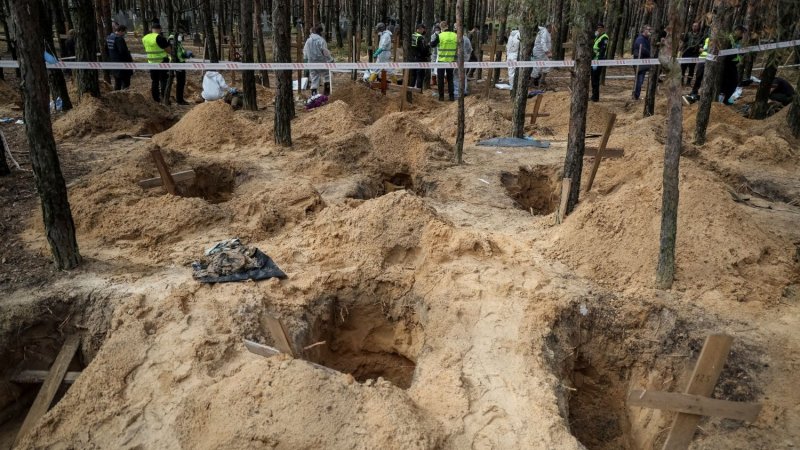
Poland's latest search efforts focus primarily on victims of the Volhynia massacres of 1943–1945, one of the most tragic and controversial episodes in Polish-Ukrainian history.
During this period, tens of thousands of ethnic Poles living in areas that are now part of western Ukraine were killed amid ethnic violence and wartime conflict, News.az reports.
Many victims were buried in unmarked graves or makeshift burial sites. Decades later, thousands of families still do not know the exact fate or burial locations of their relatives. The search for these graves has therefore become both a humanitarian and historical issue for Poland.
Why is Poland conducting new searches now?
The renewed searches have become possible following recent agreements between Poland and Ukraine that allow archaeological and forensic teams greater access to suspected burial sites.
For years, exhumation efforts were slowed by political disagreements, bureaucratic obstacles, and differing historical interpretations. However, both governments have recently shown greater willingness to cooperate on historical issues despite ongoing regional security challenges.
The new searches are part of a broader effort to identify victims, document historical events more accurately, and provide proper burials for those who died during World War II.
Where are the searches taking place?
The operations are concentrated in western Ukraine, particularly in areas historically associated with the Volhynia massacres.
Researchers are examining former villages, forests, fields, and locations identified through archival records, eyewitness testimony, and previous investigations. Many of these sites have changed significantly over the past eight decades, making the search process difficult and time-consuming.
Modern technologies such as ground-penetrating radar, aerial imagery, and forensic archaeology are being used to locate potential burial sites.
Have any graves been found?
Yes.
Recent Polish-Ukrainian search missions have identified several previously unknown burial locations believed to contain victims of wartime massacres. Archaeologists and forensic experts have recovered human remains from some sites and continue efforts to determine the identities of those buried there.
The process often involves DNA testing, historical research, and cooperation with surviving family members in Poland and elsewhere.
Because many graves are more than 80 years old, identification can be challenging, but advances in forensic science have improved the chances of success.
Why is this issue so sensitive?
The Volhynia massacres remain one of the most emotionally charged subjects in relations between Poland and Ukraine.
In Poland, many view the killings as a deliberate campaign against the Polish population and regard them as one of the greatest national tragedies of World War II.
In Ukraine, interpretations are often more complex, with some historians emphasizing the broader context of wartime violence involving multiple groups and competing nationalist movements.
As a result, the events are remembered differently in the two countries, creating occasional tensions despite strong contemporary political and security cooperation.
Why do exhumations matter so much to Poland?
For many Polish families, the issue is deeply personal.
Thousands of victims were never formally identified or given proper burials. Descendants have spent decades searching for information about missing relatives.
Polish officials argue that every victim deserves a dignified burial regardless of political disagreements. Many families see the recovery and identification of remains as a necessary step toward closure and historical justice.
The issue is therefore not only about historical research but also about memory, mourning, and respect for the dead.
How does Ukraine view the searches?
Ukraine has increasingly supported joint search and exhumation efforts, viewing them as part of a broader process of historical dialogue.
Ukrainian authorities have generally emphasized the importance of honoring all victims of wartime violence and promoting professional historical research.
At the same time, Ukraine seeks reciprocal cooperation regarding Ukrainian victims and burial sites located in Poland. This principle of mutual access has become an important component of recent agreements between the two countries.
Could the issue affect current Polish-Ukrainian relations?
Yes.
Although Poland remains one of Ukraine's closest partners in Europe, historical disputes continue to influence political discussions in both countries.
Questions regarding wartime memory, national heroes, and historical responsibility periodically generate controversy. Political leaders must often balance contemporary strategic cooperation with public demands to address historical grievances.
Despite these challenges, both governments have generally sought to prevent historical disagreements from undermining their broader partnership.
What challenges do investigators face?
The search process is often extremely difficult.
Many suspected burial sites are located in remote areas or have been altered by agriculture, construction, natural erosion, or population changes over the decades.
Historical records are frequently incomplete or contradictory. Witnesses are increasingly rare due to the passage of time, and physical evidence may have deteriorated significantly.
Forensic teams must therefore combine archaeology, archival research, witness testimony, and scientific analysis to establish reliable conclusions.
What role does forensic science play?
Modern forensic methods have become essential to these investigations.
Experts use DNA analysis, anthropological examinations, and advanced archaeological techniques to identify remains and determine the circumstances of death.
DNA comparisons can sometimes connect recovered remains with living relatives, allowing families to learn the fate of loved ones decades after the events occurred.
These technologies have significantly improved the ability of researchers to solve historical mysteries that once appeared impossible to resolve.
Could the searches contribute to reconciliation?
Many supporters believe they can.
Acknowledging victims, locating burial sites, and establishing historical facts can help reduce mistrust between communities and nations.
Reconciliation does not necessarily require complete agreement on every historical interpretation. However, many historians argue that recognizing suffering and providing dignified burials are important steps toward mutual understanding.
Joint Polish-Ukrainian research projects are often viewed as examples of how former adversaries can work together to address painful chapters of their shared history.
What happens next?
Searches and exhumations are expected to continue in multiple locations across western Ukraine.
Archaeologists, historians, and forensic experts will investigate additional sites identified through archival documents and field research. New discoveries could lead to further excavations and identification efforts.
Both countries are expected to continue discussions on historical cooperation, preservation of memorial sites, and support for families seeking information about missing relatives.
Why does this matter today?
Although the events occurred more than 80 years ago, their legacy continues to influence modern politics, national identity, and relations between neighboring countries.
For many families, the issue remains unresolved because loved ones have never been located or properly buried.
For historians, the searches offer an opportunity to better understand one of the most complex and tragic periods in Eastern European history.
For Poland and Ukraine, successful cooperation on this issue could demonstrate that even the most difficult historical disputes can be addressed through dialogue, research, and mutual respect.
Conclusion
Poland's renewed search for World War II mass graves in Ukraine is about far more than archaeology. It is an effort to uncover historical truth, identify victims, provide dignified burials, and address one of the deepest wounds in Polish-Ukrainian relations.
While historical interpretations may continue to differ, the ongoing searches represent a significant step toward understanding the past and honoring those who lost their lives during one of the darkest chapters of World War II.
By Faig Mahmudov


Similar news