Who are the hostages Pakistan is seeking to free from Somali Pirates?


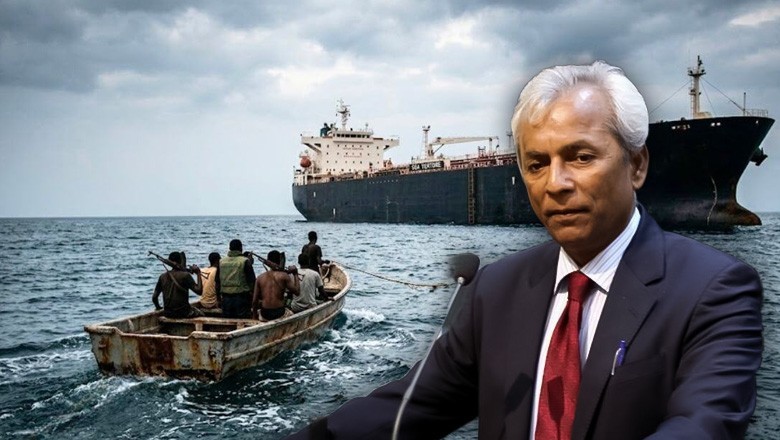
Pakistan has called for the immediate release of 11 Pakistani seamen who are being held hostage by Somali pirates after their fishing vessel was hijacked off the coast of Somalia.
The incident highlights the continuing threat of piracy in the waters surrounding the Horn of Africa, a region that was once considered one of the world's most dangerous maritime zones, News.az reports.
RECOMMENDED STORIES
Although pirate attacks have declined significantly compared with their peak in the late 2000s and early 2010s, recent incidents suggest that the threat has not disappeared entirely.
The Pakistani government has stated that it is working through diplomatic and international channels to secure the safe release of its citizens.
Who are the hostages?
The hostages are 11 Pakistani crew members who were reportedly aboard a fishing vessel operating in waters near Somalia when it was seized by pirates.
Like many fishermen working in the Indian Ocean region, the crew relied on maritime activities for their livelihoods. Following the hijacking, they were taken hostage by the attackers, who are believed to be seeking financial gain through ransom demands.
The welfare and safety of the crew have become a major concern for Pakistani authorities and the families of those being held.
Who are the Somali pirates?
Somali pirates are criminal groups that operate primarily in waters off Somalia's coastline and surrounding areas of the Indian Ocean.
Piracy emerged as a major international security issue in the early 2000s amid political instability, weak governance, and limited law enforcement capabilities within Somalia.
Pirates typically target commercial ships, fishing vessels, and smaller maritime craft. Their main objective is financial gain, often through ransom payments demanded in exchange for the release of vessels and crew members.
At the height of the piracy crisis, hundreds of sailors from numerous countries were taken hostage.
Why is Pakistan demanding their release?
Pakistan's primary concern is the safety and well-being of its citizens.
The government has a responsibility to protect Pakistani nationals abroad and to pursue all possible avenues to secure their freedom. Officials have urged international organizations, regional authorities, and relevant stakeholders to assist in obtaining the release of the crew.
The demand also reflects broader concerns about maritime security and the protection of Pakistani fishermen who operate in international waters.
How common is Somali piracy today?
Piracy off Somalia has declined significantly compared with its peak years.
Between 2008 and 2012, Somali pirates carried out dozens of successful hijackings annually, capturing commercial vessels and holding crews for ransom. International naval patrols, improved ship security measures, and greater regional cooperation helped reduce the number of attacks.
However, experts warn that the conditions that originally enabled piracy—economic hardship, weak governance, and limited maritime enforcement—have not disappeared completely.
As a result, occasional attacks continue to occur.
Why does piracy persist in Somalia?
Several factors contribute to the persistence of piracy.
Economic hardship
Many coastal communities face poverty, unemployment, and limited economic opportunities. Criminal groups often exploit these conditions to recruit participants.
Weak state institutions
Somalia has struggled for decades with political instability and limited state control over certain regions, making law enforcement difficult.
Vast coastline
Somalia possesses one of Africa's longest coastlines, making maritime monitoring and enforcement particularly challenging.
Profitable criminal activity
Even a single successful hijacking can generate substantial ransom payments, creating strong financial incentives for pirate networks.
How do Somali pirates operate?
Pirates typically use small, fast boats to approach targeted vessels.
They often carry firearms and sometimes use larger "mother ships" that allow them to operate farther from shore. Once a vessel is captured, it is usually taken to an area under pirate influence where negotiations for ransom can begin.
Crew members are often held for extended periods while negotiations take place.
In many cases, hostages are treated as bargaining tools rather than political prisoners, with pirates seeking financial compensation in exchange for their release.
Are the hostages in immediate danger?
The exact condition of the Pakistani crew members has not been publicly disclosed.
Historically, most Somali pirate groups have sought ransom payments rather than harm to hostages. Their primary objective is usually financial profit rather than violence for its own sake.
However, hostage situations are inherently dangerous. Captives can face difficult living conditions, psychological stress, health risks, and prolonged uncertainty while negotiations continue.
For this reason, governments typically seek rapid diplomatic solutions.
What is Pakistan doing to secure their release?
Pakistan is reportedly engaging diplomatic channels and coordinating with international partners to address the situation.
Possible measures may include:
-
Communication with Somali authorities;
-
Coordination with regional governments;
-
Engagement with international maritime organizations;
-
Cooperation with naval forces operating in the region;
-
Consular support for affected families.
Governments generally avoid disclosing sensitive details of hostage negotiations in order to protect the safety of those being held.
Can military force be used to rescue the hostages?
In theory, yes, but such operations carry significant risks.
Hostage rescue missions at sea are among the most complex military operations. Any attempt to free captives through force could endanger the lives of both the hostages and rescue personnel.
As a result, governments typically evaluate military options very carefully and often prioritize diplomatic and negotiated solutions whenever possible.
The decision depends on intelligence assessments, operational feasibility, and the risks to those being held.
What role does the international community play?
Maritime security is an international concern because global trade relies heavily on safe shipping routes.
Numerous countries participate in anti-piracy efforts through naval patrols, intelligence sharing, and coordinated maritime security initiatives.
International organizations also help monitor piracy incidents, support affected states, and promote cooperation among governments.
Because piracy often involves multiple jurisdictions, international collaboration is usually essential to resolving such cases.
How does piracy affect global shipping?
Piracy can have significant economic consequences.
When vessels face security threats, shipping companies may need to:
-
Increase security measures;
-
Employ armed guards;
-
Alter shipping routes;
-
Pay higher insurance premiums;
-
Accept longer transit times.
These additional costs can affect international trade and ultimately influence global supply chains.
Although piracy levels are far lower than during the peak crisis years, maritime security remains a major concern for governments and commercial operators.
Has Pakistan faced similar incidents before?
Pakistani fishermen and sailors have occasionally encountered maritime security challenges in various regions.
The country's fishing industry employs thousands of workers who often operate in international waters, making them vulnerable to piracy, territorial disputes, and other maritime risks.
Each hostage situation typically prompts significant diplomatic efforts due to the human and political sensitivities involved.
What challenges do families of the hostages face?
Families often endure immense emotional strain.
Many relatives may have limited information about the condition of their loved ones, creating uncertainty and anxiety. Financial hardship can also arise if the detained crew members were primary sources of household income.
Governments and humanitarian organizations sometimes provide assistance and support to affected families during prolonged hostage situations.
What happens next?
The immediate priority is securing the safe release of the 11 Pakistani seamen.
Diplomatic efforts are likely to continue while authorities gather information about the hostages' condition and location. International maritime organizations and regional stakeholders may also become involved in facilitating communication and negotiations.
The outcome will depend on multiple factors, including the demands of the pirates, diplomatic engagement, and the broader security situation in the region.
Why is this case important?
The incident serves as a reminder that piracy remains a security challenge despite years of international efforts to combat it.
It highlights the vulnerability of fishermen and civilian sailors who work far from home, often in dangerous maritime environments. The case also underscores the importance of international cooperation in protecting shipping routes, safeguarding crews, and responding to hostage crises.
For Pakistan, the issue is fundamentally about protecting its citizens and ensuring the safe return of 11 men whose families are waiting for them at home.
Conclusion
Pakistan's demand for the release of 11 seamen held by Somali pirates reflects both a humanitarian concern and a broader commitment to protecting its citizens abroad. While piracy in the Horn of Africa has declined dramatically from its peak, incidents such as this demonstrate that maritime security challenges remain.
As diplomatic efforts continue, the central objective remains clear: securing the safe and swift return of the hostages while reinforcing international efforts to combat piracy and protect those who earn their living at sea.
By Faig Mahmudov


Similar news