Baku was right: France finally admits Antilles poisoning


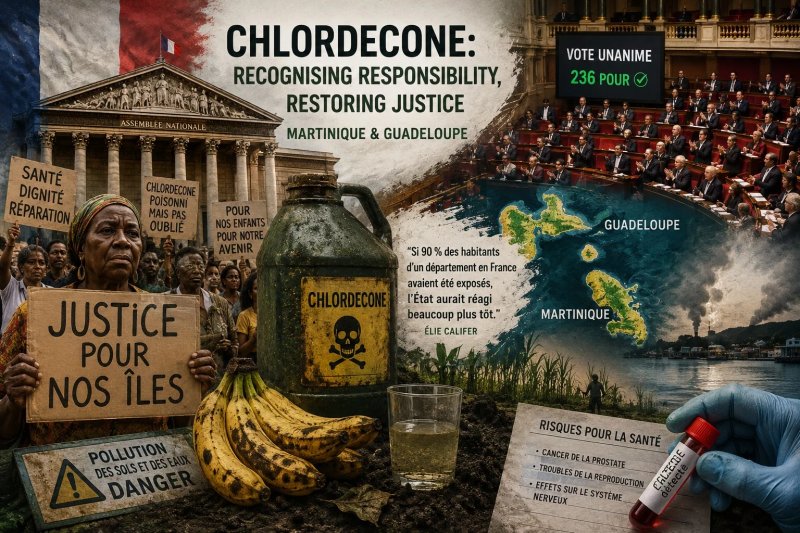
The French National Assembly’s decision to recognise the state’s responsibility for the consequences of chlordecone use in Martinique and Guadeloupe marks an important, albeit long-overdue, step towards restoring justice for the residents of France’s overseas territories.
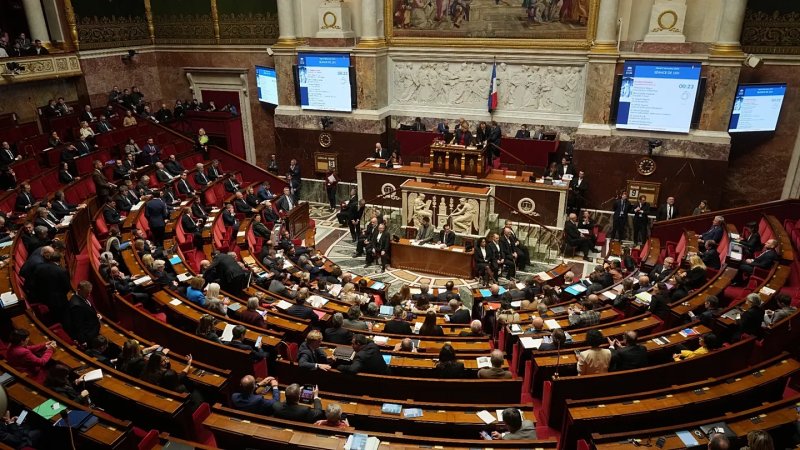
On 2 June 2026, the lower house of the French Parliament unanimously approved, at its second reading, a bill recognising the state’s share of responsibility for the health, moral, environmental and economic damage caused by the use of the toxic pesticide.
All 236 lawmakers who took part in the vote supported the measure. Formally, the case concerns an environmental and public health scandal. However, the history of chlordecone extends far beyond a failed agricultural policy. It highlights the persistent inequality between mainland France and its overseas territories, whose residents have for decades suffered the consequences of decisions taken in Paris without adequate consideration for their safety, health or right to a healthy environment.
This is precisely the issue that the Baku Initiative Group, which campaigns against modern forms of colonialism and supports the peoples of France’s overseas territories, has consistently highlighted. The organisation has repeatedly argued that the colonial legacy is reflected not only in the political status of these territories but also in social, economic and environmental inequality. The cases of Martinique and Guadeloupe are among the clearest examples of such treatment.
Source: Copyright AP Photo
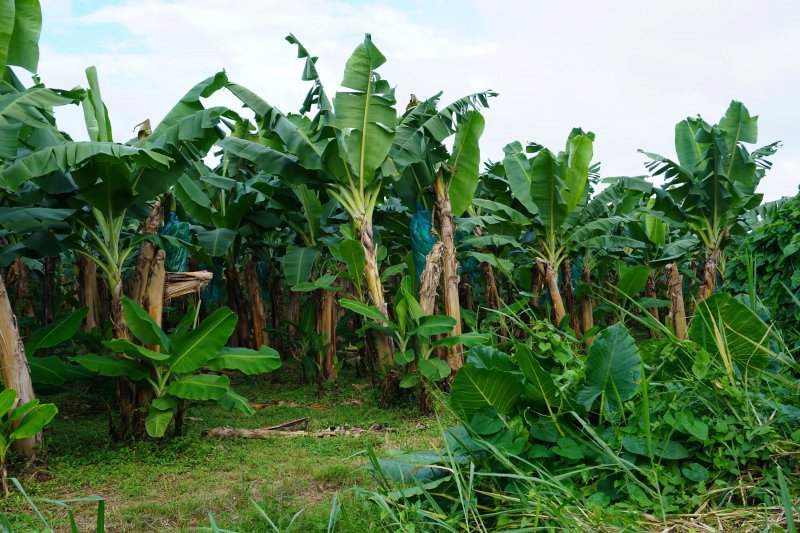
As early as the 1960s, the French authorities began gradually restricting the use of pesticides containing dangerous organochlorine compounds. Under a decree issued on 2 October 1972, France banned the use of several such substances, including aldrin, dieldrin, heptachlor and chlordane. However, the precautionary measures intended to protect the population of mainland France were not fully extended to the overseas territories. Moreover, it was in 1972 that the French state authorised the use of chlordecone on banana plantations in Martinique and Guadeloupe. The decision was taken despite existing warnings about the substance’s toxicity and the risk of long-term environmental contamination.
Chlordecone continued to be used on the islands until 1993. Over two decades, the substance contaminated soil, water resources and the food chain. Because of its extreme persistence, the consequences remain visible decades after its use was discontinued. Today, the problem affects not only former banana plantation workers. The contamination has affected the lives of almost the entire population of the islands, including people who never worked directly with pesticides. According to French public health authorities, traces of chlordecone have been detected in the bodies of more than 90 per cent of the adult population of Martinique and Guadeloupe.
Studies have also pointed to a link between exposure to the substance and an increased risk of prostate cancer. Its possible effects on reproductive health, pregnancy and the nervous system are also under discussion. The issue is therefore not an isolated mistake of the past but a large-scale humanitarian and environmental crisis whose consequences affect several generations. Particularly significant is the fact that the French authorities were aware of the potential dangers of chlordecone. Despite this, the economic interests of the banana industry were effectively placed above the health of the local population for many years.
This is why residents of the islands and representatives of civil society organisations regard what happened as a manifestation of colonial inequality. The decisions were taken by central government institutions, while the consequences were borne primarily by the populations of the overseas territories. Before the vote, the bill’s sponsor, Guadeloupean lawmaker Élie Califer, posed a fundamental question to the French authorities. He noted that if 90 per cent of the residents of any department in mainland France had been exposed to a toxic substance, the state’s responsibility would likely have been recognised much sooner. This assessment reflects one of the principal grievances raised for years by civil society movements in Martinique and Guadeloupe.
In their view, Paris would have responded very differently had a similar environmental disaster occurred in metropolitan France. French Minister for Overseas Territories Naïma Moutchou acknowledged the state’s share of responsibility. She admitted that warnings already existed when the relevant decisions were taken and that those warnings should have been given priority in order to prevent the consequences now being observed.
Source: Mathilde Augustin
The recognition of responsibility carries not only legal but also political significance. For decades, residents of the islands have sought official acknowledgement that the disaster cannot be attributed solely to private companies, plantation owners or chemical manufacturers. Government decisions authorising the use of chlordecone were a key part of the tragedy. State institutions also bear responsibility for inadequate oversight, delayed public information and the failure to take timely measures to assess the scale of the contamination.
However, acknowledging responsibility does not automatically mean that full compensation will be provided. In the adopted legislation, compensation is treated more as an objective than as an unconditional legal obligation of the state.
This has raised concerns among civil society organisations, which fear that Paris may limit itself to a symbolic acknowledgement without creating an effective mechanism to assist all those affected. The French authorities intend to send an interministerial inspection mission to Martinique and Guadeloupe. It is expected to assess possible options for establishing a compensation mechanism and prepare a report in the coming months.
For island residents, however, the issue is not limited to financial compensation. They are demanding a comprehensive state policy that includes medical monitoring, funding for scientific research, decontamination of polluted areas, support for agriculture, access to safe food and recognition of the moral harm inflicted upon them.
At the same time, civil society organisations are seeking the reopening of the criminal investigation into the chlordecone case. A Paris court is expected to issue a decision on the matter on 22 June. For activists, a new investigation is of fundamental importance because it could establish not only political but also individual responsibility for the decisions that led to the prolonged poisoning of the islands.
The history of chlordecone also lends weight to concerns that the Baku Initiative Group has consistently raised on international platforms. In June 2025, Baku hosted the international conference "Towards the Decolonisation of Guadeloupe: Challenges and Prospects", organised by the Baku Initiative Group together with political and civil society organisations from Guadeloupe. The event brought together representatives of movements advocating expanded rights for the island’s population, the restoration of historical justice and the elimination of the consequences of French colonial policy. The conference addressed not only the political status of Guadeloupe but also economic inequality, the high cost of living, social problems and the environmental consequences of decisions taken by France’s central authorities.
The Baku Initiative Group has repeatedly emphasised that colonialism does not always persist in its traditional form. In the modern world, it may manifest itself through political dependence, limited participation by local populations in key decision-making processes, economic control and the unequal distribution of environmental risks. The chlordecone crisis clearly illustrates how such a system can operate. A dangerous chemical was used to preserve the profitability of banana plantations, while the highest price was paid by the residents of Martinique and Guadeloupe.
For decades, France has portrayed itself as one of the world's leading defenders of human rights, environmental standards and the principles of equality. Yet the situation in the French Antilles reveals a significant gap between Paris’s official rhetoric and the realities in its overseas territories. The recognition of state responsibility is an important step, but it comes more than half a century after chlordecone began to be used and more than 30 years after it was finally banned.
The central question now is whether political declarations will be followed by concrete action. Paris will have to establish a transparent and accessible compensation mechanism, provide long-term medical assistance to those affected, finance environmental restoration and guarantee the participation of island residents in decisions that directly affect their future. Otherwise, the new law risks remaining largely a symbolic gesture designed to ease public pressure without addressing the consequences of decades of injustice.
The latest decision by the French National Assembly effectively confirms that the concerns raised in recent years by the Baku Initiative Group and its partner organisations in Martinique and Guadeloupe were well-founded.
The environmental and humanitarian problems of France’s overseas territories cannot be viewed separately from their colonial past and their continuing dependence on decisions taken in Paris. The recognition of responsibility for the chlordecone disaster should not mark the end of the debate. Rather, it should become the starting point for a broader discussion about the rights of the peoples of the overseas territories, their participation in managing their own resources, and their right to determine their own political, economic and environmental future.
By Murad Samedov


Similar news