Could the U.S. and China be heading toward a new cold war?


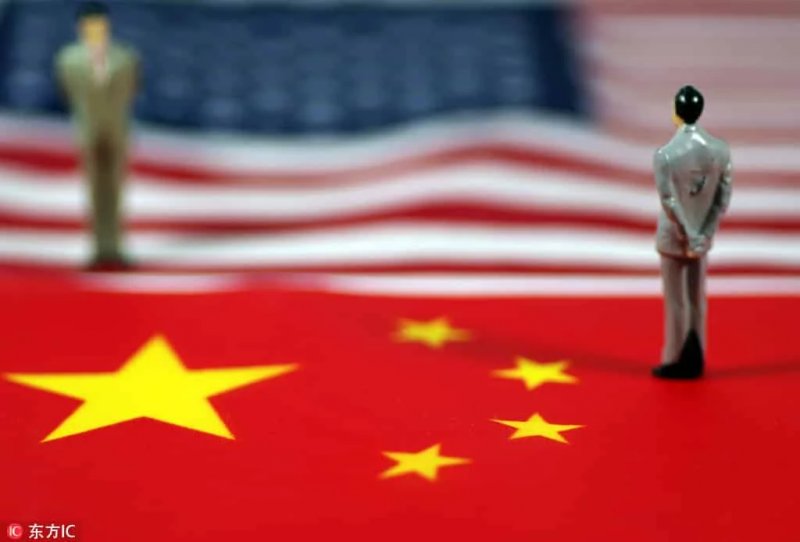
The growing rivalry between United States and China is increasingly reshaping global politics, economics, technology, and security, raising one of the most important geopolitical questions of the twenty first century: is the world entering a new Cold War?
For decades after the Cold War ended, the United States remained the world’s dominant superpower while China focused primarily on economic growth and integration into the global economy.
RECOMMENDED STORIES
Today, however, relations between Washington and Beijing have deteriorated dramatically across nearly every major area including trade, technology, military competition, Taiwan, artificial intelligence, semiconductors, cybersecurity, supply chains, and global influence.
Many analysts now compare the rivalry to the twentieth century Cold War between the United States and the Soviet Union.
Others argue the comparison is incomplete because the American and Chinese economies remain deeply interconnected in ways the U.S. and Soviet economies never were.
Regardless of terminology, it is clear that the relationship between the world’s two largest economies increasingly defines global geopolitics.
The competition is not only about military power.
It involves technology leadership, economic systems, critical minerals, digital infrastructure, artificial intelligence, trade routes, space exploration, global institutions, and influence across regions including Asia, Africa, Latin America, and the Middle East.
The outcome of this rivalry may shape the future international order for decades.
Why are U.S.-China relations deteriorating?
Several major factors contributed to worsening relations.
One of the most important is China’s rapid rise as an economic and military power.
Over recent decades, China transformed from a developing economy into the world’s second largest economy and a global industrial giant.
Many American policymakers initially believed economic engagement with China would gradually encourage political liberalization and deeper integration into a U.S. led international system.
Instead, China became more powerful while maintaining its own political model under the leadership of the Chinese Communist Party.
At the same time, Beijing increasingly asserted itself militarily and diplomatically, especially in the South China Sea, Taiwan Strait, and global technology competition.
American leaders across both major political parties gradually concluded that China represented not merely an economic competitor but also a strategic rival.
Trade disputes, accusations of intellectual property theft, cybersecurity tensions, military expansion, and ideological differences all accelerated the deterioration.
Why do some experts compare this rivalry to the Cold War?
The comparison comes from several similarities between current tensions and the twentieth century U.S.-Soviet rivalry.
The United States and China increasingly compete for global influence, military superiority, technological leadership, and ideological prestige.
Both countries are also strengthening alliances and partnerships around the world.
The rivalry extends beyond economics into security, information, technology, and geopolitical influence.
Washington increasingly frames China as the primary long term strategic challenge to American global leadership.
China meanwhile argues that the United States seeks to contain its rise and prevent national rejuvenation.
Mutual distrust continues deepening.
However, important differences exist.
Unlike the Soviet Union, China is deeply integrated into global trade and finance.
The American and Chinese economies remain interconnected through manufacturing, investment, and supply chains.
This economic interdependence makes the relationship more complicated than the original Cold War.
How important is Taiwan in the rivalry?
Taiwan represents the most dangerous flashpoint between China and the United States.
China considers Taiwan part of its territory and insists eventual reunification is unavoidable.
Beijing refuses to rule out military force if necessary.
The United States officially follows the “One China” policy but also supports Taiwan militarily and politically.
Washington supplies weapons to Taiwan and maintains strong unofficial relations with the island.
American officials increasingly emphasize maintaining peace and stability in the Taiwan Strait.
China views growing U.S. support for Taiwan as interference in internal affairs.
Tensions increased significantly in recent years through military exercises, naval deployments, diplomatic visits, and growing strategic competition.
Many analysts fear Taiwan could become the trigger for a direct confrontation between the world’s two largest powers.
Why are semiconductors so important?
Semiconductors became one of the central battlegrounds in U.S.-China competition because advanced computer chips power nearly all modern technologies including artificial intelligence, military systems, smartphones, electric vehicles, and data centers.
The United States imposed export controls restricting China’s access to advanced semiconductor technology and chip manufacturing equipment.
Washington argues these restrictions are necessary for national security and preventing military modernization by China.
Beijing views the measures as attempts to contain technological development.
The rivalry intensified competition involving companies such as NVIDIA, Intel, TSMC, and Huawei.
Control over semiconductors increasingly influences global economic and military power.
How is artificial intelligence shaping the rivalry?
Artificial intelligence became one of the most important dimensions of strategic competition.
Both countries view AI leadership as essential for future economic growth, military capabilities, surveillance systems, and technological dominance.
The United States currently maintains advantages in many advanced AI sectors, especially involving semiconductor design and leading technology companies.
China, however, invests enormous resources into AI development and rapidly expands domestic capabilities.
Chinese firms including Huawei, Tencent, Alibaba, and Baidu increasingly compete globally in artificial intelligence and digital technologies.
Governments in both countries believe AI may fundamentally reshape global power structures during coming decades.
As a result, technological competition is intensifying rapidly.
Why did trade tensions escalate so dramatically?
Trade tensions increased significantly during the presidency of Donald Trump, who imposed tariffs on hundreds of billions of dollars worth of Chinese goods.
Washington accused China of unfair trade practices, forced technology transfers, intellectual property violations, and state subsidies distorting global competition.
China responded with retaliatory tariffs.
Although some trade agreements were later reached, broader tensions remained unresolved.
Many American policymakers increasingly argued that economic engagement had strengthened China strategically without producing expected political reforms.
Concerns also grew regarding supply chain dependence on Chinese manufacturing.
As a result, both countries increasingly pursue economic diversification and partial “decoupling” in sensitive sectors.
What is decoupling?
Decoupling refers to efforts to reduce economic dependence between the United States and China.
This process involves shifting supply chains, restricting technology transfers, limiting investment exposure, and encouraging domestic production of strategic goods.
The COVID pandemic and geopolitical tensions accelerated these efforts.
Many companies began relocating parts of manufacturing operations to countries such as Vietnam, India, Mexico, and others.
Governments additionally prioritize supply chain security for semiconductors, pharmaceuticals, batteries, and critical minerals.
Complete economic separation remains unlikely because bilateral trade remains enormous.
However, selective decoupling in strategic industries continues expanding.
How does China view the rivalry?
Chinese leaders generally argue that the United States seeks to prevent China’s peaceful rise and preserve American global dominance.
Beijing emphasizes national sovereignty, technological self reliance, and long term modernization goals.
Chinese officials often criticize American sanctions, export controls, military alliances, and Taiwan policies as containment strategies.
At the same time, China presents itself internationally as a supporter of multipolarity and economic development.
The Belt and Road Initiative also forms part of Beijing’s broader strategy to expand global influence through infrastructure, trade, and investment.
Chinese leadership increasingly stresses resilience against external pressure and the importance of domestic technological independence.
How are military tensions evolving?
Military competition between the United States and China intensified significantly across the Indo Pacific region.
China rapidly modernized its armed forces including naval expansion, missile development, cyber capabilities, and space technologies.
The United States meanwhile strengthened alliances and military partnerships across Asia.
American cooperation with Japan, South Korea, Australia, and the Philippines increased substantially.
New strategic frameworks such as AUKUS also emerged partly in response to China’s growing military influence.
Naval operations in the South China Sea and Taiwan Strait became increasingly frequent and sensitive.
Both countries accuse each other of destabilizing regional security.
Why is the South China Sea so important?
The South China Sea became a major flashpoint because it contains vital shipping lanes, fisheries, energy resources, and military strategic value.
China claims large portions of the sea through controversial territorial assertions rejected by several neighboring countries.
Beijing constructed artificial islands and expanded military infrastructure in disputed areas.
The United States conducts freedom of navigation operations challenging Chinese claims.
Regional tensions involving Vietnam, the Philippines, Malaysia, and others further complicate the situation.
Control over the South China Sea carries enormous strategic and economic significance for global trade and military positioning.
How does the rivalry affect the global economy?
The U.S.-China rivalry increasingly reshapes global trade, investment, technology markets, and supply chains.
Companies worldwide face pressure to navigate competing regulatory systems and geopolitical risks.
Global markets react strongly to trade restrictions, tariffs, sanctions, and technology controls involving the two countries.
Critical industries including semiconductors, batteries, renewable energy, telecommunications, and AI are especially affected.
Countries globally increasingly attempt to balance relations with both Washington and Beijing simultaneously.
The rivalry also influences inflation, commodity prices, manufacturing patterns, and investment decisions worldwide.
Why are developing countries important in the competition?
Both the United States and China compete for influence across Africa, Latin America, Southeast Asia, the Middle East, and Central Asia.
China expanded influence through infrastructure financing, trade, and development projects linked partly to the Belt and Road Initiative.
The United States meanwhile emphasizes alliances, security cooperation, and investment partnerships.
Developing countries often seek economic benefits from both sides while avoiding forced alignment.
This competition increasingly shapes global diplomacy and international institutions.
Could the rivalry become a military conflict?
Most analysts believe neither side wants direct war because the economic and human costs would be catastrophic.
Both countries possess nuclear weapons and deeply interconnected economies.
However, risks remain significant especially involving Taiwan or accidental military escalation in the Indo Pacific.
Miscalculations, cyber incidents, naval confrontations, or political crises could increase tensions rapidly.
As military competition intensifies, managing communication and crisis prevention becomes increasingly important.
How is Europe responding?
The European Union faces a difficult balancing challenge.
Europe increasingly shares American concerns about security, technology, and economic dependence on China.
However, China also remains a major trading partner for European economies.
European governments therefore seek strategies often described as “de risking” rather than full decoupling.
This means reducing vulnerabilities in critical sectors while maintaining economic engagement where possible.
Could cooperation still improve?
Despite rivalry, both countries still cooperate in certain areas including trade, climate discussions, anti narcotics efforts, and some diplomatic engagement.
Leaders periodically hold summits attempting to stabilize relations and reduce tensions.
However, deep structural competition likely means rivalry will remain central to international politics for the foreseeable future.
What does the future look like?
The United States and China are likely entering a prolonged era of strategic competition shaping nearly every major aspect of global affairs.
Technology, AI, semiconductors, military power, energy transition, digital infrastructure, and geopolitical influence will remain key battlegrounds.
The rivalry may not fully resemble the twentieth century Cold War because economic interdependence remains much stronger.
Nevertheless, the relationship increasingly defines the global balance of power.
How both countries manage competition, avoid military escalation, and navigate economic interdependence may ultimately determine the future stability of the international order in the twenty first century.
By Faig Mahmudov


Similar news