Can BYD’s flash charging technology make gas cars oibsolete?


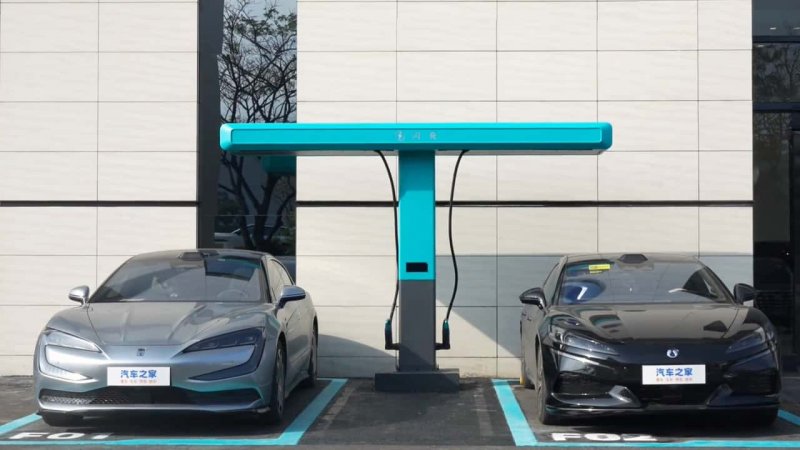
The global electric vehicle industry may be entering a transformative new phase as BYD aggressively expands ultra fast charging technology that could dramatically reduce one of the biggest advantages gasoline vehicles still hold over electric cars: refueling speed.
For years, charging times remained one of the main obstacles slowing mass adoption of electric vehicles.
RECOMMENDED STORIES
While EV technology advanced rapidly in areas such as battery range, software, acceleration, and manufacturing scale, many consumers still worried about charging convenience compared to traditional gasoline stations.
BYD now aims to change that equation through flash charging systems capable of adding hundreds of kilometers of range within minutes.
The company’s latest charging and battery developments increasingly position it as one of the world’s most influential EV innovators and one of the strongest challengers to Tesla globally.
The push comes during an increasingly intense global EV competition where automakers no longer compete only on vehicle sales but also on charging ecosystems, battery chemistry, artificial intelligence, software integration, and autonomous driving technologies.
China already dominates large parts of the global EV supply chain including battery production and mineral processing.
Now BYD seeks to strengthen its position further by making EV charging faster, cheaper, and more practical for mainstream drivers.
Many analysts believe ultra fast charging could become one of the most important technologies determining whether EVs eventually replace internal combustion vehicles entirely.
However, significant challenges still remain involving infrastructure costs, electricity grids, battery durability, and global standardization.
The race to solve those problems is increasingly reshaping the future of transportation.
What is BYD’s flash charging technology?
BYD’s flash charging system is designed to dramatically reduce EV charging times by combining advanced battery chemistry with extremely high power charging capabilities.
The technology reportedly allows compatible vehicles to gain substantial driving range within only a few minutes.
The company’s second generation Blade Battery and megawatt level charging systems are central to this strategy.
BYD aims to make charging speeds increasingly comparable to traditional gasoline refueling times.
This represents a major shift because charging inconvenience historically remained one of the biggest barriers preventing some consumers from switching to electric vehicles.
If successful at large scale, flash charging could significantly accelerate EV adoption globally.
Why are charging times such a major issue for EVs?
Many drivers still view charging speed as one of the biggest disadvantages of electric vehicles compared to gasoline cars.
Traditional vehicles can usually refuel within only a few minutes.
Many EVs, however, require significantly longer charging sessions especially when using slower public infrastructure.
Although home charging works well for many owners, long distance travel still creates anxiety for some consumers regarding waiting times and charging station availability.
Ultra fast charging aims to solve this problem by reducing charging stops to only several minutes rather than lengthy sessions.
Improving convenience is therefore critical for convincing mainstream consumers to transition away from gasoline powered vehicles.
How does BYD compare to Tesla in charging technology?
Tesla long dominated the fast charging market through its Supercharger network, which became one of the company’s biggest competitive advantages globally.
Tesla’s charging infrastructure helped address range anxiety and supported widespread EV adoption.
BYD now increasingly challenges Tesla through faster charging technology, battery innovation, and aggressive infrastructure expansion particularly in China.
While Tesla remains a global leader in charging ecosystems and software integration, BYD’s manufacturing scale and battery expertise allow it to compete aggressively on pricing and charging performance.
The rivalry increasingly reflects a broader global competition between American and Chinese EV ecosystems.
What is the Blade Battery?
The Blade Battery became one of BYD’s most important technological innovations.
The battery design focuses heavily on safety, energy density, durability, and thermal stability.
Unlike some traditional lithium ion battery designs, the Blade Battery reportedly reduces risks of overheating and thermal runaway.
BYD also claims the system offers improved longevity and structural efficiency.
The second generation version further improves charging speed and performance.
Battery technology increasingly became one of the most important battlegrounds in the EV industry because it directly affects range, safety, cost, and charging capabilities.
Why is China leading in EV battery technology?
China dominates much of the global EV battery supply chain including mineral processing, manufacturing capacity, and battery research.
Chinese companies invested heavily in battery technology years before many Western competitors accelerated EV strategies.
China additionally benefits from enormous domestic EV demand, government support, and vertically integrated supply chains.
Companies such as BYD and CATL emerged as global battery leaders partly because they control large portions of production ecosystems from raw materials to finished products.
This industrial scale gives Chinese companies significant cost and manufacturing advantages internationally.
Could ultra fast charging eliminate range anxiety?
Potentially.
Range anxiety refers to fears that electric vehicles may run out of battery power before reaching charging stations.
Although modern EV ranges improved dramatically, charging convenience still concerns many consumers.
If ultra fast charging becomes widely available and reliable, drivers may begin treating EV charging similarly to gasoline refueling.
This could reduce psychological barriers slowing adoption.
However, charging infrastructure must also expand substantially for flash charging systems to achieve mainstream impact globally.
How fast are these new charging systems?
Some next generation systems now target charging speeds measured in megawatts rather than kilowatts.
This could theoretically allow vehicles to gain hundreds of kilometers of range within extremely short charging sessions.
Actual performance depends on battery compatibility, charger availability, temperature conditions, and grid capacity.
Still, the industry trend clearly points toward dramatically faster charging capabilities compared to earlier EV generations.
Why is infrastructure still a challenge?
Ultra fast charging requires enormous electrical power and expensive infrastructure investments.
Many existing charging stations and power grids are not designed to handle widespread megawatt level charging demand.
Governments and private companies therefore need major investments in grid modernization, charging stations, transformers, and energy management systems.
Rural areas and developing markets may face especially difficult infrastructure challenges.
The success of flash charging technology therefore depends not only on vehicle batteries but also on broader energy infrastructure development.
Could ultra fast charging damage batteries?
Battery degradation remains one of the key technical concerns surrounding extremely high speed charging.
Rapid charging generates heat and stress inside battery systems.
Manufacturers therefore focus heavily on cooling technologies, battery chemistry improvements, and thermal management systems.
Companies such as BYD argue their latest battery designs improve durability and safety even under faster charging conditions.
However, long term real world performance will remain closely monitored by consumers and analysts.
Why is BYD growing so rapidly globally?
BYD expanded rapidly because of several advantages including manufacturing scale, battery integration, pricing competitiveness, and broad product variety.
Unlike many automakers, BYD produces both vehicles and batteries internally, giving the company greater control over costs and supply chains.
The company also aggressively expanded internationally across Europe, Latin America, Southeast Asia, and other emerging markets.
BYD increasingly competes not only with Tesla but also with traditional automakers transitioning toward electrification.
How does flash charging affect gasoline vehicles?
If EV charging becomes nearly as fast and convenient as gasoline refueling, one of the final major consumer advantages of internal combustion vehicles could weaken substantially.
Historically, many consumers preferred gasoline vehicles because refueling remained easier and faster.
Ultra fast charging technology could reduce that advantage dramatically.
Combined with lower operating costs and environmental pressures, this may accelerate long term transition away from gasoline engines.
However, gasoline vehicles still maintain advantages in some regions where charging infrastructure remains limited.
What role does artificial intelligence play in charging systems?
AI increasingly helps optimize battery performance, charging efficiency, energy distribution, and vehicle management systems.
Smart charging networks can reduce grid strain, improve station efficiency, and manage energy demand dynamically.
Automakers increasingly integrate AI into broader vehicle ecosystems involving navigation, charging planning, battery monitoring, and autonomous driving.
The future EV industry therefore increasingly combines electrification with advanced software and AI infrastructure.
How are governments influencing the EV charging race?
Governments worldwide support EV infrastructure through subsidies, regulations, and climate policies.
China especially invested heavily in charging networks and battery industries.
The United States and European Union are also expanding support for EV infrastructure as part of broader decarbonization strategies.
Government policy significantly influences charging deployment speed, industry standards, and investment flows globally.
Could the global EV market split into competing ecosystems?
Possibly.
The EV industry increasingly reflects broader geopolitical and technological competition especially between China and Western economies.
Different charging standards, battery technologies, software systems, and supply chains may gradually create partially separate automotive ecosystems.
Chinese companies already dominate many EV markets while Tesla and Western automakers remain strong in others.
This fragmentation may become increasingly important geopolitically and economically.
Why are traditional automakers under pressure?
Legacy automakers now face pressure from both Tesla and Chinese EV firms simultaneously.
Companies such as Toyota, Volkswagen, Ford Motor Company, and General Motors must compete not only on vehicle design but also on battery technology, software, charging ecosystems, and manufacturing efficiency.
The industry transformation is therefore occurring faster and more aggressively than many traditional automakers initially expected.
Could EVs fully replace gasoline vehicles eventually?
Many governments and automakers believe long term electrification is inevitable, especially as climate policies tighten globally.
However, full replacement will likely take decades and vary significantly by region.
Infrastructure, affordability, electricity generation, battery materials, and consumer behavior all influence adoption rates.
Ultra fast charging could remove one of the biggest remaining barriers to mass EV adoption, but challenges involving cost and infrastructure still remain substantial.
What happens next in the charging race?
Competition around charging technology is likely to intensify significantly.
Automakers increasingly recognize that charging ecosystems may become as important as the vehicles themselves.
BYD, Tesla, and other manufacturers are racing to improve battery chemistry, reduce charging times, expand infrastructure, and integrate AI powered energy systems.
The outcome of this competition may ultimately determine which companies dominate the next era of transportation.
If flash charging becomes widespread and affordable, it could fundamentally accelerate the decline of gasoline powered vehicles and reshape the global automotive industry permanently.
By Faig Mahmudov


Similar news