Reasons behind Tesla ending production of some models


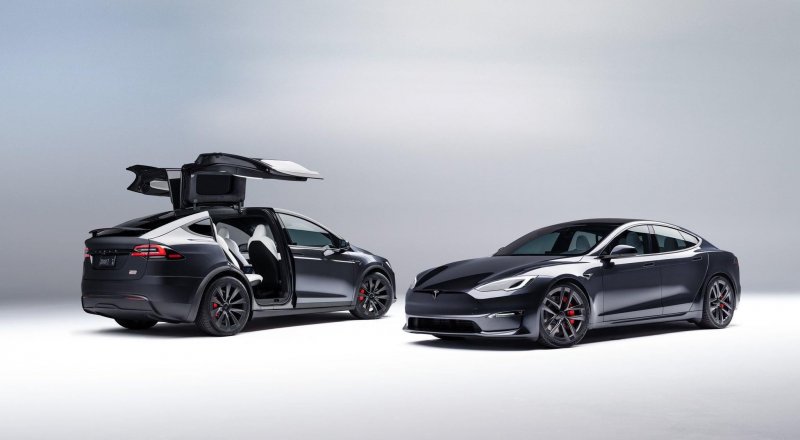
Tesla is reportedly preparing to end production of its iconic Model S sedan and Model X SUV after more than a decade on the market, marking the end of an era for the company that helped transform the global electric vehicle industry.
The decision reflects a major strategic shift inside Tesla as the company increasingly focuses on mass market vehicles, artificial intelligence, autonomous driving technology, robotics, and next generation manufacturing rather than premium luxury models that once defined the brand.
RECOMMENDED STORIES
The Model S and Model X were among the most influential electric vehicles ever produced.
The Model S, launched in 2012, proved electric cars could compete with luxury gasoline vehicles in performance, technology, and driving range.
The Model X followed in 2015 with its distinctive falcon wing doors and high performance electric SUV design.
Together, the two vehicles played a central role in establishing Tesla as the world’s most recognizable electric vehicle manufacturer.
However, after 14 years, changing market dynamics, rising competition, slowing premium EV demand, and Tesla’s evolving priorities appear to be driving the company toward discontinuing both models.
The move symbolizes not only the end of two historic vehicles but also a broader transformation occurring across the global automotive industry.
Why are the Model S and Model X so important historically?
The Model S fundamentally changed perceptions about electric vehicles.
Before Tesla, electric cars were often viewed as slow, impractical, and technologically limited.
The Model S demonstrated that EVs could deliver luxury, speed, long range capability, and advanced software features simultaneously.
It became one of the first electric vehicles to seriously challenge premium brands such as Mercedes-Benz, BMW, and Audi.
The Model X later expanded Tesla’s presence into the luxury SUV market, helping the company grow globally.
Both vehicles also introduced innovations including over the air software updates, minimalist interiors, large touchscreen systems, and advanced driver assistance features that later influenced the broader automotive industry.
Why is Tesla ending production now?
Several major factors likely contributed to the decision.
First, demand for the Model S and Model X has declined significantly compared to Tesla’s more affordable models such as the Model 3 and Model Y.
The company increasingly relies on high volume production rather than niche luxury sales.
Second, competition in the premium EV market intensified dramatically.
Traditional automakers and Chinese EV companies now offer many luxury electric alternatives.
Third, Tesla increasingly prioritizes future technologies including autonomous driving, AI systems, humanoid robotics, and robotaxi development.
CEO Elon Musk repeatedly emphasized that Tesla’s future value depends more on artificial intelligence and autonomy than traditional vehicle manufacturing alone.
Ending older premium models may therefore help streamline operations and redirect resources toward newer strategic priorities.
Did the Model S lose its competitive edge?
Although still technologically advanced in many ways, the Model S gradually lost some of its uniqueness as competitors caught up.
Luxury EV markets became far more crowded during recent years.
Companies including Porsche, Lucid Motors, Mercedes-Benz, BMW, and several Chinese manufacturers introduced increasingly competitive premium electric sedans and SUVs.
Tesla also updated the Model S and Model X less aggressively compared to some rivals.
Many analysts believe the vehicles eventually became overshadowed by Tesla’s newer strategic focus and broader market changes.
Why did Tesla shift toward cheaper models?
Tesla’s long term strategy increasingly revolves around scaling production and reaching larger global markets.
The Model 3 and Model Y became massively successful because they are more affordable and appeal to a broader customer base.
The Model Y in particular became one of the world’s best selling vehicles across all categories.
Mass production also improves profitability and manufacturing efficiency.
Tesla therefore shifted from being primarily a niche luxury EV maker toward becoming a large scale global automaker.
The Model S and Model X remained important symbolically but contributed a relatively small share of total deliveries.
How did the Model S change the automotive industry?
The Model S arguably forced the entire automotive industry to take electric vehicles seriously.
Before Tesla’s success, many major automakers underestimated EV demand and technological progress.
The Model S demonstrated that electric vehicles could outperform traditional luxury sedans in acceleration, software integration, and efficiency.
Its success pressured legacy automakers to accelerate EV investments and transition strategies.
Many features now common in modern vehicles including large touchscreens, software focused interiors, and over the air updates became mainstream partly because of Tesla’s influence.
The car therefore reshaped not only Tesla’s future but also the broader direction of the global auto industry.
What made the Model X unique?
The Model X became famous largely because of its unusual falcon wing doors and futuristic design.
The SUV combined high performance electric driving with family oriented utility and advanced technology.
However, the vehicle also became known for manufacturing complexity.
The falcon wing door system was technologically ambitious but created engineering and production challenges.
Despite those difficulties, the Model X helped establish Tesla in the growing luxury SUV market and strengthened the company’s brand identity during its expansion years.
How is competition affecting Tesla?
Competition in the EV market intensified dramatically worldwide.
Chinese automakers including BYD expanded rapidly and increasingly challenge Tesla in global sales and pricing.
Traditional automakers also invested billions into electric vehicle development.
Consumers now have many more EV choices than a decade ago.
This competitive environment pressures Tesla to improve efficiency, reduce costs, and focus on scalable high growth segments.
Luxury niche models therefore became less central to Tesla’s broader strategy.
What role does China play in Tesla’s strategy?
China became one of Tesla’s most important markets and manufacturing hubs.
The company’s Shanghai Gigafactory plays a major role in global production and exports.
At the same time, Chinese EV competition intensified rapidly.
Companies such as BYD increasingly dominate parts of the Chinese market through aggressive pricing and expanding technology.
Tesla therefore faces pressure to remain cost competitive and globally scalable.
Focusing resources on mass market products and future AI driven technologies may help the company adapt to these market realities.
How important are AI and robotaxis to Tesla now?
Elon Musk increasingly presents Tesla as an artificial intelligence and robotics company rather than simply an automaker.
The company invests heavily in autonomous driving systems, AI training infrastructure, humanoid robots, and robotaxi concepts.
Musk repeatedly argued that self driving technology could eventually become Tesla’s most valuable business segment.
This strategic shift means traditional vehicle models may become less important compared to software, autonomy, and AI capabilities.
Ending older models could therefore reflect Tesla’s transition into a different type of technology company.
Will Tesla replace the Model S and X with new vehicles?
Tesla has not fully clarified whether direct replacements are planned.
However, the company continues developing new products including the Cybertruck and future autonomous vehicle concepts.
Many analysts believe Tesla may eventually introduce entirely new premium platforms designed around autonomy and AI integration rather than traditional driving experiences.
Future Tesla vehicles may therefore look very different from earlier generations.
Could this hurt Tesla’s brand image?
Possibly, but opinions differ.
Some consumers view the Model S and Model X as iconic products central to Tesla’s identity.
Ending production could therefore create nostalgia and concerns that Tesla is abandoning its premium roots.
Others believe focusing on scalable technologies and future products strengthens Tesla’s long term position competitively.
The company increasingly prioritizes innovation cycles and technological transformation over maintaining legacy models.
How are investors reacting?
Investors generally focus more on Tesla’s long term AI, autonomy, robotics, and energy business prospects than individual vehicle models.
However, Tesla’s stock remains highly sensitive to delivery numbers, margins, competition, and future growth expectations.
The end of Model S and Model X production may therefore be interpreted either as operational streamlining or as evidence of slowing premium demand depending on investor perspective.
What does this mean for the EV industry overall?
The move highlights how quickly the EV industry is evolving.
Early pioneering vehicles that once transformed the market are now being replaced by new technologies, competitors, and business models.
The industry increasingly revolves around scale, software, AI integration, battery efficiency, and autonomous systems rather than simply electrification alone.
Tesla helped trigger this transformation, but it now faces the challenge of adapting to the competitive environment it helped create.
Could the Model S become a collector’s car?
Many automotive enthusiasts believe the Model S may eventually gain historical significance similar to pioneering vehicles from earlier technological eras.
Because the car fundamentally changed the perception of electric mobility, early versions especially could become highly collectible in the future.
The Model S already occupies an important place in automotive history as one of the vehicles that accelerated the global shift toward electrification.
What happens next for Tesla?
Tesla appears increasingly focused on becoming a broader AI and robotics platform company rather than remaining solely an electric car manufacturer.
The company’s future strategy likely revolves around autonomous driving, robotaxis, energy systems, humanoid robotics, and AI infrastructure.
At the same time, competition, regulation, pricing pressure, and technological execution remain major challenges.
Ending the Model S and Model X would therefore symbolize more than the retirement of two vehicles.
It would represent Tesla’s transition from the company that pioneered modern electric cars into a business attempting to define the next era of artificial intelligence driven transportation and automation.
By Faig Mahmudov


Similar news