Dangote refinery boosts gas supply deals with NNPC


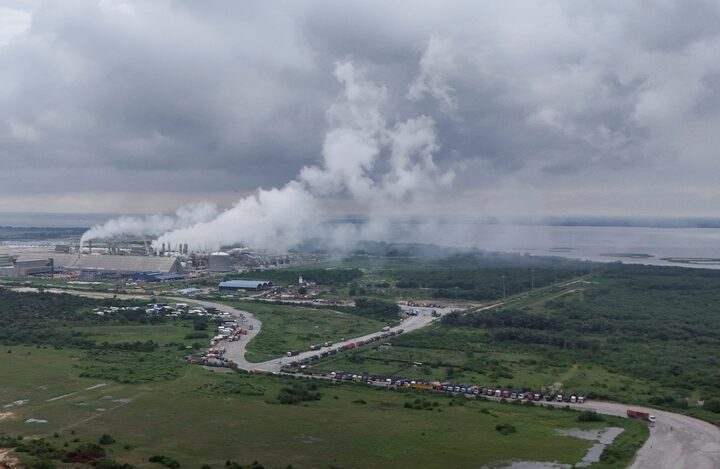
Nigeria’s Dangote Group has strengthened gas supply agreements with units of the Nigerian National Petroleum Company (NNPC) to support expansion plans across its refining, fertiliser and cement operations, the companies said.
The new contracts were signed between Dangote Petroleum Refinery, Dangote Fertiliser Plant, Dangote Cement and NNPC subsidiaries Nigerian Gas Marketing Limited and NNPC Gas Infrastructure Company. The agreements were announced during the Nigeria Gas Master Plan 2026 event in Abuja. Financial terms and supply volumes were not disclosed, News.Az reports, citing Reuters.
The expanded gas supply is expected to help power Dangote’s industrial growth while supporting Nigeria’s broader strategy to shift toward cleaner energy sources and strengthen domestic manufacturing.
RECOMMENDED STORIES
Nigeria recently launched the updated Gas Master Plan, aimed at fixing structural issues in the country’s gas sector by expanding infrastructure, improving supply reliability, attracting investment and making natural gas a key driver of economic development.
Under the plan, Nigeria aims to increase gas output to 10 billion cubic feet per day by 2027, up from roughly 8 billion currently, and further to 12 billion cubic feet per day by 2030. The government also hopes to attract more than $60 billion in investment across the gas value chain.
Officials say the focus is now shifting from policy design to implementation. Authorities are prioritising converting Nigeria’s large gas reserves into reliable supply and economic value, rather than simply maintaining resource potential on paper.
NNPC leadership said the strategy is designed to boost national gas production, optimise costs and attract new investors, while ensuring stable supply to industrial users such as refineries, fertiliser plants and cement factories.
For Dangote Group, securing reliable gas supply is critical as it continues scaling operations. The Dangote refinery, one of Africa’s largest energy projects, is central to Nigeria’s goal of reducing fuel imports and improving energy self-sufficiency.
Analysts say stronger gas supply contracts could improve operational stability for large industrial projects and support Nigeria’s push to diversify its economy beyond crude oil exports.
The deals also highlight Nigeria’s effort to position natural gas as a transition fuel, balancing economic growth needs with global pressure to reduce carbon emissions.
If successfully implemented, the Gas Master Plan could reshape Nigeria’s energy landscape by boosting production capacity, supporting heavy industry and increasing export potential in the coming years.
By Aysel Mammadzada


Similar news