Democracy in transition: Global struggle for governance in a changing world


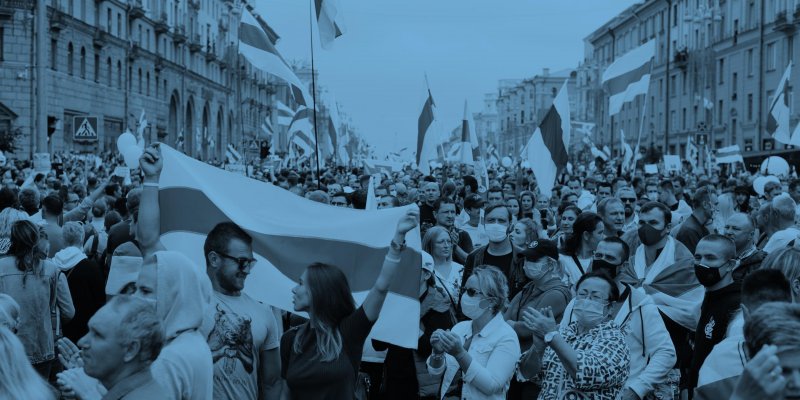
Across continents, democracy is being tested, reshaped, and, in some cases, redefined. While the 20th century was marked by a sweeping wave of democratization, the 21st century has become an era of recalibration—where nations are reassessing how political systems can adapt to rapid technological, social, and geopolitical change, News.az reports.
This long-term transformation has turned the question of governance into one of the defining political stories of our time.
Shifting center of power
From Washington to New Delhi, from Brussels to Brasília, the nature of political authority is evolving. Traditional party systems are under pressure, and new movements—often driven by digital platforms and populist sentiment—are challenging established elites. In some countries, voters are demanding stronger central governments to ensure stability; in others, they are calling for greater decentralization and civic participation.
Experts describe this as a “post-trust” era, where citizens no longer rely on institutions as the sole arbiters of truth or legitimacy. Instead, information spreads horizontally through social media, empowering individuals while also fragmenting the public sphere. This dynamic has created both unprecedented engagement and deep polarization, forcing governments to rethink how to maintain social cohesion in a time of constant connectivity.
Global democratic balance
While some nations are experiencing democratic fatigue, others are seeing renewed political energy. In Africa, countries like Ghana and Botswana continue to strengthen electoral systems and rule of law. In Latin America, citizens are demanding transparency and reform after decades of corruption scandals. Meanwhile, parts of Asia are experimenting with hybrid models that blend market efficiency with varying degrees of political control.
At the same time, the global rivalry between democratic and authoritarian systems has intensified. The United States and its allies continue to advocate for liberal democracy and human rights, while powers like China and Russia promote governance models emphasizing stability, sovereignty, and state control. This competition is shaping global institutions, trade alignments, and even the flow of technology.
Technology and the future of governance
Digital transformation remains one of the most disruptive forces in modern politics. Artificial intelligence, cybersecurity, and digital surveillance are now central to questions of governance and privacy. Governments face the delicate task of balancing innovation with regulation—ensuring technology serves citizens rather than controlling them.
Countries leading in digital governance, such as Estonia and Singapore, are demonstrating how transparency and efficiency can coexist with modern statecraft. Others are experimenting with blockchain-based voting systems, e-governance platforms, and citizen data portals—showing that democracy can evolve without losing its essence.
Enduring challenge
Despite the turbulence, democracy’s core ideals—freedom, accountability, and representation—remain remarkably resilient. Political systems continue to evolve, adapting to cultural and technological realities. The global conversation about governance is no longer a binary one of democracy versus autocracy; it is about how societies can build systems that deliver justice, opportunity, and voice in a rapidly changing world.
The world’s political future may not follow a single path—but the ongoing struggle to balance power, freedom, and responsibility ensures that governance will remain an ever-relevant and ever-evolving story for generations to come.


Similar news