EU lowers 2026 eurozone growth forecast amid global trade risks


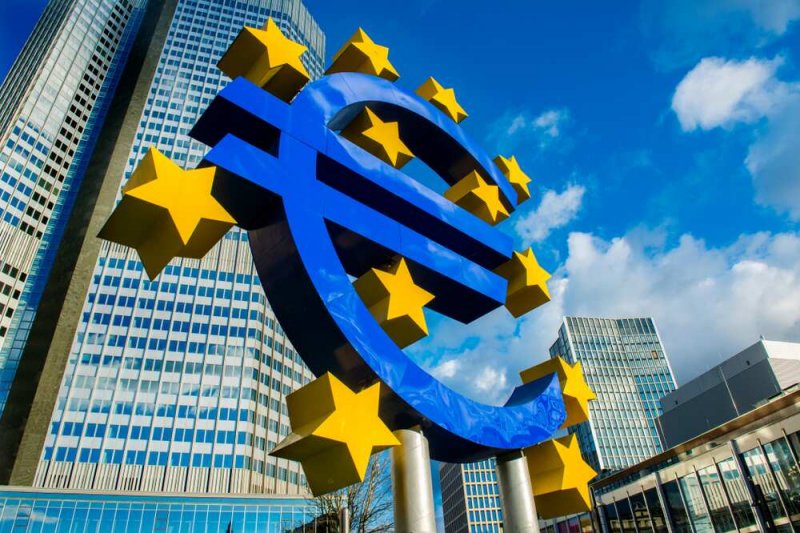
The eurozone economy is expected to expand less than previously predicted next year, the European Commission said on Monday, citing risks from international trade and geopolitical tensions.
The EU executive now forecasts growth of 1.2% in 2026 for the 20-country single currency area, down from an earlier projection of 1.4%, News.Az reports, citing AFP.
EU economy chief Valdis Dombrovskis highlighted that US trade policies and reactions from “key players like China will dampen global trade.” He added, “The EU's highly open economy remains susceptible to ongoing trade restrictions and uncertainty.”
The European Commission also noted that recent US trade agreements with partners, including the EU, “alleviated some of the uncertainties” affecting the bloc.
Struck in July, the deal with US President Donald Trump means EU exports face a baseline US levy of 15 percent, rather than a threatened 30 percent, which would have wrought havoc on the European economy.
The EU's data is based on the implementation of the tariffs as agreed.
For the entire 27-country EU, Brussels expects growth of 1.4 percent in 2026, slightly lower than the 1.5 percent predicted in May.
Dombrovskis appeared upbeat despite the difficulties.
"The EU's economy has beaten expectations in the first nine months of the year. Looking further ahead, we expect growth to continue at a moderate pace despite the challenging external environment," Dombrovskis said.
The commission believes that the ramping up of Europe's competitiveness paired with higher defence spending "focused on EU production" and new trade deals "could bolster economic activity more than projected".
Europe is, however, still lagging behind the United States and China.
The International Monetary Fund (IMF) in October predicted the US economy would grow by 2.1 percent next year.
Even though it anticipated that China's economy would slow this year, the IMF predicted the Asian powerhouse would grow by 4.2 percent in 2026.
But the forecast for Europe offered some relief after the commission said it now expected the bloc's biggest economy, Germany, to grow by 0.2 percent this year, instead of the stagnation it previously predicted.
It also forecast the export-driven German economy to grow by 1.2 percent next year, slightly up from the 1.1 percent past prediction.
"The positive effects of a ramp-up in public spending is partly counterbalanced by the negative impact of trade tensions, which are expected to impact exports," the commission said of Germany.
France, the second biggest European economy, is faring a little better, with growth of 0.7 percent expected this year and 0.9 percent in 2026.
But while the outlook for this year improved from 0.6 percent, the commission cut its growth forecast for France for 2026 from 1.3 percent.
"In 2026, the domestic economic and policy uncertainty is set to weigh on real GDP growth," the commission said of France.


Similar news