From victory to revival: Azerbaijan builds a new future in Karabakh


By Asif Aydinly
The liberation of Karabakh and Eastern Zangezur was not merely a military victory — it marked the beginning of a new chapter in the history of modern Azerbaijan. It is a story of return, rebirth, and historic justice. A story in which the pain of decades-long occupation gives way to hope, renewal, and life. Today, the Azerbaijani people are not simply returning to their ancestral lands — they are breathing new life into every stone, every river, and every street of their historic homeland.
The return to Shusha, Aghdam, Sugovushan, and Lachin is not only a matter of physical resettlement — it is a powerful symbol of national triumph and unity. It represents the restoration of justice, culture, memory, and dignity. Every family that steps once more onto the land of their ancestors is living proof that the spirit of a nation cannot be broken when it is upheld by a strong and resolute state.
This report chronicles the Great Return — the story of how Azerbaijan, far from stopping at military success, is building a new, thriving life on the liberated lands.
Today, the Azerbaijani people are witnessing a historic moment — a return to their ancestral lands that were under occupation for decades. The glorious victory of the Azerbaijani Army in 2020 ushered in a new era in the country’s history: an era of restoration, construction, and the return of life to the liberated territories. The state flag flying once again in Shusha, Khankendi, and other cities and villages is not just a symbol of military triumph, but of national rebirth, renewed faith, and pride in the Motherland.
The process of the Great Return continues at full pace. In recent weeks, a new convoy of returnees was dispatched to the fully rebuilt village of Sarijali in the Aghdam district. Twenty-eight families — a total of 110 people — have returned to their homeland after decades of displacement. In October and November of this year, the resettlement of the first residents into the city of Aghdam itself is set to begin. At the same time, resettlement will commence in the villages of Khidirli and Kangarli, where 719 and 292 individual houses have already been constructed respectively, alongside completed social and technical infrastructure.
Grand reconstruction plans for Aghdam are already being implemented. Construction has begun on one of five new residential districts. The city is designed to accommodate 100,000 residents and is set to become the fourth largest city in Azerbaijan. Between 20,000 and 25,000 people are expected to be resettled here by the end of 2026. All development is being carried out within state programs and is expected to be completed on time — by the end of 2026.

However, the return to Karabakh is not limited to Aghdam. Projects are simultaneously advancing in the Aghdara district, where resettlement in the village of Sugovushan is ongoing. A total of 180 families are expected to return, and 20 of them have already received keys to their new homes during the initial phase. On April 7, an additional 53 families — 185 people — arrived in Sugovushan, beginning a new chapter of life on revitalized ancestral land.
In accordance with the instruction of President Ilham Aliyev, another convoy of returnees was sent to Sarijali from Baku’s Garadagh district. In this stage, 39 families — 153 people — returned home. Expressing gratitude to the state, returnees emphasized the profound care and attention extended to each resettled family. In their speeches, they voiced deep appreciation to President Ilham Aliyev and First Vice-President Mehriban Aliyeva for their support and assistance, and also thanked the Azerbaijani Army for liberating their homeland and honored the memory of fallen heroes.
The resettlement process also continues in the Aghdara district: on April 22, another 20 families — 68 people — were relocated from the Tartar district to the village of Hasanriz. The government is providing not only transportation, but also all necessary conditions for a safe, comfortable, and dignified return. The construction of housing, the restoration of infrastructure, and the creation of jobs and social services are being implemented in a systematic and professional manner.
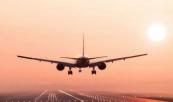
Today, the liberated territories of Karabakh and Eastern Zangezur are home not only to returnees, but also to specialists from a wide range of fields — medicine, education, culture, tourism, industry, and energy. More than 40,000 people are already working and contributing to the revival of the region. This year, the commissioning of an international airport in Lachin is planned. According to reports on social media, the first flights have already landed. Previously, passengers would arrive in Fuzuli and travel to Lachin by road; now, a direct air link is being established with the region. This stands as clear evidence of the rapid restoration of transport infrastructure and the return of Karabakh to full-fledged life.
The development of the Lachin district, like that of all of Karabakh, is progressing in strict accordance with national programs. The hosting of international events and meetings on these lands demonstrates to the world that Azerbaijan is a strong, sovereign, and peace-loving state with great ambitions and deep respect for its history.
These projects, investments, and resettlements prove that Azerbaijan has not only restored its territorial integrity but is confidently building a future on the liberated lands. This is not merely about returning people — it is the revival of entire regions, the creation of new cities and villages, and the restoration of cultural and historical memory. With political will, strategic vision, and economic strength, the state is restoring life where once there was ruin. This is a path of honor, duty, and justice for the martyrs who gave their lives for the freedom of the Motherland. The reborn Karabakh and Eastern Zangezur are not only symbols of victory — they are the foundations of a stronger and more united Republic of Azerbaijan. Against the backdrop of growing international authority and economic development, Azerbaijan is establishing itself as a country capable of overcoming the most difficult challenges and serving as an example of sustainable post-conflict recovery. This path is a testament to the power of national unity, visionary leadership, and the people's profound love for their land.
The material was prepared with the financial support of the Media Development Agency of the Republic of Azerbaijan.


Similar news