Hormuz crisis: Dozens of tankers trapped in Gulf but still insurable


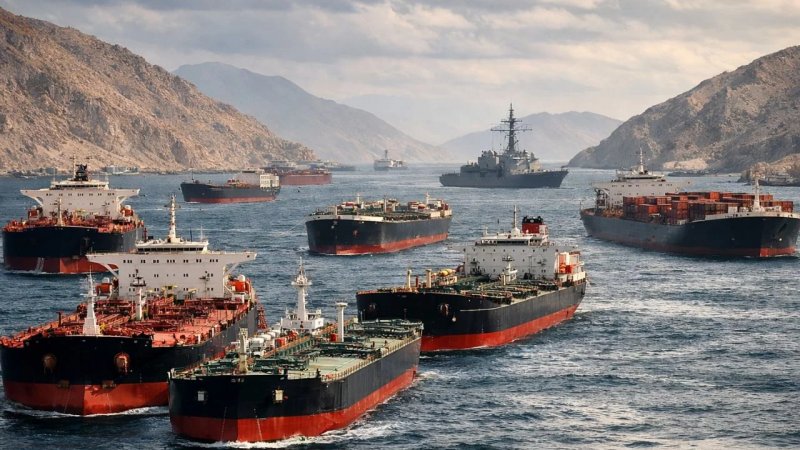
Since the US–Israel strikes on 28 February, shipping through the Strait of Hormuz has almost stopped and attacks have multiplied without a clear targeting pattern.
Insurers have not “walked away” from most trapped tonnage - yet war-cancellation clocks, GPS interference and P&I liability exposure are rapidly resetting the cost and terms of operating in the Gulf, News.Az reports, citing foreign media.
Market & trading calls:
•Insurance repricing will delay traffic normalization: vessels remain insurable, but sharply higher war-risk premiums and renegotiated cover will slow the return of commercial transits.
• Operational risk now exceeds physical risk: widespread GNSS/AIS disruption materially increases collision and claims risk in congested anchorages and holding patterns. The result is a higher probability of navigation-related casualties and insurance disputes, reinforcing owner reluctance to transit.
• Duration is the key market trigger: if military operations extend beyond the 4-week priced-in window, expect a shift toward de facto commercial closure, tightening tonnage supply, lengthening ballast legs, and sustaining a freight and risk premium across Gulf-linked trades.
Since the US–Israel strikes on 28 February 2026, the Strait of Hormuz has shifted from geopolitical headline to underwriting reality. In a matter of days, commercial activity through the chokepoint has collapsed by roughly 90%, with large numbers of tankers and gas carriers waiting on both sides of the strait rather than committing to transit.
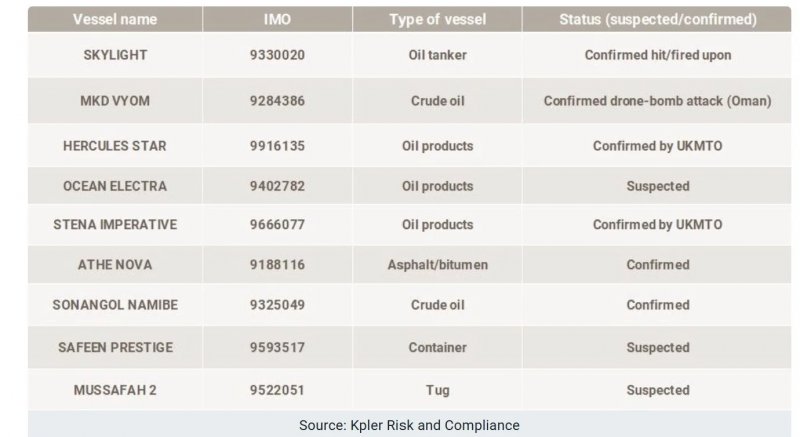
The past five days alone have seen seven confirmed attacks on different vessel types in and near the Strait. Unlike the Houthi campaign model in the Red Sea — marked by selective targeting and clearer operational intent — the Hormuz incidents show no consistent pattern linking affected vessels by flag, ownership, operator or affiliation. The practical implication is blunt: all merchant vessels, regardless of profile, remain exposed.
Only a handful of ships appear to be continuing regular transit: those sailing under Iranian flags or regime-associated as well as some Greek-based Dynacom vessels.
List of commercial vessels attacked near the Strait of Hormuz as of 06 Mar
The vessels trapped in the Gulf remain insured but at higher premiums
Despite the operational collapse, the current disruption has not created a pool of “uninsurable” vessels. Most ships trapped in the Persian Gulf remain covered by their existing marine insurers, although those policies are now entering a renegotiation phase with significantly higher risk pricing.
War-risk insurance contracts in shipping typically run on 12-month terms, but they include a seven-day war cancellation clause allowing underwriters to revise or withdraw coverage following a major escalation. In the current crisis, insurers exercised this clause immediately after the strikes, meaning the majority of vessels remain insured at their previous premium levels until Friday, 6 March assuming cancellation happened 27 February.
Once that window closes, operators seeking continued coverage will almost certainly face substantially higher war-risk premiums, rather than outright withdrawal of insurance capacity.
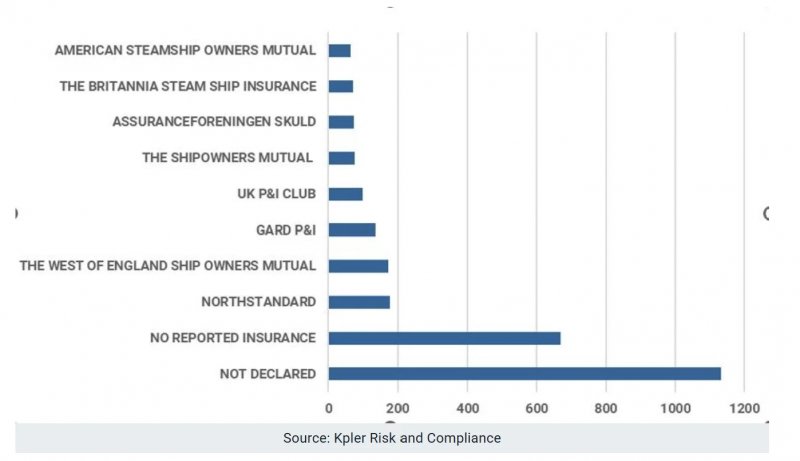
The P&I data confirms the continuation of coverage. As of 6 March, Kpler Risk & Compliance data indicates that the majority of vessels currently trapped in the Gulf remain insured by their existing providers - P&I exposure among more than 1,000 vessels is concentrated in a small group of International Group clubs and only 3 notable changes observed. The exception lies with shadow fleet vessels, whose insurance status is often uncertain even under normal market conditions and becomes even more opaque during a crisis.
Top 10 insurance companies represented in the Persian gulf (as of 06 March)
Pricing Hormuz is not guesswork, but loss math - plus a navigation shock
For underwriters, crises like Hormuz are priced as a constrained risk equation, not a headline reaction. Premiums are built from four moving parts: expected loss (probability × severity), cost of capital, operating expenses, and reinsurance constraints.
In conflict, that typically shows up as war-risk additional premiums (AP) that are voyage- or time-bound, alongside tighter conditions as capacity is withdrawn or reallocated. What’s distinct in this escalation is that insurers are not only pricing the physical risk (attacks) — they are also repricing systemic navigation risk across the Gulf. Reports of widespread GPS/GNSS interference materially change both the frequency and the “provability” of loss:
• Safety risk: degraded positioning increases the likelihood of collision and grounding, especially when traffic compresses into holding areas and convoy-like patterns. • Claims verification risk: interference complicates reconstruction of where an incident occurred and what precisely happened, raising friction around exclusions, warranties, and causation.
That combination tends to push pricing higher than a simple “attack count” model would imply, because it inflates both incident probability and claims complexity at the same time.
Insurers are pricing the crisis through time-based scenarios
Baseline (≈ 4-5 weeks of military operations): Hormuz remains heavily disrupted but not formally closed. Underwriters watch: transit behavior (actual crossings vs aborted voyages/holding patterns), insurance capacity (AP moves, cancellations, reinsurance limits - the “can we even quote?” constraint), and signal integrity (AIS gaps, spoofing clusters, abnormal tracks as a proxy for collision risk).
• Downside duration (days to <2 weeks): a catalyzed de-escalation where incident frequency declines and traffic begins to normalize. Queues shrink, transits resume, and war-risk premiums compress, though typically not back to pre-crisis levels for the imminent future.
• Upside duration (weeks to months): sustained attacks or persistent electronic warfare turn today’s collapse into a de facto commercial shutdown - not necessarily a legal closure, but a market outcome where vessels avoid transit because cover becomes unavailable, unclear, or uneconomic. Structural effects follow: rerouting around alternative export infrastructure, longer ballast legs, tightening vessel supply, and a persistent freight/price premium.
Insurers are watching the operating picture as closely as the political one: in a high-risk zone, behavioral data (transits, queues, signal integrity) becomes the leading indicator for both pricing and whether shipping remains insurable in practice.


Similar news