How countries are fighting climate change


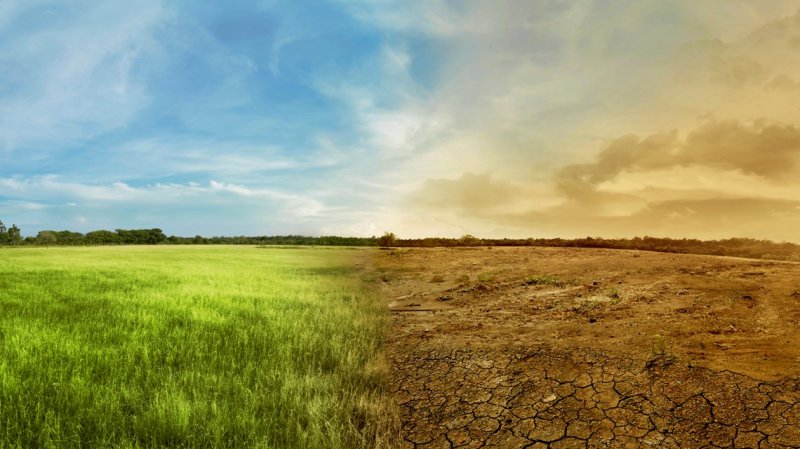
Climate change is one of the most urgent challenges of the 21st century, threatening ecosystems, economies, and human health around the globe, News.Az reports.
Rising temperatures, melting glaciers, and more frequent natural disasters are forcing nations to act decisively. Today, nearly every country in the world is implementing strategies to reduce greenhouse gas emissions, transition to cleaner energy, and protect vulnerable communities from environmental damage.
Global climate commitments
The foundation of the world’s response to climate change is the Paris Agreement, signed by 196 countries in 2015. Under this historic accord, each country sets its own emission-reduction targets, known as Nationally Determined Contributions (NDCs), with the collective goal of limiting global warming to well below 2°C — and preferably 1.5°C — above pre-industrial levels. Since then, many nations have strengthened their commitments.
By 2025, over 90 countries had updated their NDCs, pledging to achieve net-zero emissions between 2050 and 2070. The European Union committed to cutting emissions by at least 55 percent by 2030, compared with 1990 levels. The United States aims for a 50–52 percent reduction by 2030, while China, the world’s largest emitter, has pledged to reach carbon neutrality by 2060. Other major economies, including India, Japan, and South Korea, have introduced similar long-term targets.
In addition, international climate conferences — such as COP28 in Dubai (2023) and COP29 in Baku (2024) — have led to new agreements to phase out fossil fuels, accelerate renewable energy development, and increase funding for climate adaptation in developing countries.
Shifting to renewable energy
The energy sector remains the largest source of global emissions, accounting for over 70 percent of all greenhouse gases. To combat this, countries are investing heavily in renewable energy sources like solar, wind, hydro, and geothermal power.
In 2025, global renewable energy capacity surpassed 4,000 gigawatts, representing nearly half of the world’s total power generation. China leads with the largest solar and wind installations, followed by the United States, India, and the European Union. Europe has also become a pioneer in offshore wind projects, with new farms across the North Sea expected to supply energy to tens of millions of households.
The cost of renewables has fallen dramatically — solar power is now 90 percent cheaper than in 2010, while the cost of wind energy has dropped by more than 60 percent. This has made clean energy not only environmentally responsible but also economically competitive. Meanwhile, countries such as Norway and Iceland are demonstrating that nearly 100 percent renewable electricity generation is achievable through hydropower and geothermal energy.
Investing in green technologies and adaptation
Beyond renewable energy, nations are embracing green technologies to cut emissions in industries and transport. The shift to electric vehicles (EVs) has accelerated, with over 40 million EVs now on the road worldwide. Governments in Europe, North America, and Asia are phasing out internal combustion engines — the European Union, for instance, plans to ban the sale of new petrol and diesel cars by 2035.
Heavy industries like steel, cement, and shipping — once seen as impossible to decarbonize — are now investing in carbon capture, hydrogen fuel, and cleaner production methods. The hydrogen economy is growing rapidly, as countries build networks of hydrogen plants to power factories and long-distance transport.
At the same time, climate adaptation is becoming as important as emission reduction. Countries are spending billions on flood defenses, drought-resistant agriculture, and early-warning systems for storms and wildfires. In 2025, global climate adaptation funding exceeded 65 billion dollars, though experts warn that much more is needed to protect the world’s poorest and most exposed regions.
International cooperation and financing
Fighting climate change requires not only national action but global cooperation. Wealthier countries have pledged to support developing nations through the Green Climate Fund, which aims to mobilize 100 billion dollars annually for climate projects. While this goal has not yet been fully met, progress is ongoing — by 2025, contributions reached around 87 billion dollars, with new mechanisms in place to ensure transparency and fair distribution.
Countries are also forming regional alliances to coordinate action. The European Green Deal, the U.S.–EU Clean Energy Partnership, and Asia’s CLEAN Initiative are examples of collaborative frameworks that promote research, investment, and shared climate technology. These partnerships are helping nations accelerate innovation while ensuring a just transition that supports workers and communities shifting away from fossil fuels.
The road ahead
Despite global progress, scientists warn that current efforts are still not enough to keep warming below 1.5°C. The world remains on track for about 2.4°C of warming by the end of the century unless emissions decline faster. To close this gap, experts emphasize the need for deeper decarbonization, faster renewable expansion, and protection of forests and oceans that naturally absorb carbon dioxide.
However, momentum continues to grow. Public awareness, technological innovation, and financial investment are driving a new era of environmental action. Countries are proving that climate protection and economic growth can go hand in hand — creating millions of jobs in clean energy, electric mobility, and sustainable agriculture.
As the global climate movement enters its next phase, the message is clear: every nation must act, cooperate, and innovate to safeguard the planet. The fight against climate change is no longer a distant goal — it is the defining challenge of our time, shaping the future of economies, societies, and generations to come.


Similar news