How Elena Rybakina turned efficiency into a winning formula


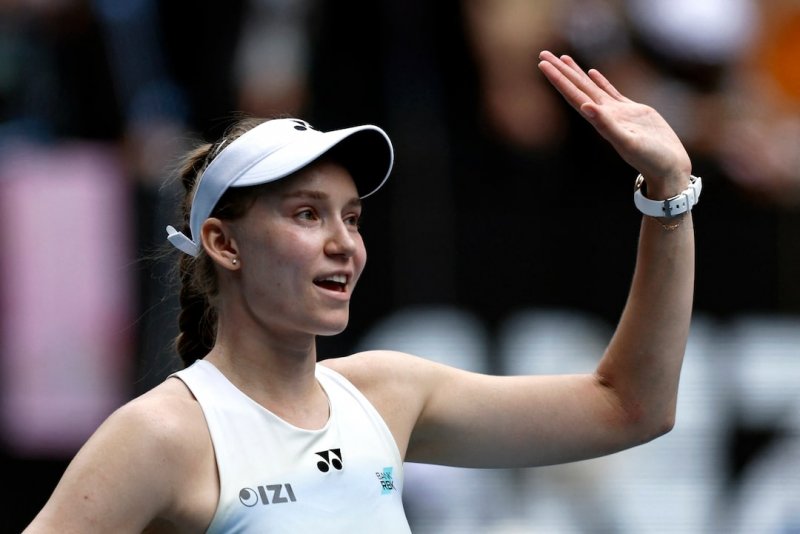
Elena Rybakina has emerged as one of the most influential figures in modern women’s tennis, redefining expectations around power, composure, and efficiency at the elite level.
Her ascent reflects a broader evolution within the sport, where height, strength, and precision combine with tactical restraint rather than overt aggression. Rybakina’s presence has helped recalibrate how dominance is expressed on the women’s tour, emphasizing clean ball striking and calm decision making over constant emotional display.
RECOMMENDED STORIES
Her impact is not limited to individual achievements. Rybakina represents a structural shift in the competitive balance of women’s tennis, where matches are increasingly decided by first strike tennis, serve effectiveness, and point shortening strategies. This evolution has made her one of the most studied and discussed players among coaches, analysts, and opponents.
How Elena Rybakina developed her distinctive playing style
Rybakina’s game is built on simplicity executed at a very high level. From early development stages, her training emphasized repeatable mechanics, efficient footwork, and minimizing unnecessary motion. This approach laid the foundation for her hallmark traits: a powerful serve, flat groundstrokes, and an ability to control rallies with minimal risk.
Her serve is widely regarded as one of the most effective weapons in women’s tennis. Delivered with fluid motion and exceptional placement, it consistently produces aces and weak returns. Unlike players who rely solely on speed, Rybakina varies direction and depth to keep opponents off balance.
From the baseline, her strokes travel low over the net and penetrate the court quickly. This flat trajectory reduces reaction time for opponents and limits defensive options. Crucially, Rybakina achieves this without overhitting, maintaining a high margin of control even during extended rallies.
Why composure is central to Rybakina’s success
One of Rybakina’s most distinctive characteristics is her emotional neutrality on court. She rarely displays outward frustration or exuberance, maintaining a steady demeanor regardless of match circumstances. This composure is not passivity but discipline.
In high pressure situations, such as tie breaks or late stage tournament matches, this calm presence becomes a competitive advantage. Opponents often struggle to read momentum shifts or exploit emotional openings, while Rybakina remains focused on execution.
This mental consistency supports her physical game. Because her technique is built on repeatable mechanics, emotional stability allows her to reproduce the same patterns under pressure, reducing unforced errors at critical moments.
How Elena Rybakina fits into the modern power era
Women’s tennis has experienced a steady increase in power over the past decade. Taller athletes with stronger serves and flatter strokes have become more prevalent. Rybakina exemplifies this trend while also refining it.
Rather than overwhelming opponents through sheer pace alone, she integrates power with timing and placement. This balance allows her to dominate points efficiently while conserving energy across long matches and tournaments.
Her success illustrates how the power era does not necessarily require constant aggression. Instead, it rewards players who can select moments to accelerate while maintaining structural discipline throughout the match.
Tactical intelligence behind her efficiency
Rybakina’s tactical approach is understated but highly effective. She prioritizes serve plus one patterns, aiming to end points within the first few shots whenever possible. This strategy reduces exposure to long defensive exchanges and preserves physical resources.
When rallies extend, she focuses on depth rather than angle, pushing opponents back and limiting their attacking options. Her court positioning remains compact, enabling quick recovery and consistent shot production.
She also adapts well to different surfaces. On faster courts, her serve and flat strokes become particularly potent. On slower surfaces, she increases margin and patience, relying on placement rather than speed alone.
How physical attributes shape her game
Rybakina’s height provides natural advantages in serving and reach, but her success is not solely a function of stature. Her movement, often underestimated, allows her to cover the court efficiently despite a taller frame.
Conditioning and balance training play a crucial role in sustaining her mobility. By maintaining a low center of gravity during strokes, she generates power without sacrificing stability.
This physical efficiency contributes to her durability across demanding schedules, enabling consistent performance at the highest level.
Why Elena Rybakina is difficult to disrupt
Many players rely on emotional intensity or crowd engagement to shift momentum. Rybakina’s composed style neutralizes these tactics. Because she shows minimal reaction to external factors, opponents often struggle to gain psychological leverage.
Her rhythm is internally regulated rather than reactive. This makes it difficult to break her concentration through extended rallies, delays, or changes in match tempo.
As a result, matches against Rybakina frequently hinge on execution rather than emotional swings, favoring her controlled approach.
Influence on coaching and player development
Rybakina’s success has influenced coaching philosophies, particularly in junior development. Coaches increasingly emphasize serve quality, clean contact, and emotional regulation as core competencies.
Her model demonstrates that consistency and simplicity can outperform complexity when executed precisely. This perspective has encouraged a renewed focus on fundamentals within high performance training environments.
Young players now study her service motion and baseline positioning as examples of efficient biomechanics.
How Elena Rybakina reshaped expectations of leadership on court
Leadership in tennis is often associated with visible intensity or vocal presence. Rybakina challenges this assumption. Her leadership is expressed through reliability, focus, and quiet confidence.
This alternative model resonates with players who may not naturally gravitate toward expressive behavior but still aspire to competitive excellence. It broadens the definition of what it means to be mentally strong in elite sport.
Media perception and public image
Rybakina’s reserved demeanor has shaped a unique public image. Rather than dominating headlines through controversy or theatrics, she commands attention through performance consistency.
This image aligns with an audience segment that values professionalism and substance. Over time, her credibility has grown alongside her results, reinforcing her status as a serious contender in every major tournament she enters.
Why her game translates across eras
Although firmly rooted in the modern power era, Rybakina’s game contains elements that would translate well across different periods of tennis history. Clean ball striking, serve effectiveness, and tactical discipline are timeless assets.
This cross era adaptability enhances her long term relevance and positions her as a benchmark for evaluating future players.
Challenges and evolution ahead
Sustaining success at the top requires continual adaptation. For Rybakina, this includes refining defensive transitions, adding variety in slower conditions, and managing physical load over extended seasons.
Her ability to evolve without compromising core strengths will determine the next phase of her career. Given her methodical approach, incremental improvement rather than radical change is likely.
Why Elena Rybakina matters to the future of women’s tennis
Elena Rybakina represents a mature evolution of power tennis. She demonstrates that dominance does not require constant emotional display or excessive risk. Instead, precision, composure, and efficiency can define excellence.
Her influence extends beyond titles and rankings. By reshaping perceptions of strength and leadership, she contributes to a more diverse and inclusive understanding of success in women’s tennis.
In this sense, Rybakina is not only a champion level competitor but also a defining figure in the sport’s ongoing transformation.
By Faig Mahmudov


Similar news