How much does space tourism cost and how do the first commercial flights work?


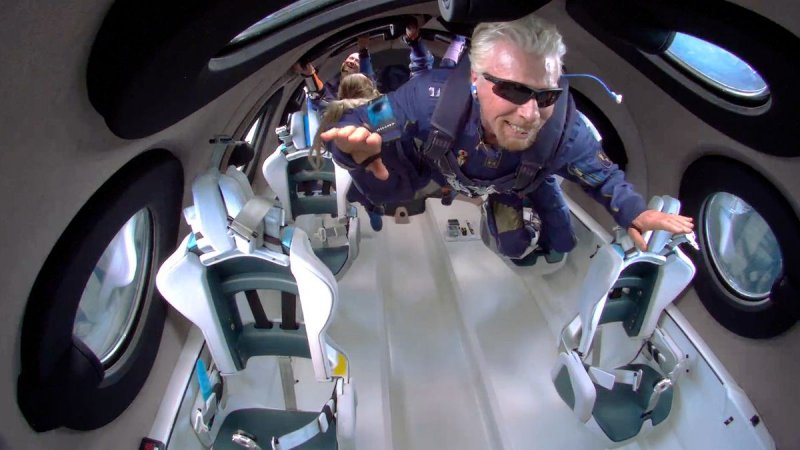
For decades, traveling to space was an opportunity reserved exclusively for professional astronauts selected and trained by national space agencies. Today, however, space tourism has become a reality. Wealthy entrepreneurs, celebrities, business executives, and private citizens have already traveled beyond Earth's atmosphere, marking the beginning of a new era in human exploration.
What was once the subject of science fiction is now an emerging industry worth billions of dollars. Companies are competing to make space accessible to private customers, while governments and investors are pouring resources into technologies designed to lower costs and expand opportunities, News.az reports.
Although space tourism remains expensive and available only to a small number of people, experts believe the industry could evolve dramatically over the coming decades. This raises two important questions: How much does space tourism currently cost, and how do commercial space flights actually work?
The Birth of Space Tourism
The concept of space tourism first became reality in 2001 when businessman Dennis Tito became the first private individual to travel to space.
Tito spent approximately eight days aboard the International Space Station after paying an estimated $20 million for the journey. At the time, the trip was viewed as an extraordinary exception rather than the beginning of a new industry.
Over the following two decades, advances in reusable rockets, private aerospace investment, and commercial spaceflight technology transformed the sector. Companies founded by some of the world's wealthiest entrepreneurs began competing to create a viable space tourism market.
Today, space tourism is no longer experimental. It has become a growing commercial industry with multiple providers offering different types of experiences.
The Companies Leading the Industry
Three companies have emerged as the most recognizable names in commercial space tourism.
Blue Origin
Founded by Jeff Bezos, Blue Origin focuses on suborbital tourism flights using its New Shepard rocket system.
Passengers experience several minutes of weightlessness before returning to Earth. The entire mission typically lasts around ten minutes.
The company has already flown numerous private customers, including celebrities, business leaders, and ordinary citizens selected through special programs.
Virgin Galactic
Created by Richard Branson, Virgin Galactic uses a spaceplane rather than a traditional vertical rocket launch.
Its spacecraft is carried to high altitude by a mothership aircraft before igniting its rocket engine and ascending toward space.
Passengers experience spectacular views of Earth and a brief period of weightlessness before gliding back to a runway landing.
SpaceX
Founded by Elon Musk, SpaceX offers a more ambitious vision of commercial space travel.
Unlike Blue Origin and Virgin Galactic, SpaceX conducts orbital missions capable of carrying private astronauts around Earth for several days. The company also aims to eventually support lunar tourism and missions to Mars.
SpaceX currently operates the most advanced commercial human spaceflight system in the world.
What Is the Difference Between Suborbital and Orbital Flights?
Understanding the difference between suborbital and orbital spaceflight is essential.
Suborbital Flights
Suborbital flights briefly cross the internationally recognized boundary of space before returning to Earth.
Passengers experience:
-
A rocket launch
-
Several minutes of weightlessness
-
Views of Earth's curvature
-
A relatively short mission duration
These flights typically last between 10 and 90 minutes depending on the vehicle and mission profile.
Orbital Flights
Orbital missions travel much faster and remain in space for extended periods.
Passengers orbit Earth at speeds exceeding 27,000 kilometers per hour and may spend several days in space.
These missions are significantly more complex, require more extensive training, and cost substantially more than suborbital experiences.
How Much Does Space Tourism Cost?
Space tourism remains one of the most expensive travel experiences available.
Virgin Galactic
Tickets initially sold for approximately $250,000.
Prices later increased significantly, with seats now costing around $450,000 or more depending on the mission and package.
Despite the high price, thousands of customers have expressed interest in future flights.
Blue Origin
Blue Origin does not publicly disclose standard ticket prices for every mission.
However, industry estimates suggest passengers may pay between $500,000 and several million dollars depending on the specific flight.
In one famous auction, a seat sold for $28 million, highlighting the exclusivity of early missions.
SpaceX
Orbital missions represent an entirely different price category.
Private SpaceX missions can cost tens of millions of dollars per passenger. Some estimates place certain orbital experiences above $50 million per seat.
Future lunar tourism missions could cost substantially more.
What Happens Before Launch?
Space tourists do not simply arrive at a spaceport and board a spacecraft.
Before flight, passengers undergo extensive preparation and training.
Typical training includes:
-
Safety procedures
-
Emergency protocols
-
Weightlessness preparation
-
Communication systems
-
Physical conditioning
-
Spacecraft familiarization
Training programs vary depending on the complexity of the mission.
Suborbital tourists may train for a few days, while orbital passengers often prepare for months.
The Launch Experience
For many passengers, the launch is the most intense part of the journey.
Rocket engines generate enormous thrust, accelerating the spacecraft to extraordinary speeds within minutes.
Passengers typically experience several times the force of gravity during ascent.
Despite the physical intensity, most travelers describe the launch as exhilarating rather than uncomfortable.
Modern spacecraft are designed with passenger safety and comfort as priorities.
Experiencing Weightlessness
One of the main attractions of space tourism is weightlessness.
As the spacecraft reaches space, passengers can unbuckle from their seats and float freely inside the cabin.
Many describe the sensation as unlike anything experienced on Earth.
Objects drift through the air, movement requires only gentle pushes, and passengers can perform acrobatic maneuvers impossible under normal gravity.
For many travelers, these few minutes of weightlessness become the highlight of the entire mission.
Seeing Earth From Space
Astronauts frequently describe viewing Earth from space as a life-changing experience.
Passengers see:
-
The curvature of Earth
-
The thin atmosphere protecting the planet
-
Vast oceans and continents
-
The darkness of space
-
Sunrises and sunsets unlike anything visible from the ground
Many travelers report a phenomenon known as the "Overview Effect"—a profound shift in perspective resulting from seeing Earth as a fragile and interconnected world.
This psychological experience has become one of the most powerful attractions of space tourism.
Is Space Tourism Safe?
Safety remains one of the industry's most important challenges.
Commercial spaceflight involves inherent risks that cannot be completely eliminated.
Companies invest heavily in:
-
Vehicle testing
-
Redundant safety systems
-
Crew training
-
Engineering reliability
-
Emergency procedures
The industry has learned important lessons from both government and private space programs.
Although commercial spaceflight has become increasingly reliable, it remains significantly riskier than conventional air travel.
Who Can Become a Space Tourist?
One of the industry's goals is to make space accessible to ordinary people.
Currently, however, most customers are wealthy individuals due to the high costs involved.
Basic requirements generally include:
-
Good overall health
-
Ability to withstand acceleration forces
-
Successful completion of training
-
Financial ability to purchase a ticket
As technology improves and competition increases, companies hope to expand access to broader segments of the population.
Could Space Tourism Become Affordable?
The long-term success of the industry depends largely on reducing costs.
Many experts compare today's space tourism market to the early days of aviation.
Commercial air travel was once available only to the wealthy. Over time, technological improvements, competition, and economies of scale dramatically lowered prices.
Space companies hope a similar process will occur over the coming decades.
Reusable rockets, advanced manufacturing techniques, and increased flight frequency could eventually make space tourism far more affordable.
Future Destinations Beyond Earth Orbit
The future of space tourism may extend far beyond short trips to the edge of space.
Potential future experiences include:
-
Orbital hotels
-
Private space stations
-
Lunar flyby missions
-
Lunar surface tourism
-
Space sports competitions
-
Multi-day orbital vacations
Some companies and researchers are already developing concepts that could support these possibilities in the coming decades.
Could People Eventually Vacation in Space?
Although it sounds futuristic today, many industry leaders believe routine vacations in space could eventually become possible.
Private space stations are already under development, and several companies envision commercial habitats where tourists could stay for days or weeks.
Such experiences would likely remain expensive initially but could become increasingly accessible as technology advances.
The timeline remains uncertain, but the foundations of a future space tourism economy are already being established.
Conclusion
Space tourism has transformed from a science-fiction dream into a functioning commercial industry. Companies such as Blue Origin, Virgin Galactic, and SpaceX are pioneering new ways for private individuals to experience space, whether through brief suborbital flights or multi-day orbital missions.
At present, ticket prices range from hundreds of thousands to tens of millions of dollars, making space tourism accessible primarily to the wealthy. However, advances in reusable rockets, spacecraft technology, and commercial competition could gradually lower costs over time.
The first generation of commercial space travelers is already proving that private access to space is possible. The next challenge will be making it more affordable, more frequent, and ultimately available to a much larger portion of humanity.
As the industry evolves, future generations may view space travel much as people today view international air travel—not as an extraordinary luxury, but as another way to explore the world beyond familiar horizons.
By Faig Mahmudov


Similar news