The world's most valuable companies: Who tops the list and how much are they worth?


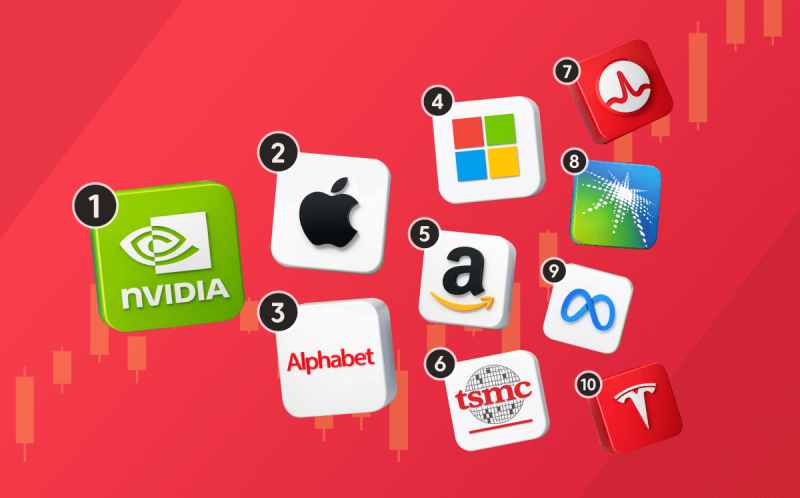
The race to become the world's most valuable company has become one of the defining stories of the modern global economy. Over the past two decades, technological innovation, digital transformation, artificial intelligence, cloud computing, e-commerce, and semiconductor development have dramatically reshaped corporate rankings.
Today, the world's most valuable companies are worth more than the annual economic output of many countries. Their products and services are used by billions of people every day, and their decisions can influence global markets, supply chains, employment, and even geopolitics, News.az reports.
RECOMMENDED STORIES
Market capitalization—the total value of a company's outstanding shares—is commonly used to measure corporate value. While rankings change daily as stock prices fluctuate, a small group of companies consistently dominates the global leaderboard.
As of 2026, technology companies remain firmly in control of the top positions, reflecting the growing importance of artificial intelligence, digital infrastructure, and advanced computing in the global economy.
What Is Market Capitalization?
Before examining the rankings, it is important to understand how company value is measured.
Market capitalization, often referred to as "market cap," represents the total value investors assign to a publicly traded company.
The calculation is straightforward:
Market Capitalization = Share Price × Total Outstanding Shares
For example, if a company has one billion shares outstanding and each share is worth $100, its market capitalization equals $100 billion.
Market cap does not necessarily represent cash held by a company or the amount required to purchase it outright. Instead, it reflects investor confidence in the company's future earnings, growth potential, competitive position, and overall business strength.
Why Technology Companies Dominate
The dominance of technology companies is not accidental.
Unlike traditional industries, digital businesses can scale rapidly across global markets without requiring massive physical infrastructure. Software, cloud services, artificial intelligence platforms, social media networks, and digital ecosystems can generate enormous revenues while serving billions of users.
Technology companies also benefit from network effects. As more people use their products, those products often become more valuable, reinforcing their market position and making it difficult for competitors to catch up.
The emergence of artificial intelligence has accelerated this trend even further, pushing technology valuations to unprecedented levels.
1. Microsoft
Microsoft remains one of the world's most valuable companies and is frequently at or near the top of global rankings.
Founded in 1975, the company transformed personal computing and later reinvented itself through cloud computing, enterprise software, cybersecurity, and artificial intelligence.
Today, Microsoft generates revenue from:
-
Windows operating systems
-
Office productivity software
-
Azure cloud services
-
Gaming
-
Artificial intelligence solutions
-
Enterprise technology platforms
Its strategic investments in AI have significantly strengthened its market position.
Estimated market value: More than $4 trillion.
2. NVIDIA
NVIDIA has become one of the biggest success stories of the AI revolution.
Originally known for graphics processing units (GPUs) used in gaming, the company now provides critical hardware powering artificial intelligence systems worldwide.
Its chips are used in:
-
AI model training
-
Data centers
-
Autonomous vehicles
-
Robotics
-
Scientific computing
-
Advanced simulations
As demand for AI infrastructure continues to surge, NVIDIA's valuation has risen dramatically.
Estimated market value: Around $4 trillion.
3. Apple
Apple remains one of the most influential companies in history.
The company's ecosystem includes:
-
iPhone
-
iPad
-
Mac
-
Apple Watch
-
AirPods
-
Digital services
-
Payment platforms
Apple's strength lies not only in hardware but also in its ability to create highly integrated products and services that encourage long-term customer loyalty.
Despite increasing competition, Apple continues to generate enormous profits and maintain one of the strongest brands in the world.
Estimated market value: Approximately $3.5–4 trillion.
4. Amazon
Amazon revolutionized e-commerce and later expanded into cloud computing, entertainment, logistics, artificial intelligence, and digital advertising.
Its business empire now includes:
-
Online retail
-
AWS cloud services
-
Streaming platforms
-
Smart devices
-
Logistics networks
-
AI technologies
AWS remains one of the most profitable cloud computing businesses globally, helping support Amazon's enormous valuation.
Estimated market value: More than $2 trillion.
5. Alphabet (Google)
Alphabet, the parent company of Google, remains one of the world's most valuable corporations.
The company dominates online search and generates substantial revenue through digital advertising.
Its portfolio includes:
-
Google Search
-
YouTube
-
Android
-
Google Cloud
-
AI research
-
Autonomous vehicle projects
As artificial intelligence becomes increasingly important, Alphabet's vast data resources and technological capabilities position it as a major player in future innovation.
Estimated market value: Around $2 trillion.
6. Saudi Aramco
Saudi Aramco remains the world's most valuable energy company.
The company controls some of the largest proven oil reserves on the planet and plays a critical role in global energy markets.
Despite the transition toward renewable energy, oil and gas continue to power much of the global economy, supporting Aramco's enormous value.
The company's profitability is heavily influenced by global energy prices and demand.
Estimated market value: Approximately $1.5–2 trillion.
7. Meta Platforms
Meta owns some of the world's largest social media platforms.
Its ecosystem includes:
-
Facebook
-
Instagram
-
WhatsApp
-
Messenger
Billions of users interact with Meta's products daily.
The company is investing heavily in artificial intelligence, virtual reality, augmented reality, and future digital platforms that could shape the next generation of online experiences.
Estimated market value: More than $1.5 trillion.
8. Broadcom
Broadcom has emerged as a critical supplier of semiconductors and enterprise technology solutions.
The company provides components used in:
-
Data centers
-
Telecommunications networks
-
Cloud infrastructure
-
Consumer electronics
-
Artificial intelligence systems
As demand for computing power grows, semiconductor companies like Broadcom are becoming increasingly important to the global economy.
Estimated market value: More than $1 trillion.
9. Tesla
Tesla remains the most valuable automotive company in the world.
Although best known for electric vehicles, Tesla also operates in:
-
Battery technology
-
Energy storage
-
Artificial intelligence
-
Autonomous driving systems
-
Robotics
Investors continue to view Tesla as both an automotive manufacturer and a technology company, contributing to its high valuation.
Estimated market value: Around $1 trillion.
10. TSMC (Taiwan Semiconductor Manufacturing Company)
TSMC is one of the most strategically important companies in the world.
The company manufactures advanced semiconductor chips used by many leading technology firms, including smartphone makers, AI companies, and cloud providers.
Without companies like TSMC, much of the modern digital economy would struggle to function.
Its importance has grown significantly as AI demand increases.
Estimated market value: More than $1 trillion.
How Artificial Intelligence Is Reshaping Corporate Rankings
Artificial intelligence has become the most important driver of corporate value in recent years.
Companies involved in AI infrastructure, cloud computing, semiconductors, and advanced software have seen extraordinary growth.
Investors increasingly view AI as a technology comparable to the internet revolution, capable of transforming nearly every industry.
As a result, firms with strong AI capabilities are attracting enormous investment and climbing rapidly in global rankings.
Why Energy Companies Still Matter
Although technology companies dominate the rankings, energy remains essential to economic activity.
Oil, natural gas, and electricity continue to power transportation, manufacturing, agriculture, and industrial production.
Energy companies generate enormous revenues and remain among the largest corporations globally.
The transition to cleaner energy sources may reshape the sector, but energy will continue to play a central role in the global economy for decades.
Which Companies Could Enter the Top 10 Next?
Several companies are rapidly increasing their valuations and could challenge existing leaders.
Potential future contenders include:
-
Semiconductor manufacturers
-
AI-focused firms
-
Cloud infrastructure providers
-
Biotechnology companies
-
Renewable energy leaders
As emerging technologies mature, entirely new corporate giants could appear by the end of the decade.
Could a Company Reach $10 Trillion?
Not long ago, a trillion-dollar company seemed unimaginable.
Today, multiple corporations are valued at several trillion dollars, leading some analysts to ask whether a $10 trillion company could emerge during the next decade.
Artificial intelligence, robotics, biotechnology, quantum computing, and future digital platforms could create entirely new markets worth trillions of dollars.
While predicting the winner is impossible, many experts believe the first $10 trillion company may emerge from the technology sector.
Conclusion
The world's most valuable companies are increasingly defined by innovation, technology, data, and artificial intelligence. Microsoft, NVIDIA, Apple, Amazon, Alphabet, and other technology leaders now occupy positions once dominated by industrial and energy giants.
Their combined market value exceeds the economic output of many countries and reflects the growing importance of digital infrastructure in modern life.
As artificial intelligence, semiconductors, cloud computing, and advanced technologies continue to evolve, the competition for corporate leadership is likely to intensify. The rankings may change, but one trend appears clear: the companies shaping the future of technology are also shaping the future of the global economy.
The race for corporate supremacy is no longer simply about profits—it is increasingly about innovation, influence, and the ability to define the next era of human progress.
By Faig Mahmudov


Similar news