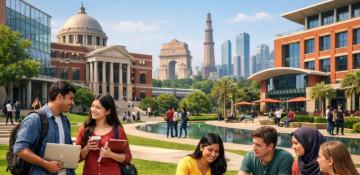
How studying abroad became one of the most influential pathways shaping global education



How studying abroad became one of the most influential forces in modern education is closely tied to the rapid internationalisation of universities, expanding global mobility and the growing demand for cross-cultural skills, News.Az reports.
Over the past two decades, the number of students pursuing education outside their home countries has steadily increased, making international study one of the defining trends of the 21st-century academic landscape. For millions of young people, studying abroad is viewed not only as a way to earn a degree but also as a chance to gain independence, global exposure and long-term career advantages.
Education experts point out that the idea of crossing borders for learning is not new. Historically, scholars travelled between cultural centres such as Cairo, Athens, Samarkand and Paris in search of knowledge. However, what sets the modern era apart is the scale and accessibility of international study. Universities across Europe, North America, the Middle East and Asia now actively compete for global talent, offering scholarships, flexible programs and English-taught degrees to attract students from different regions.
Today, more than five million students worldwide are enrolled at foreign institutions—nearly triple the number two decades ago. The reasons behind this growth are diverse. For many, studying abroad offers access to higher-quality education, advanced research facilities and specialised programs not available in their home countries. For others, it provides a pathway to international careers, language proficiency and exposure to different academic cultures.
One of the main drivers of international study is the global job market’s increasing demand for graduates with international experience. Employers consistently highlight the value of cross-cultural communication, adaptability and independent problem-solving—skills naturally developed through studying abroad. Students who have lived in another country often enter the workforce with a broader worldview, stronger confidence and a practical understanding of diversity.
Another factor behind the rise is the expansion of scholarship opportunities. Governments, international organisations and leading universities offer financial support to attract ambitious students. Programs such as Erasmus+ in Europe, Fulbright in the United States, Chevening in the United Kingdom, DAAD in Germany, MEXT in Japan and numerous national scholarship schemes aim to strengthen cultural diplomacy while helping students access quality education abroad. These initiatives have made international study more accessible to students from developing countries.
At the same time, the digital age has played a major role in shaping mobility trends. Online applications, virtual counselling, global university fairs and digital learning platforms have made it easier for students to explore options and prepare for studying abroad. Many universities now run hybrid or fully online programs that allow students to begin coursework remotely before transitioning to in-person study.
However, the process of studying abroad is not without challenges. Students must navigate visa procedures, financial planning, accommodation arrangements, cultural adjustment and academic expectations that may differ significantly from what they are used to. For some, the transition can be overwhelming—managing daily expenses, adapting to new teaching styles or coping with homesickness. Universities typically offer orientation programs, counselling and support services to help international students integrate more easily.
Financial considerations also remain one of the biggest obstacles. Tuition fees, travel costs and living expenses vary widely depending on the country and institution. While scholarships and part-time work opportunities help many students manage costs, financial planning remains essential. Countries such as Germany and Norway attract international students partly because of their low or zero tuition fees, while destinations like the United States, the United Kingdom and Australia remain popular despite higher costs due to their strong academic reputations.
Visa regulations are another important element. Countries often require proof of financial stability, acceptance letters, language proficiency and health insurance before issuing student visas. While these measures ensure that students are prepared, they also require careful documentation and planning. Some nations, such as Canada and Australia, link student visas to post-study work opportunities, making them particularly attractive to students who want to gain international work experience.
The benefits of studying abroad extend far beyond academics. Students immersed in a foreign culture learn to navigate new environments, understand different perspectives and build lifelong international networks. Many describe the experience as transformational—one that helps them grow personally and professionally. Living abroad encourages independence, responsibility and resilience while fostering appreciation for cultural diversity.
For host countries, international students contribute significantly to academic development, research innovation and economic growth. Universities benefit from cultural diversity on campus, which enriches classroom discussions and promotes global perspectives. Economically, international students contribute billions of dollars annually to local economies through tuition fees, housing, transportation and daily expenses.
Looking ahead, the trend of studying abroad is expected to continue expanding. Countries are competing more actively to attract international students, often adjusting immigration policies to offer more flexible work and residency pathways for graduates. Meanwhile, new destinations such as South Korea, Türkiye, the United Arab Emirates and Central European countries are rising as competitive education hubs.
Despite global uncertainties, studying abroad remains one of the most powerful tools for shaping future leaders, diplomats, scientists, entrepreneurs and professionals. As the world becomes increasingly interconnected, international education will continue to play a crucial role in building mutual understanding and preparing young people for the realities of a globalised workforce.
In essence, studying abroad has become far more than earning a degree—it is an investment in global competence, personal growth and long-term opportunity. As demand continues to rise, its impact on students, universities and societies will remain profound for many years to come.


Similar news